Half past three in the morning, the thirty-first of August, 1888. A cart driver turns his horse into Buck's Row, a narrow street in Whitechapel, London, hemmed in by warehouses and the sleeping backs of terraced houses. The gas lamp at the end of the row throws just enough light to make out a shape on the pavement. At first he thinks it's a discarded tarpaulin. It is a woman. Her throat has been cut so deeply she is nearly decapitated. Within the hour, a police surgeon will discover the injuries do not stop there.
Her name was Mary Ann Nichols. She would not be the last.
Over the next ten weeks, a killer stalked the streets of London's East End, murdered at least a handful of women in the open air, vanished each time without a trace, and left behind a name that has outlived every detective who ever chased him: Jack the Ripper — a name he may never have chosen for himself. More than a century later, despite thousands of pages of police files, modern forensic attempts, and no shortage of confident claims, nobody actually knows who he was.
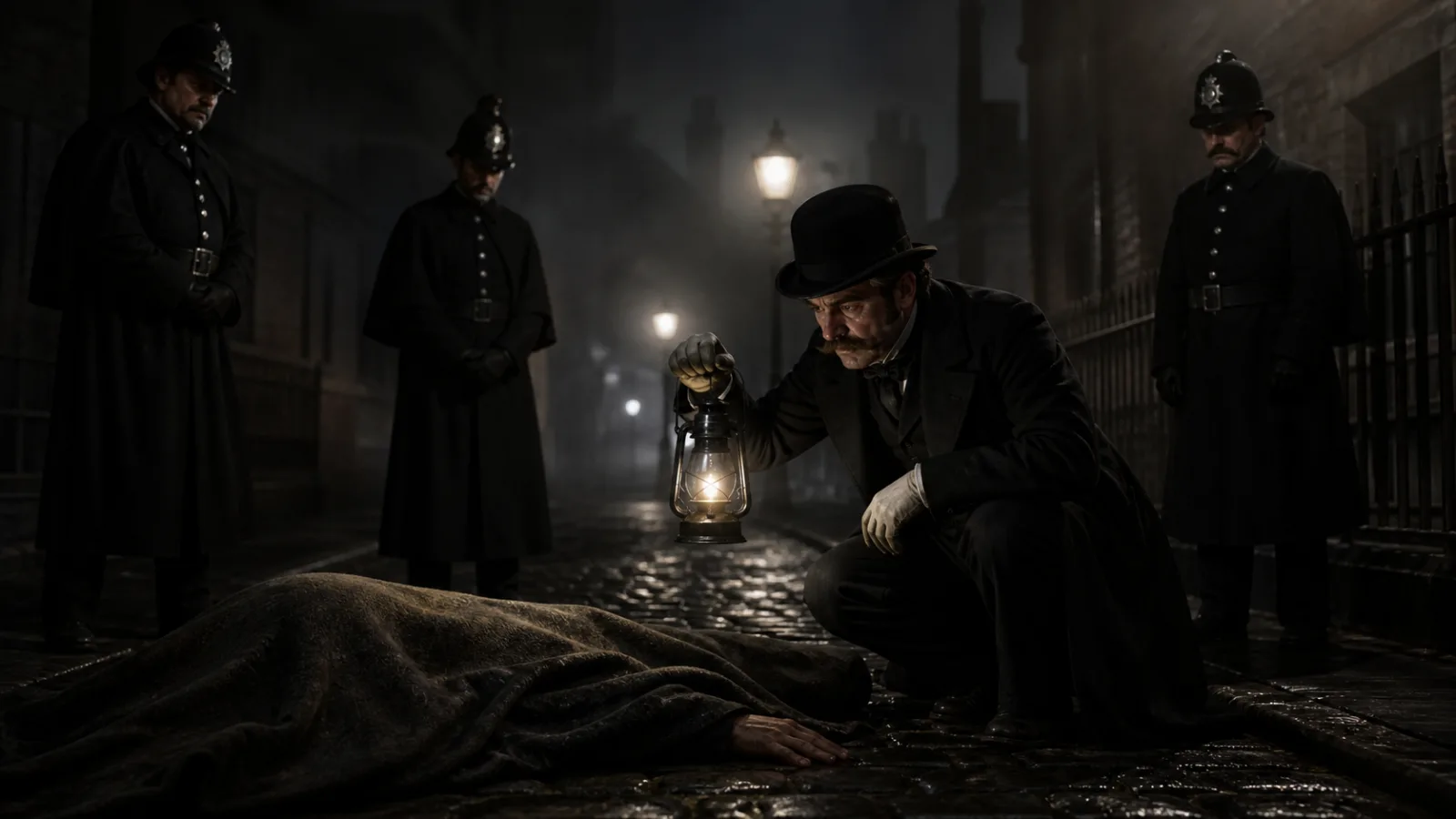
A District Built for Disappearance
To understand why this case gripped a city and never let go, it helps to understand the place it happened in.
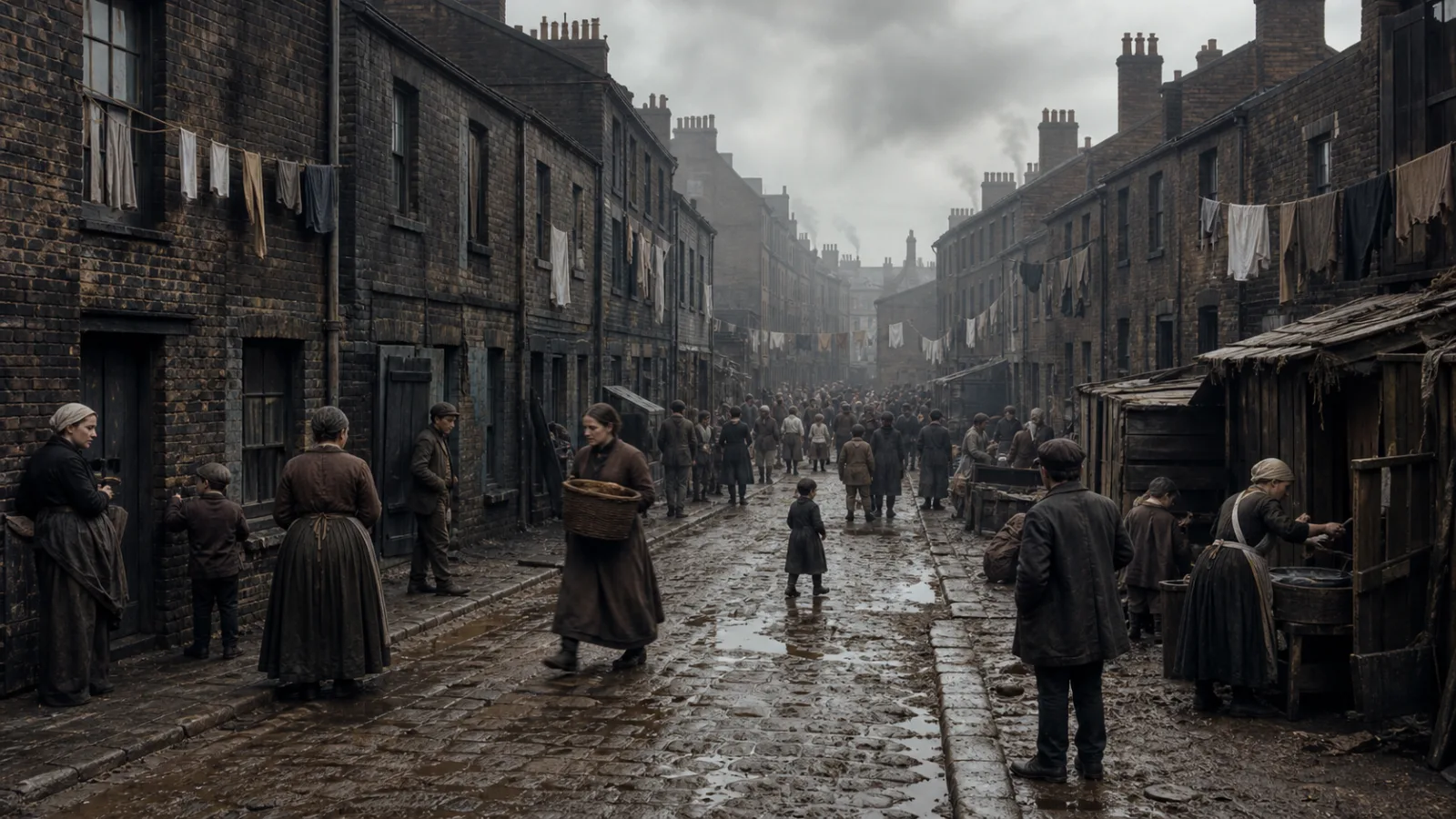
Whitechapel in the autumn of 1888 was one of the poorest districts in the world's richest city. Tens of thousands of people were crammed into a few square miles of slum housing, doss houses, and narrow courts that never saw direct sunlight. This was the era of the Industrial Revolution's long shadow — overcrowding, chronic unemployment, and a flood of immigration, much of it Jewish refugees fleeing persecution in Eastern Europe, which fed ugly undercurrents of xenophobia already running through the neighborhood. Many women survived through casual prostitution, trading a few pence for a bed in a lodging house for the night. It was a district the Victorian press already treated as a moral cautionary tale, patrolled thinly by a Metropolitan Police force whose officers walked fixed beats through streets barely lit by gas lamps.
It was in this world that a killer began operating, choosing — deliberately or not — a population that made detection extraordinarily difficult. Women working alone at night, in near-total darkness, in a maze of alleys and courtyards, with no witnesses expected and few questions asked when they went missing for an evening.
The Canonical Murders
The canonical murders — the ones most historians agree can be attributed to a single killer — begin with Mary Ann Nichols on the thirty-first of August. Eight days later, on the eighth of September, Annie Chapman is found in the back yard of a house on Hanbury Street, her body mutilated in a way the examining surgeon believed showed some anatomical knowledge.
Then, in a single night — the thirtieth of September, remembered as the "double event" — two women are killed within roughly an hour of each other. Elizabeth Stride is found in Dutfield's Yard, her throat cut but her body otherwise untouched, leading many to believe the killer was interrupted. Catherine Eddowes is found less than an hour later and less than a mile away in Mitre Square, mutilated extensively, her face disfigured, one kidney removed.
The final canonical victim is Mary Jane Kelly, murdered on the ninth of November — this time indoors, in the privacy of her own rented room at Miller's Court. Without the pressure of an open street, the killer had time. What responding officers found when they broke down her door was so severe that the case files note the attending doctor's reluctance to fully describe it in his official report.
How Many Victims Were There, Really?
Five women, officially. Yet the Whitechapel murders file held by Scotland Yard lists other killings from the same period — women like Martha Tabram, killed in early August, and Alice McKenzie and others in the years after — whose connection to the same killer remains disputed among historians. Some believe the true number of victims could be higher; others argue the canonical five is already generous, and that copycat killings or unrelated violence have been folded into the legend over time.
Clinical Evidence and Theatrical Claims
The surviving evidence is a strange mixture of the clinical and the theatrical.
On the clinical side are postmortem reports from police surgeons — some startlingly detailed for the era — describing wound patterns that suggested, to some examiners, anatomical knowledge, and to others, simply the frenzy of an unskilled attacker with a sharp knife and no interruption. Contemporary surgeons disagreed with each other then, and forensic historians still disagree now. There was no fingerprinting in 1888, no blood typing, no DNA. Investigators worked with magnifying glasses, notebooks, and their own eyes.
On the theatrical side: the letters. Hundreds poured into newspapers and the police, claiming to be from the killer himself. Most were almost certainly hoaxes written by journalists or opportunists craving attention. But two remain genuinely debated. The "Dear Boss" letter was the first to use the name "Jack the Ripper" and was sent to a news agency days before the double event. The "Saucy Jacky" postcard referenced the double murder in language some investigators believed could only have come from someone with inside knowledge — though this too is disputed, since details of the murders were already circulating in the press.
The Kidney in the Box
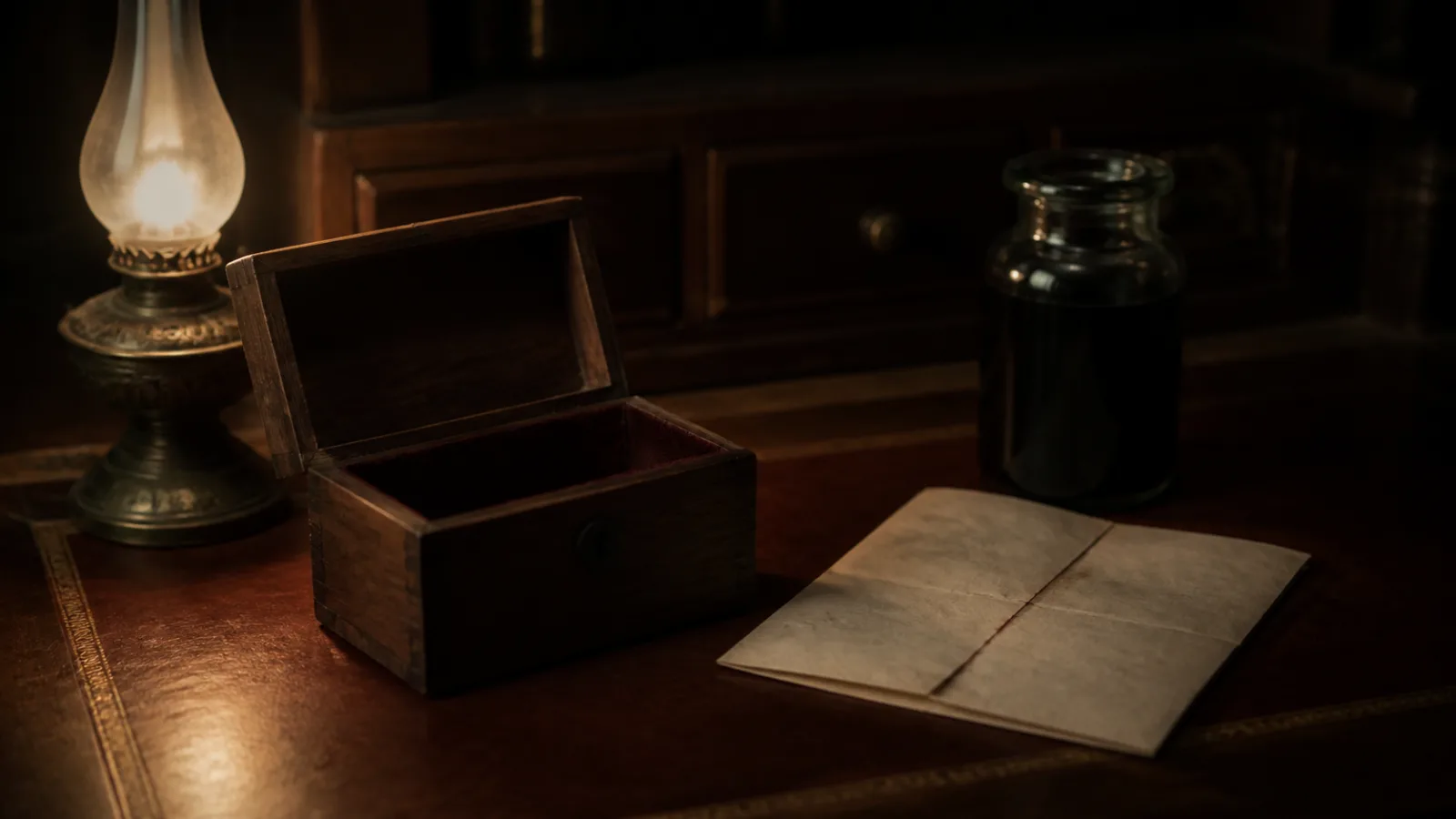
The most chilling physical artifact of the case is the "From Hell" letter, delivered to George Lusk, head of a local vigilance committee, along with a small box. Inside was half of a human kidney, preserved in spirits. The letter claimed it had been taken from one of the victims and, in crude, misspelled prose, boasted the rest had been fried and eaten.
Doctors who examined the organ at the time debated whether it matched the kidney missing from Catherine Eddowes. Some found the evidence suggestive; others pointed out that the preservation method was consistent with a medical or anatomical specimen readily obtainable at the time, not necessarily proof of authenticity. The kidney itself has since been lost, so modern forensic examination is impossible.
Eyewitnesses Who Never Quite Agree
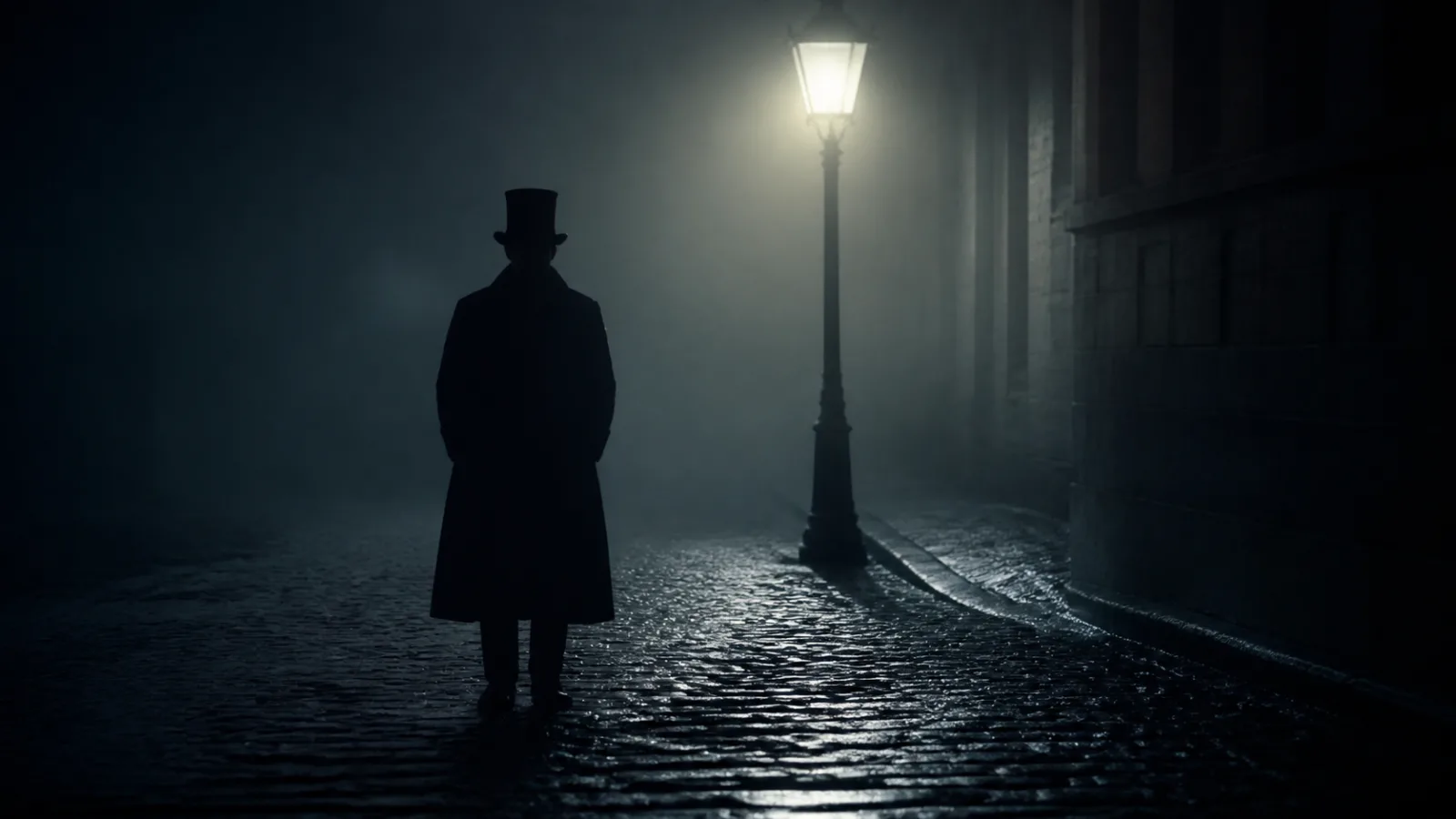
Several people reported seeing some of the victims in the company of a man shortly before their deaths — a man variously described as respectably dressed or shabby, foreign-looking or clearly English, wearing a deerstalker cap or a felt hat. The descriptions rarely agree with each other beyond a general impression: ordinary, unremarkable, a man who could disappear into a crowd.
This, more than any single clue, may be the most unsettling fact of the entire case. Whoever he was, he did not stand out.
An Investigation Hamstrung by Its Era
The Metropolitan Police investigation, led in large part by Inspector Frederick Abberline, was thorough by the standards of its day but limited by the tools available. Officers questioned thousands of people, tracked down butchers and slaughtermen whose professional skill with a blade made them natural suspects, and followed leads generated as much by public panic as by evidence. No one was ever charged. The case remains, officially, open and unsolved to this day.
Suspects and Theories
The official suspect list drawn up by police at the time included Montague John Druitt, a barrister who died by suspected suicide weeks after the final murder, whose family reportedly believed he was involved — though the evidence tying him to the crimes is thin and largely circumstantial.
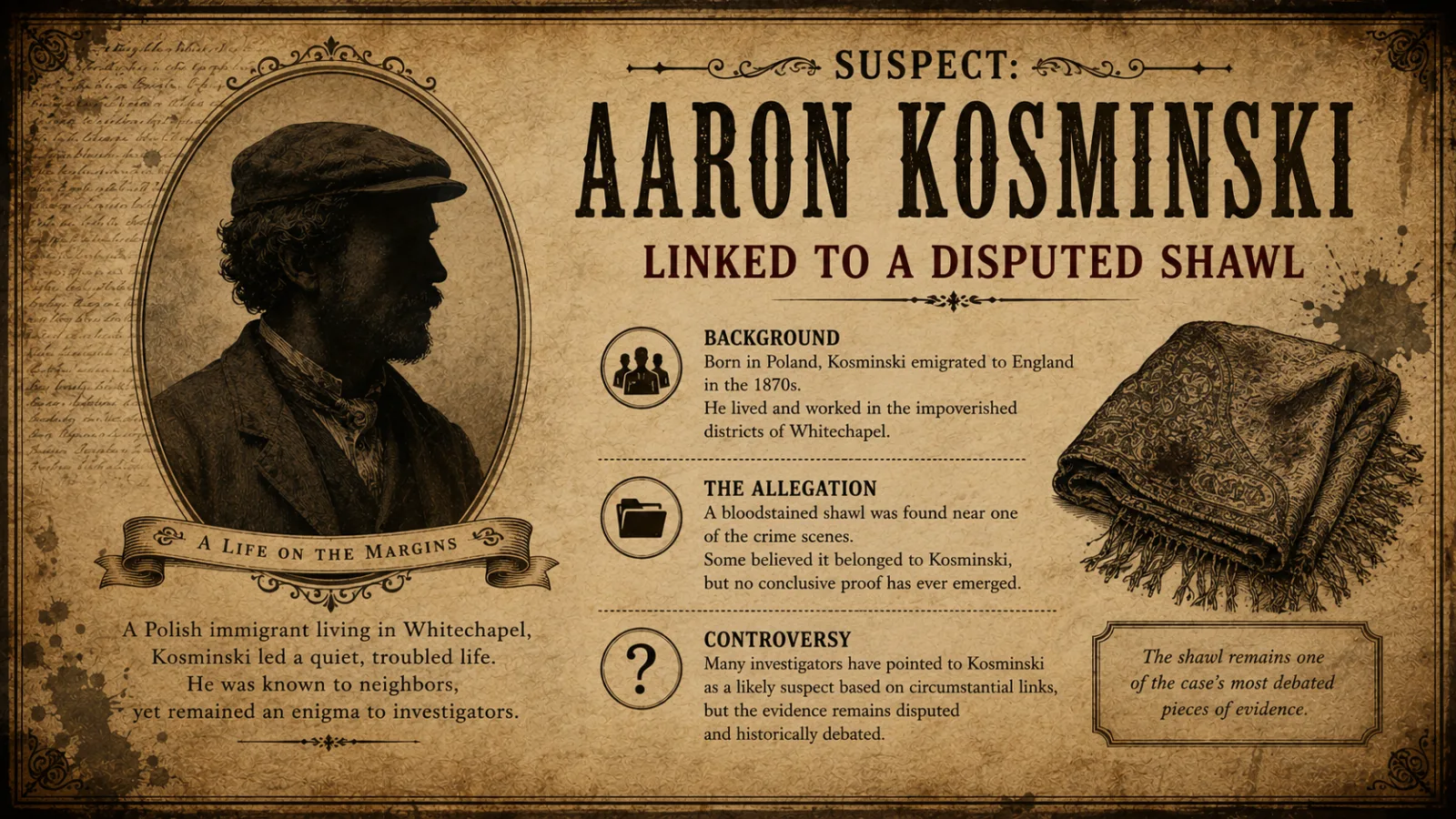
Another is Aaron Kosminski, a Polish Jewish immigrant living in the area who was later confined to an asylum. Kosminski has drawn renewed attention due to a controversial forensic analysis of a shawl said to have been found near Catherine Eddowes' body. In 2014 and again in 2019, researchers published DNA findings claiming a match between genetic material on the shawl and living descendants of both Kosminski and Eddowes. But the shawl's chain of custody before the twentieth century is not verifiably documented, its authenticity as crime scene evidence has been seriously challenged by other historians and scientists, and the DNA methodology itself has drawn criticism for its handling of degraded, heavily contaminated genetic material spanning more than a century. It is, at best, suggestive — not conclusive.
Beyond the official suspects, more than a hundred names have been proposed over the decades, ranging from the plausible to the absurd: a physician with anatomical training, a foreign sailor passing through the docks whose movements might explain the sudden start and stop of the murders, even prominent Victorian figures tied to royal conspiracy theories involving the royal physician or members of the royal family. These royal theories gained popular traction in the twentieth century but are dismissed by most serious historians for lacking credible documentary support — they say more about the era's appetite for scandal than about the actual killer.
The Mundane Explanation
The explanation favored by many historians today is perhaps the least satisfying and the most likely: an ordinary man, local to the district, with no special training, who killed opportunistically under cover of darkness and poverty, and who either died, was institutionalized, or emigrated shortly afterward — which would neatly explain why the murders simply stopped.
That may be the truest fact of this entire case. The murders stopped not because anyone caught him, and not because a confession was ever made. They simply ended in November 1888, and the man responsible walked back into the same fog and darkness he'd emerged from — unnamed, unpunished, and unknown.
Somewhere in London that winter, a man went to sleep in an ordinary bed, in an ordinary room, having done what he did — and no one ever came for him. He may have died within the year. He may have lived to see the new century. We will likely never know which. And that is the question this case leaves behind, more than any name or theory ever could: not who he was, but how close everyone in that city might have unknowingly stood beside him.