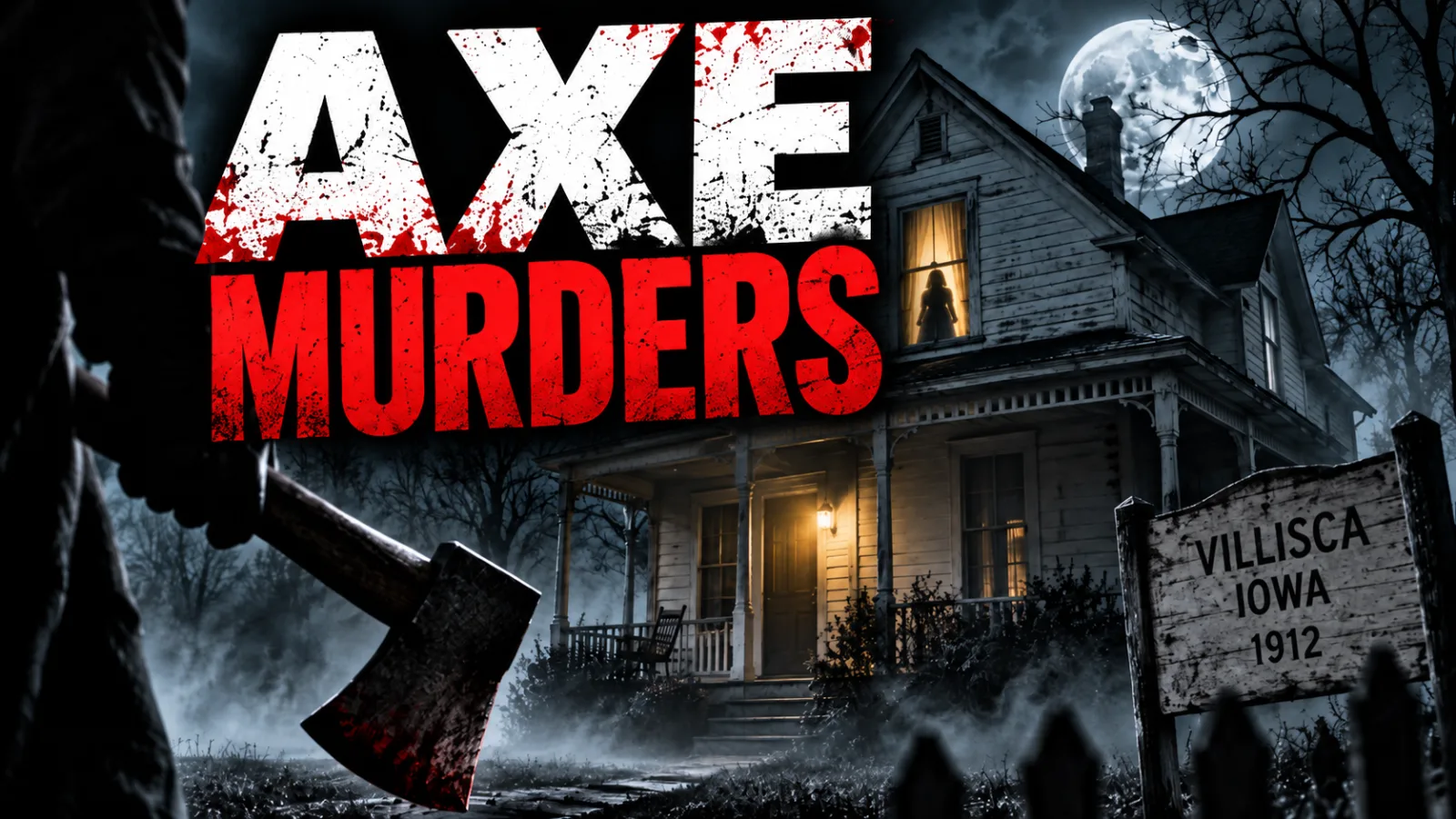
It's just past midnight in Villisca, Iowa, on a warm June night in 1912. Inside a small white house on Fourth Street, eight people are asleep. By sunrise, all eight will be dead, killed with the blunt edge of an axe as they slept.
The killer covered every mirror in the house. He left a slab of uncut bacon by the back door. And then he vanished completely, leaving behind one of the most brutal unsolved mass murders in American history.
Who did this, and why, remains a mystery that has haunted this small farming town for over a century.
A Town Where Nothing Happened
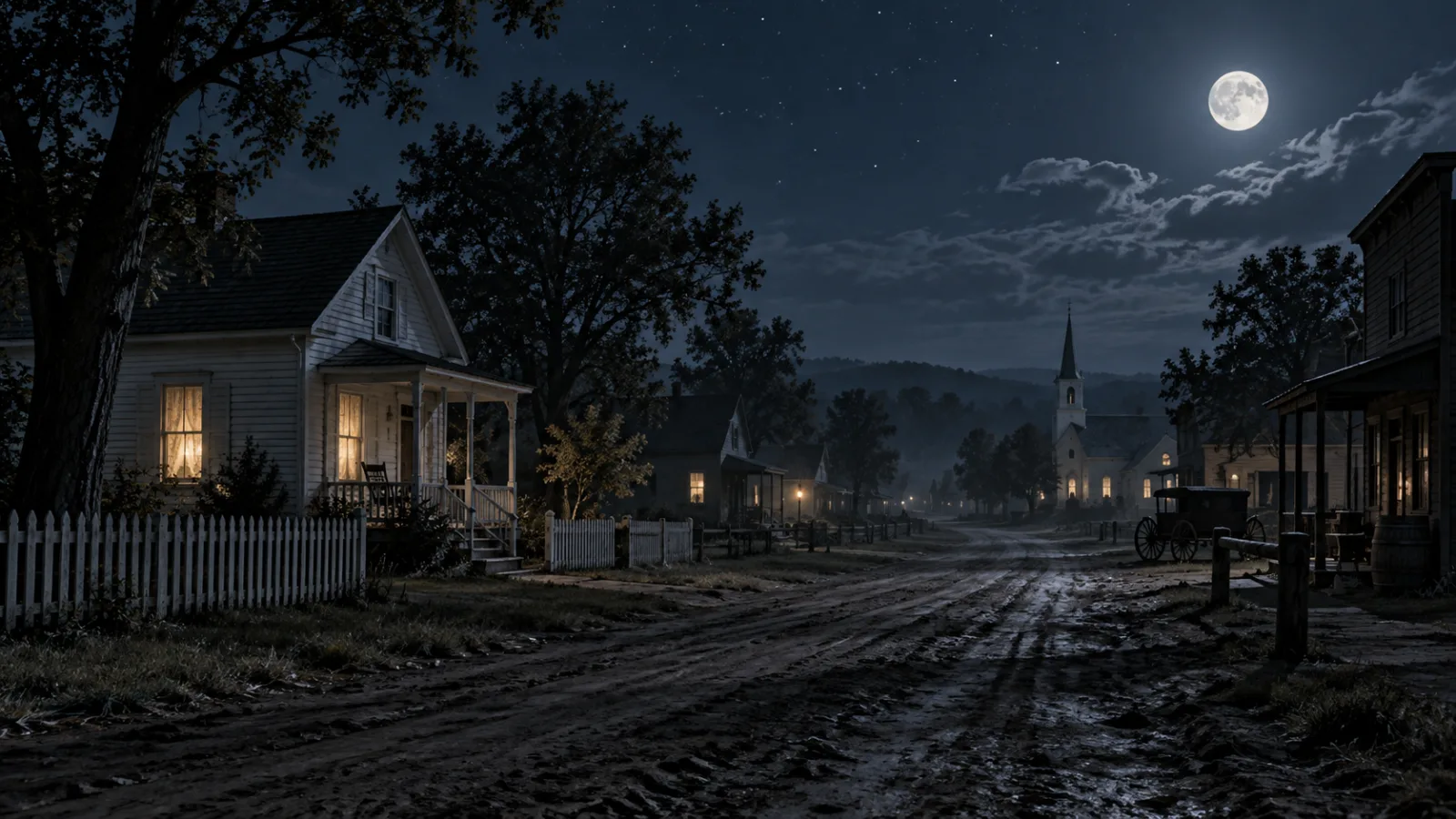
To understand what happened that night, you have to understand Villisca itself. In 1912, it was a modest, close-knit town of around 2,500 people in the rolling farmland of southwestern Iowa. Doors were left unlocked, everyone knew everyone, and nothing more dramatic than a bad harvest usually made the local paper.
The Moore Family
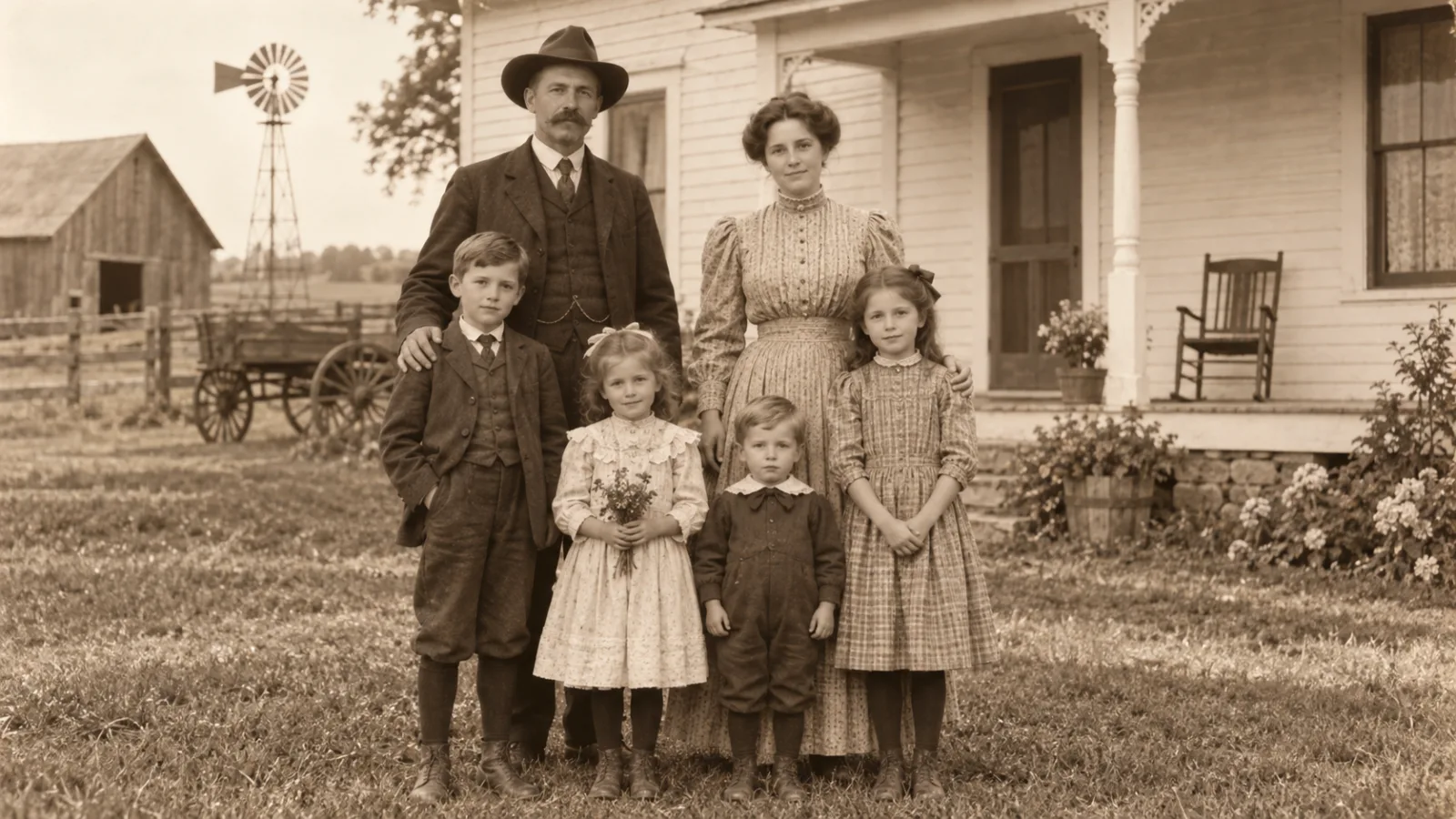
The Moore family was well known and well liked. Josiah Moore ran a successful farm implement business. His wife, Sarah, was active in the community. They had four children, Herman, Katherine, Boyd, and Paul, ranging in age from five to eleven.
On the evening of Saturday, June 9, the Moores attended a children's program at the local Presbyterian church, where Sarah taught Sunday school. Afterward, they invited two of Katherine's young friends, sisters Ina and Lena Stillinger, ages eight and twelve, to spend the night. It was a simple act of small-town hospitality.
The girls walked home with the Moore family sometime after ten o'clock. It was the last time any of the eight would be seen alive.
The Discovery
The next morning, a neighbor named Mary Peckham noticed something wrong. The Moore children hadn't come outside. The chickens hadn't been fed. The curtains, usually opened by this hour, were drawn shut. She knocked, and no one answered. Growing alarmed, she eventually reached Ross Moore, Josiah's brother, who came and unlocked the door.
What he found inside would shock the entire country.
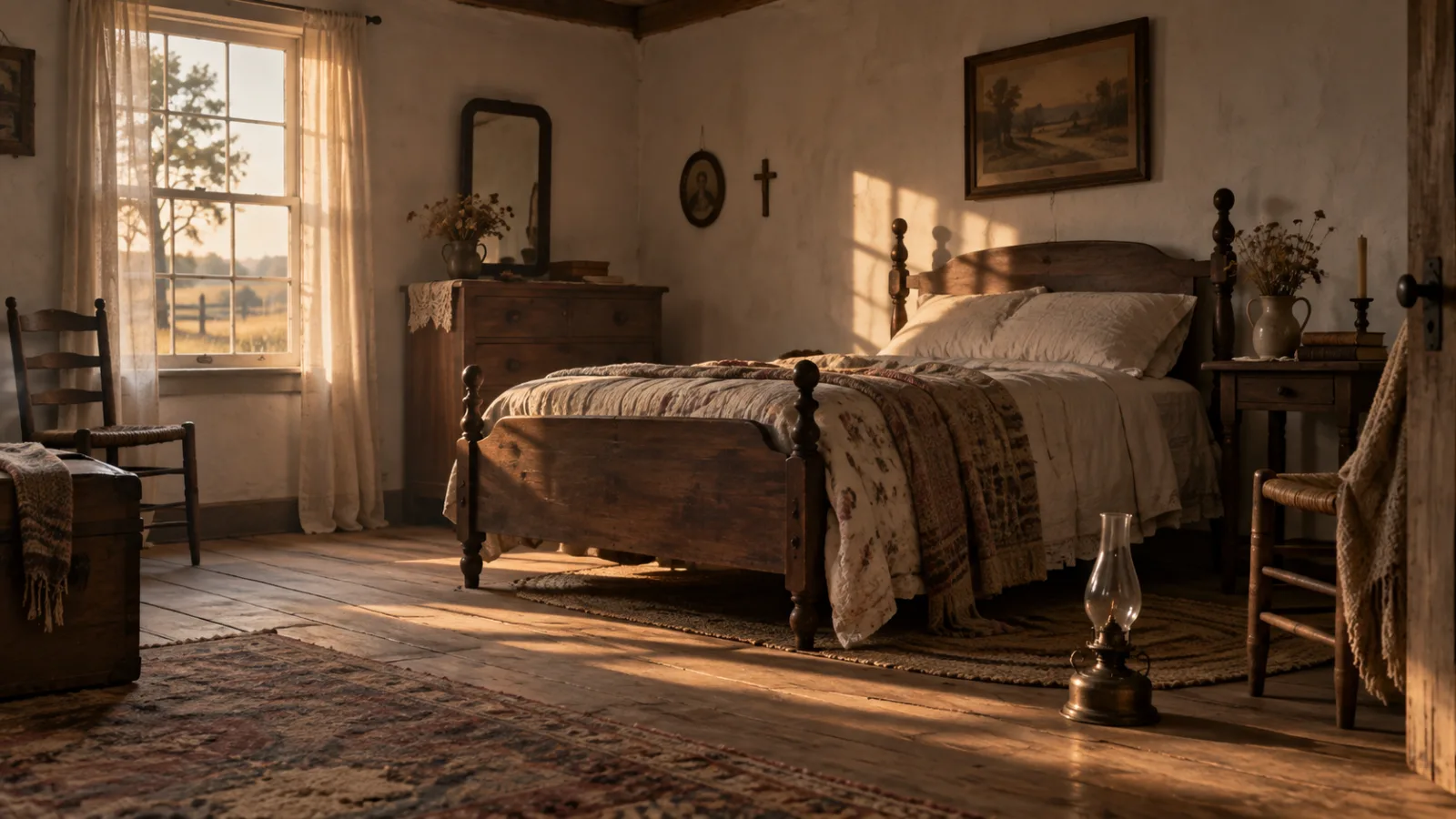
In the two upstairs bedrooms, all eight victims lay dead, killed with an axe, apparently while they slept. Josiah and Sarah Moore were found in their bed. Their four children lay together in another room. The two Stillinger girls were found in a bed in a smaller room. Investigators would later determine that the killer had likely struck the parents first, then moved methodically from room to room.
Strange Details at the Scene
The physical scene left investigators with more questions than answers.
- The weapon: The axe belonged to the Moores themselves. It had been wiped down but remained identifiable, resting near a bed.
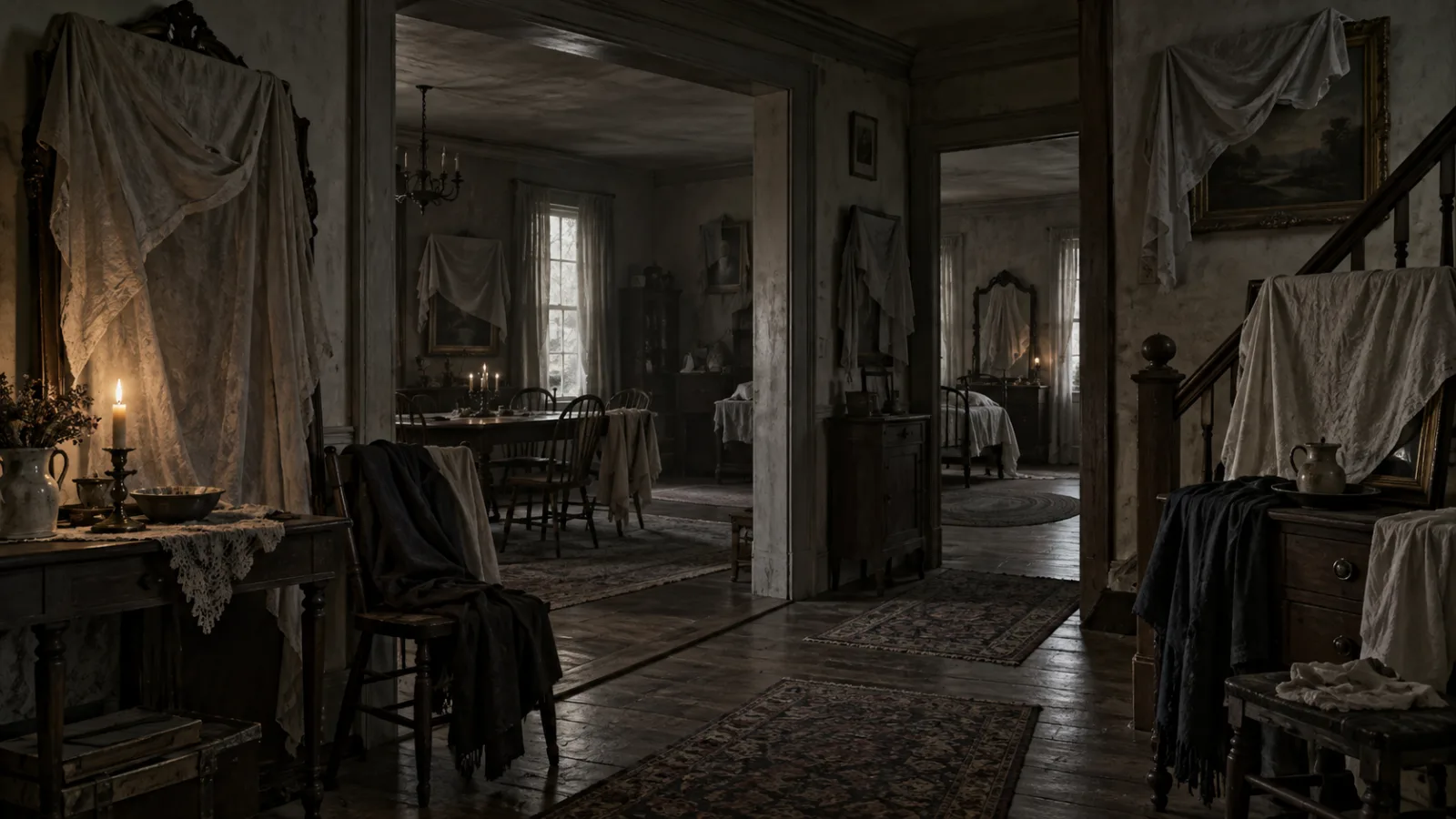
- Covered mirrors: Every mirror and glass surface in the home had been covered with clothing or cloth, apparently by the killer. No one has ever offered a confirmed explanation for why.
- Bloody water: A pan of bloody water sat in the kitchen, suggesting the killer had paused to wash before leaving.
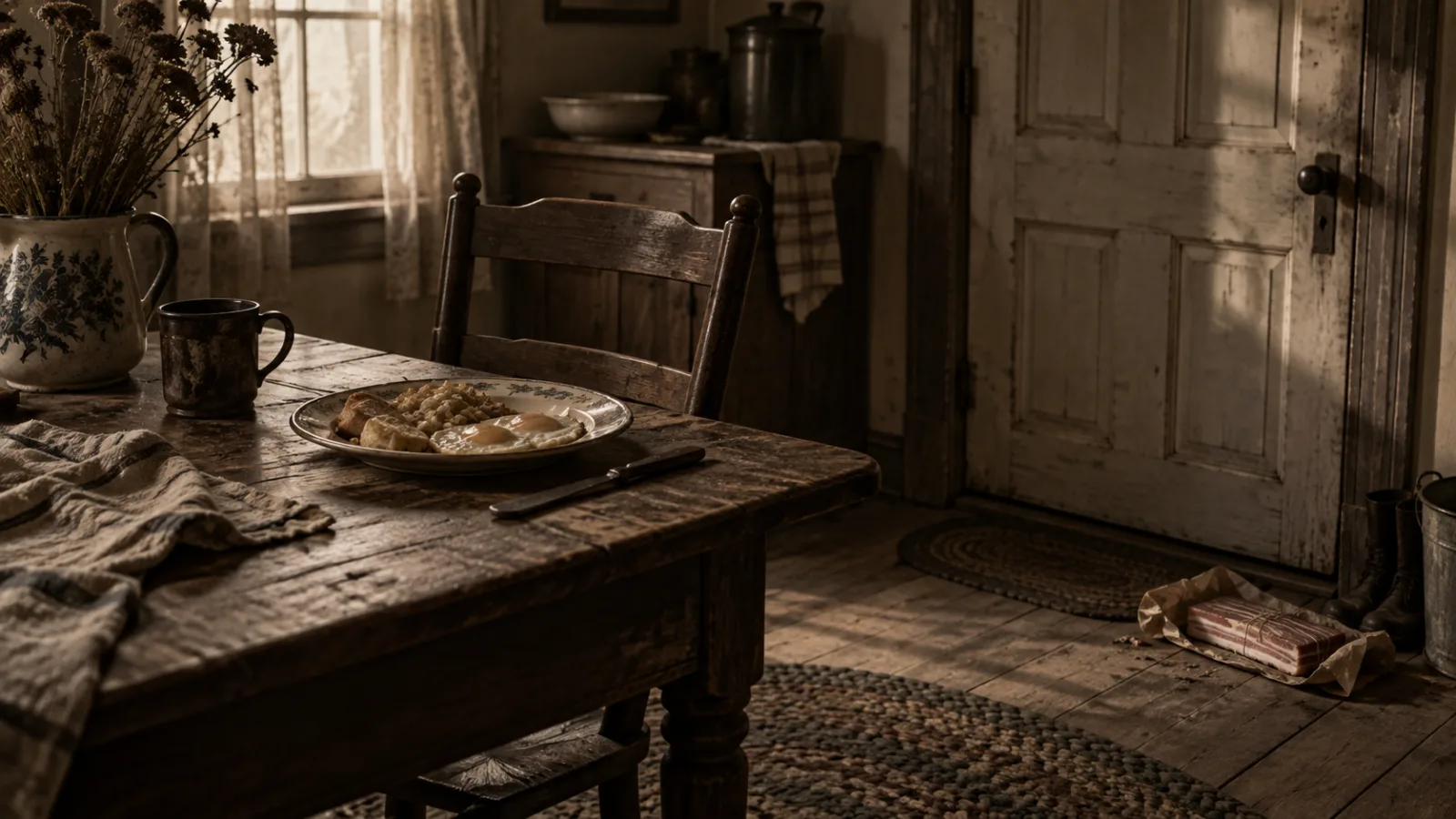
- Food: A plate of uneaten food sat on the table, along with that unexplained slab of bacon near the door, an oddly domestic detail in the middle of a slaughter.
- Blocked doors: The killer had blocked the doors from the inside using household items.
- The lamp: A lit oil lamp with its chimney removed had been left behind, as though it had guided him through the dark rooms.
Perhaps most disturbing, medical examiners concluded that the two younger Stillinger children had not been killed immediately. Evidence suggested Lena Stillinger may have woken and tried to fight off her attacker, based on the position of her body and defensive wounds, though she, like everyone else, ultimately succumbed to the same brutal method.
There was no evidence of theft. Money and valuables inside the home were untouched. This wasn't a robbery. It was something else entirely, and investigators of the era had almost no forensic tools to explain what.
A Botched Investigation
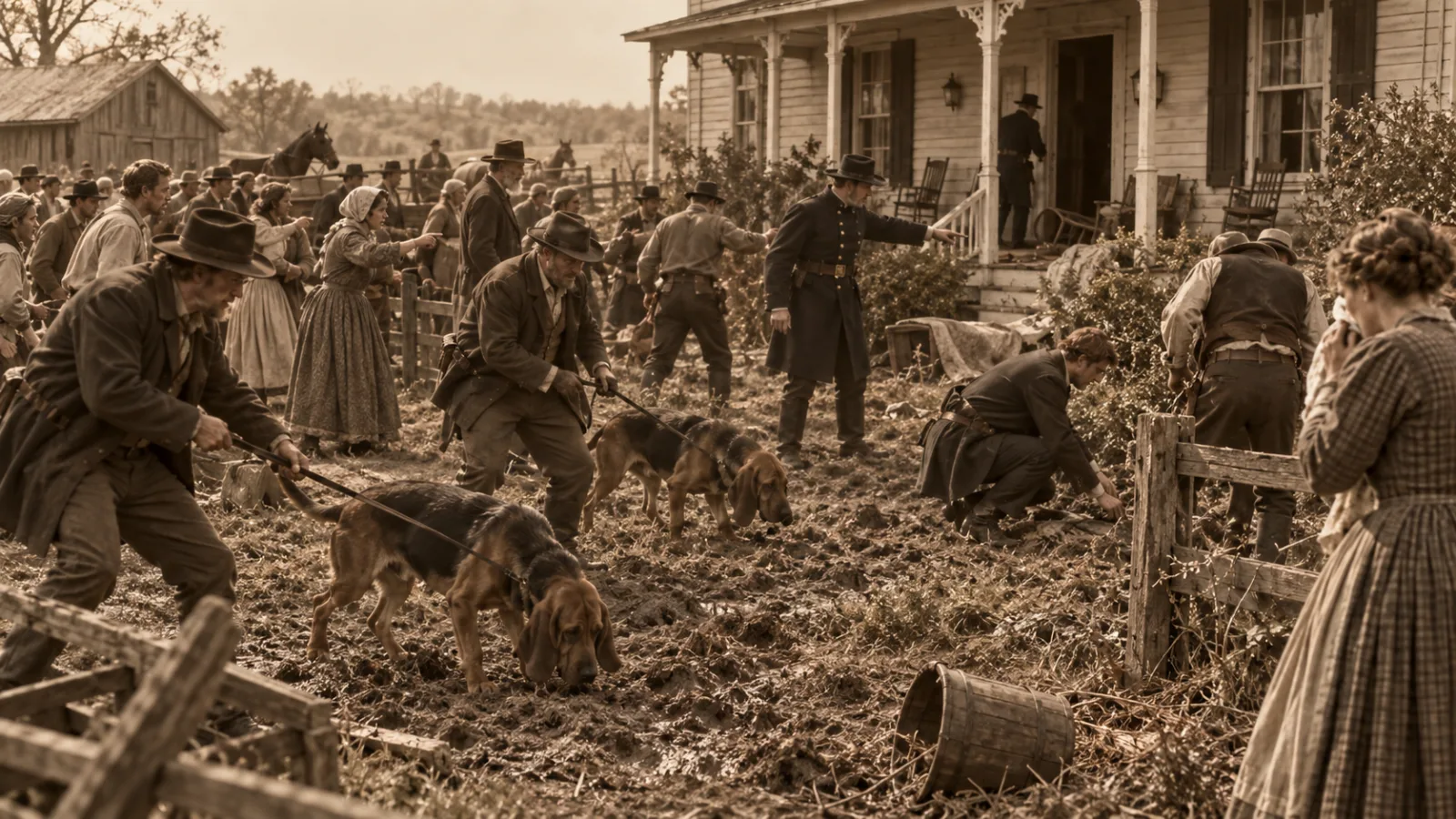
News of the murders spread fast, and so did fear. Villisca was gripped by suspicion almost overnight. The local sheriff, without significant experience in a case of this scale, struggled from the outset. Bloodhounds were brought in. Crowds of curious townspeople reportedly trampled through the crime scene before it could be properly preserved, destroying whatever physical evidence might have remained.
In an era before fingerprinting was widely used and decades before DNA analysis existed, investigators were left largely with witness accounts, rumor, and speculation.
The Suspects
Several suspects emerged over the following years, and each theory reveals something different about the case's persistent uncertainty.
Frank Jones and William Mansfield
The first was a state senator named Frank Jones. Josiah Moore had once worked for Jones' farm implement business before leaving to start his own competing company, reportedly taking a lucrative account with him. Some believed Jones held a grudge intense enough to want Moore dead. Suspicion also fell on a possible affair Josiah may have been having, connected to Jones' family, which some theorized gave Jones even more motive.
A private detective named James Wilkerson pursued this theory aggressively for years, eventually helping bring an associate of Jones, a man named William Mansfield, to trial as the alleged hired killer. Mansfield was tried twice. Both times, he was acquitted. The evidence tying him to the murders was thin and largely circumstantial, and to this day no credible physical evidence has ever linked Jones or Mansfield directly to the scene.
Reverend George Kelly
Then there was Reverend George Kelly, a traveling minister with a documented history of erratic and disturbing behavior, including previous run-ins with authorities related to sending obscene letters. Kelly had been in Villisca the night of the murders and left town early the next morning.
Years later, under prolonged and aggressive interrogation, he gave a confession describing the murders in detail. But Kelly was known to be mentally unstable, and his confession contained inconsistencies. He recanted almost immediately afterward, claiming he'd been coerced.
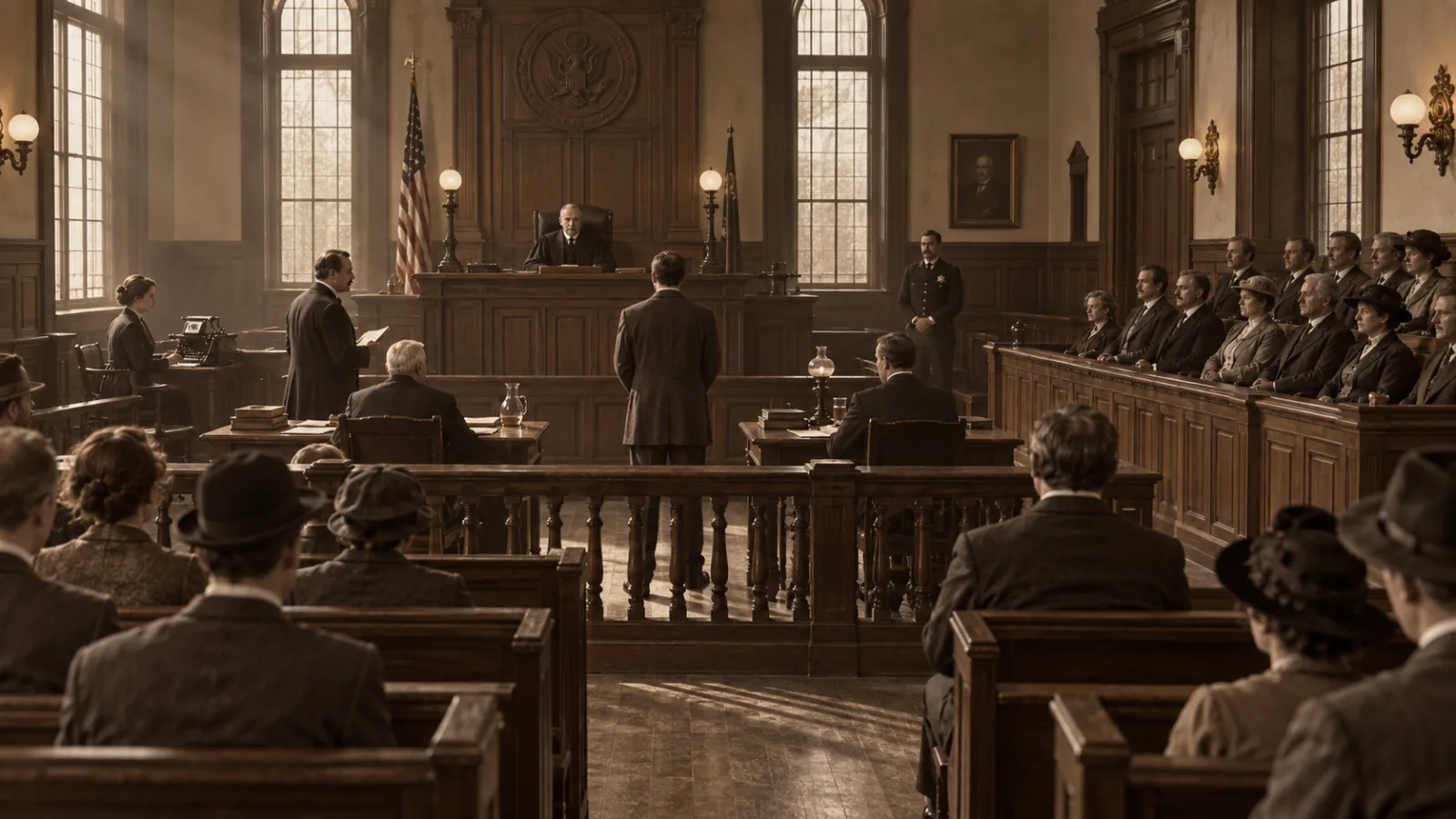
Despite this, he was tried, and in his second trial, in 1917, he was convicted. Many at the time and since have questioned whether that conviction reflected genuine guilt or simply the desperate need of a terrified town to close the case. He was released after roughly one year.
A Traveling Killer?
Other theories point outward entirely. Some researchers have connected the Villisca killings to a string of similar unsolved axe murders that occurred across the Midwest and even into the South between roughly 1911 and 1912, in towns along rail lines. That raises the unsettling possibility of an unidentified traveling serial killer.
The method, timing, and the covering of mirrors bore resemblance to a few other cases, though no conclusive links have ever been proven, and the pattern remains debated among historians and criminologists to this day.
What Remains Unknown
No one was ever definitively convicted and made to stay convicted. No confession has ever fully matched the physical evidence. No forensic technology, then or since, has produced a verified identification of the killer. The case remains, officially, unsolved.
What we're left with are fragments. A slab of bacon by the door. Covered mirrors. A lamp with its chimney removed, carried carefully from room to room by someone who wanted to see clearly what he was doing. A killer who left the money in the house and instead worked in near-total silence and darkness, ensuring that no one would look back at him, or that he wouldn't have to look at himself.
The House Today
The house still stands on Fourth Street in Villisca, restored to its 1912 condition. It draws visitors from around the world, some drawn by the history, others by reported unexplained occurrences that have made it one of the country's most talked-about reportedly haunted locations.
Whatever people experience there, the true unsolved element isn't paranormal. It's factual. Somebody walked into that home in the middle of the night, killed eight people in near total silence, deliberately blocked out every reflection of themselves, and walked away into the dark without ever being caught.
More than a century later, the identity of that person has never been confirmed. And in an upstairs bedroom of that quiet house, an oil lamp still sits where investigators found it, chimney removed, as if whoever carried it that night simply set it down, and never came back to explain why.