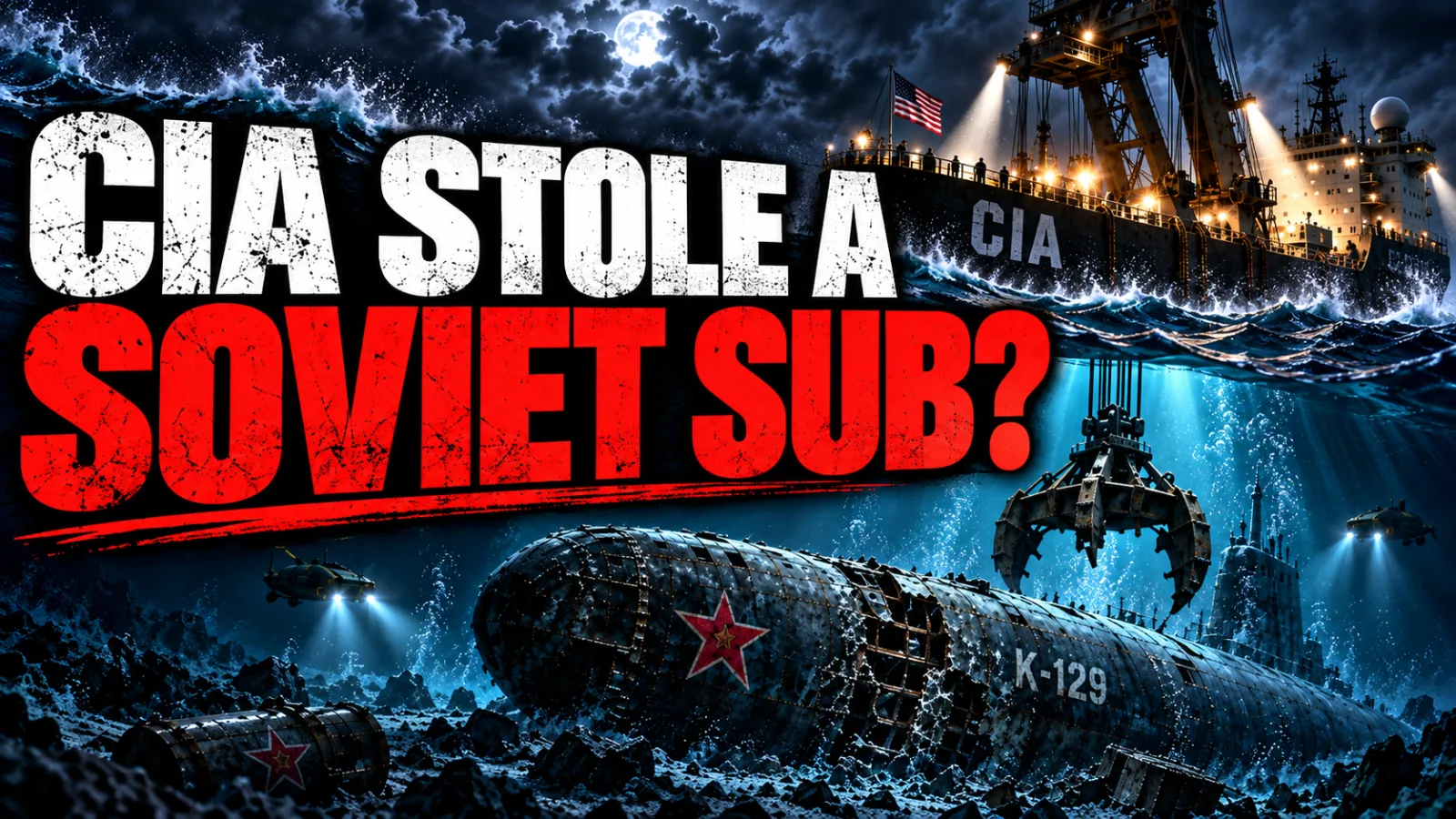
In March 1968, somewhere in the North Pacific, roughly sixteen hundred miles northwest of Hawaii, a Soviet Golf-class submarine designated K-129 was running on the surface. It was doing what Soviet ballistic missile submarines did during the Cold War: quietly patrolling, ready to launch nuclear weapons at a moment's notice. Then, without any warning anyone can point to, it sank.
All ninety-eight men aboard were lost. Three nuclear-tipped ballistic missiles went down with the boat, along with its codebooks and cryptographic gear. The Soviet Navy searched for weeks and found nothing. They did not know precisely where their own submarine was.
The United States did.
What followed was a six-year, multi-agency, billion-dollar effort by the Central Intelligence Agency to reach into the deepest part of the ocean, grab a sunken enemy warship by the hull, and lift it into the light. It involved a reclusive billionaire, a purpose-built ship unlike anything the world had seen, and a cover story so convincing that journalists chased it for years without knowing the truth. At the center of it sits a question that has never been fully answered: what did the CIA actually pull out of that submarine, and what does the government still refuse to say?
Why a Sunken Submarine Mattered
The Cold War was not an abstract standoff. It was two nuclear superpowers each trying to know exactly what the other had, where it was, and how it worked. A sunken Soviet submarine was not just a wreck. It was a physical object packed with some of the Soviet Union's most closely guarded secrets: missile technology, warhead design, cipher machines, and codebooks that could unlock years of intercepted Soviet communications.
For American intelligence, K-129 was not a grave. It was a vault.
The USS Halibut Finds the Wreck
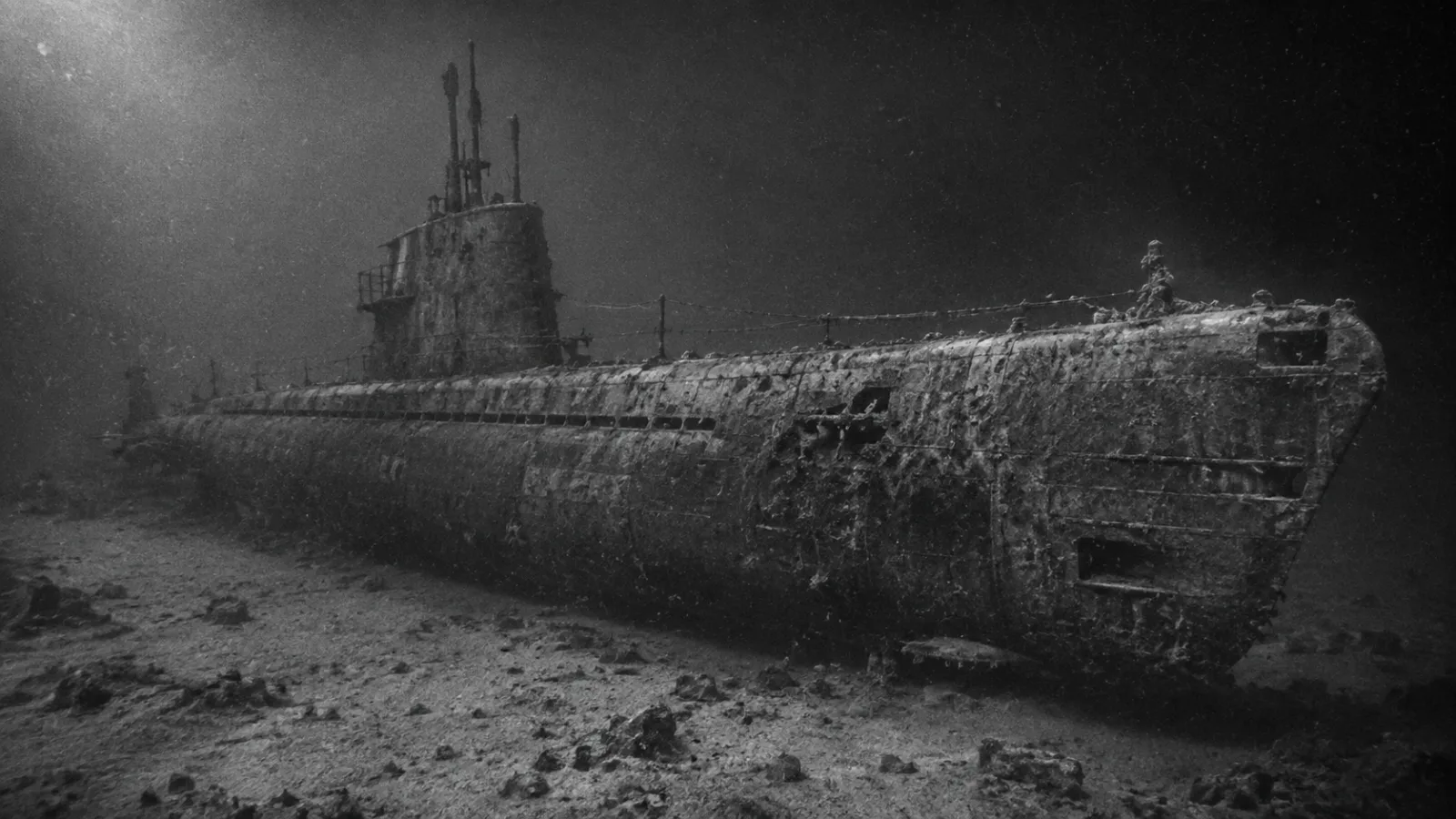
The U.S. Navy located the wreck a few months after it sank, using a specialized submarine, the USS Halibut, equipped with towed cameras capable of photographing the ocean floor. K-129 lay roughly 16,500 feet down, more than three miles beneath the surface. Photographs showed the hull largely intact on the seabed.
For the Navy, that was as far as it could go. No recovery technology existed that could lift a two-thousand-ton submarine from that depth. It was beyond the reach of any salvage operation ever attempted.
The CIA Takes Over
That is when the CIA stepped in, not the Navy, and the detail matters. This became an intelligence operation rather than a military one, run under the kind of secrecy usually reserved for the agency's most sensitive espionage programs.
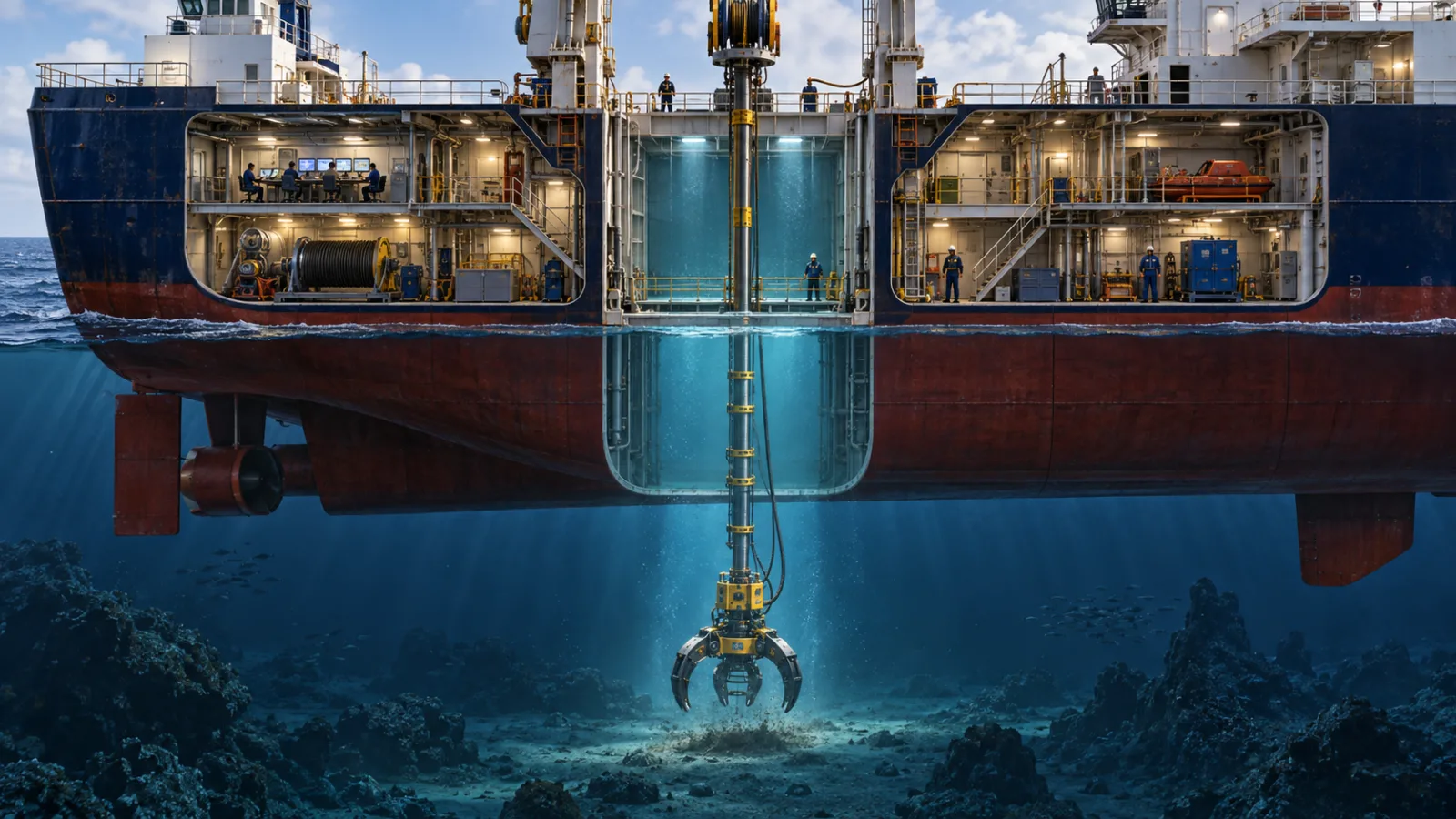
The plan was audacious even by Cold War standards: build a ship specifically designed to lower a massive mechanical claw three miles down, close it around the broken hull of a Soviet submarine, and hoist the whole thing into a concealed compartment in the ship's belly. And do it all without the Soviets realizing what was happening in international waters above their lost submarine.
Engineering the Impossible Lift
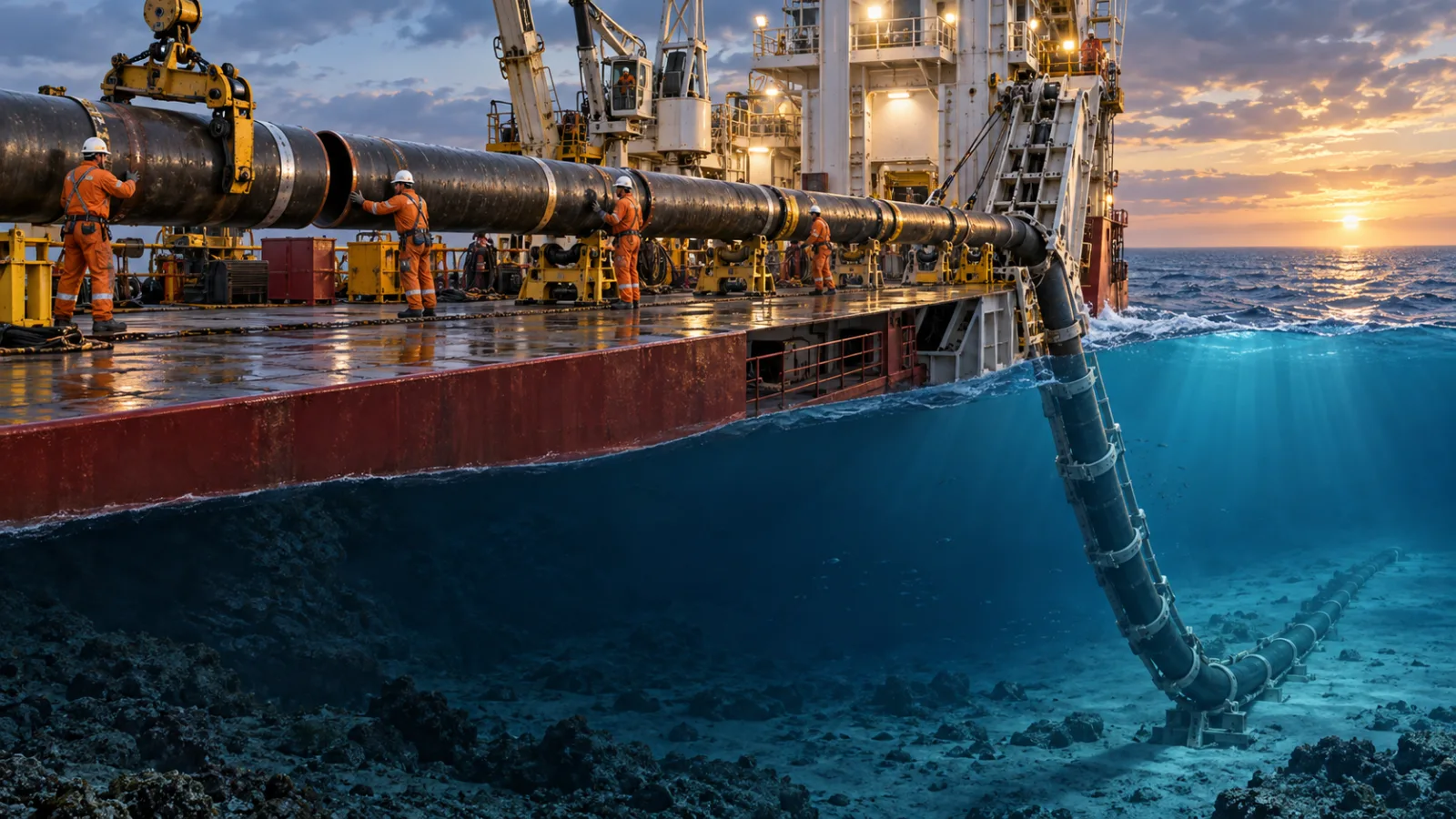
The engineering problem alone was staggering. No one had ever tried to lift an object that heavy from that depth, and the pressure at sixteen thousand feet is immense. The lifting pipe had to be built in sections and assembled continuously as it descended, essentially constructing and disassembling a steel pipeline three miles long, over and over, for every dive.
The claw itself, which engineers named Clementine, had to grip an unevenly shaped, corroded submarine hull and hold it together during a lift where any structural failure would send everything back to the ocean floor.
Howard Hughes and the Perfect Cover Story
Operating a ship like this required a cover story that could survive years of public scrutiny. Howard Hughes was already known as an eccentric billionaire with interests in aerospace, drilling technology, and reclusive secrecy of his own, which made him an ideal public face for the operation. The agency approached the Hughes organization, and Hughes agreed to lend his name.
The story told to the public, and to much of the maritime industry, was that Hughes was funding a groundbreaking commercial venture: a ship called the Glomar Explorer, designed to vacuum manganese nodules from the deep ocean floor.
Why the Mining Story Worked
Manganese nodules were a genuinely hot topic in ocean science at the time. These potato-sized mineral deposits, rich in manganese, nickel, copper, and cobalt, litter parts of the deep seabed, and in the late 1960s and early 1970s there was real commercial and scientific interest in mining them.
That is what made the cover believable. It was not a wild fabrication invented from nothing. It was a plausible, timely business idea wrapped around a genuinely enormous ship, funded through Hughes's company, Global Marine Development. The Glomar Explorer was real. It sailed. It had a real crew who, in most cases, believed they were working on a mining vessel. Only a small number of people aboard knew its true purpose.
Inside the Glomar Explorer
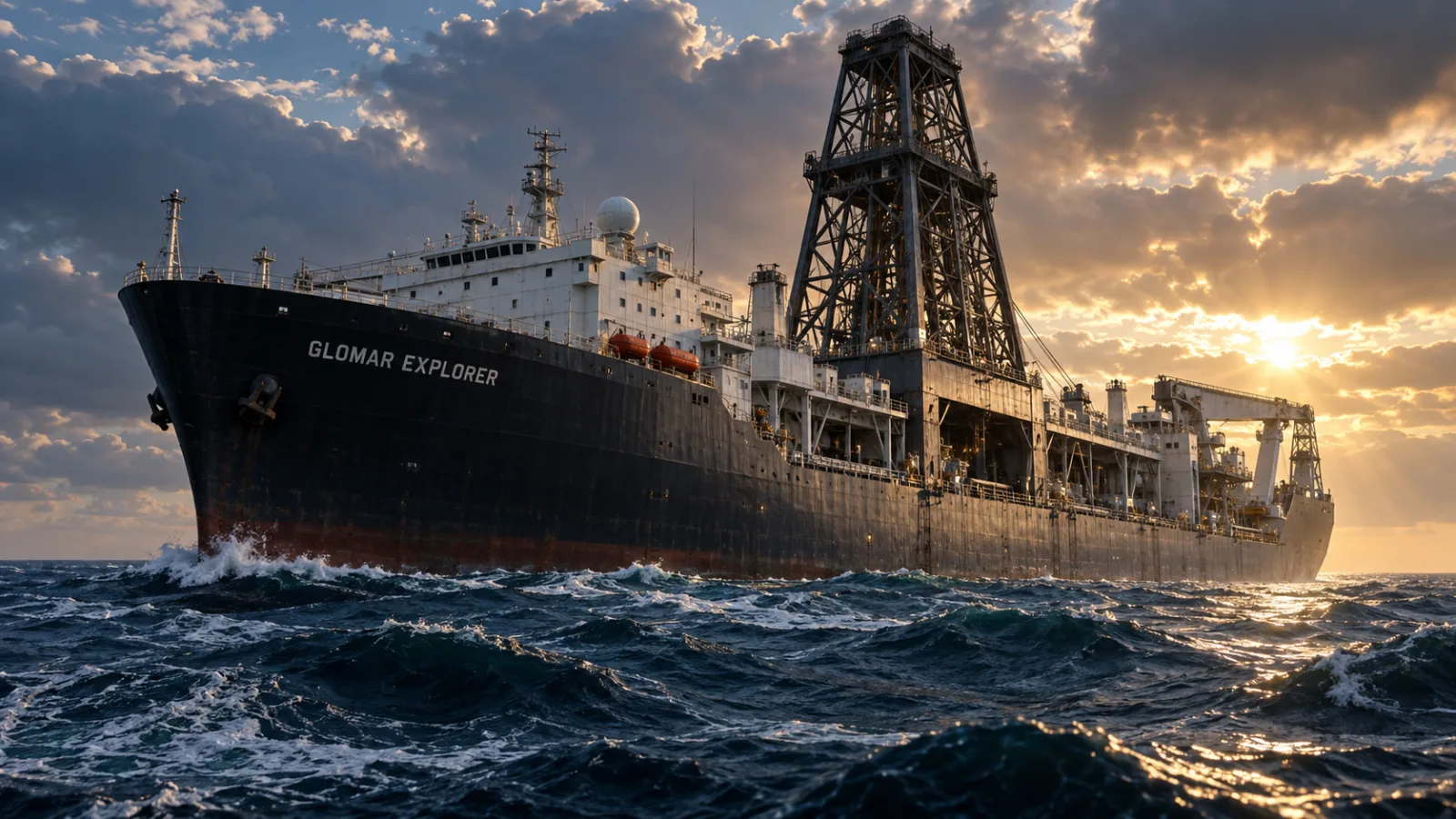
The ship was a marvel of engineering regardless of its secret mission. It stretched more than six hundred feet, with a massive center well, essentially a moon pool, built into its hull. The recovery pipe and claw could be lowered directly beneath the ship, hidden from satellite and surface observation.
Above the moon pool sat docking legs and a derrick, all disguised within the profile of what looked, from a distance, like an unusually large drilling or mining vessel. It was built primarily at shipyards on the American east coast and in California, then sailed around South America to the recovery site because it was too wide for the Panama Canal.
The 1974 Recovery Attempt
The recovery itself took place in the summer of 1974, six years after K-129 sank. The Glomar Explorer arrived at the site and began the painstaking process of lowering Clementine on its pipe string, section by section, toward the wreck far below. Lowering and later raising the claw took days, with the crew assembling and disassembling pipe sections around the clock, all while maintaining the fiction, even among most of their own shipmates, that this was a mining operation.
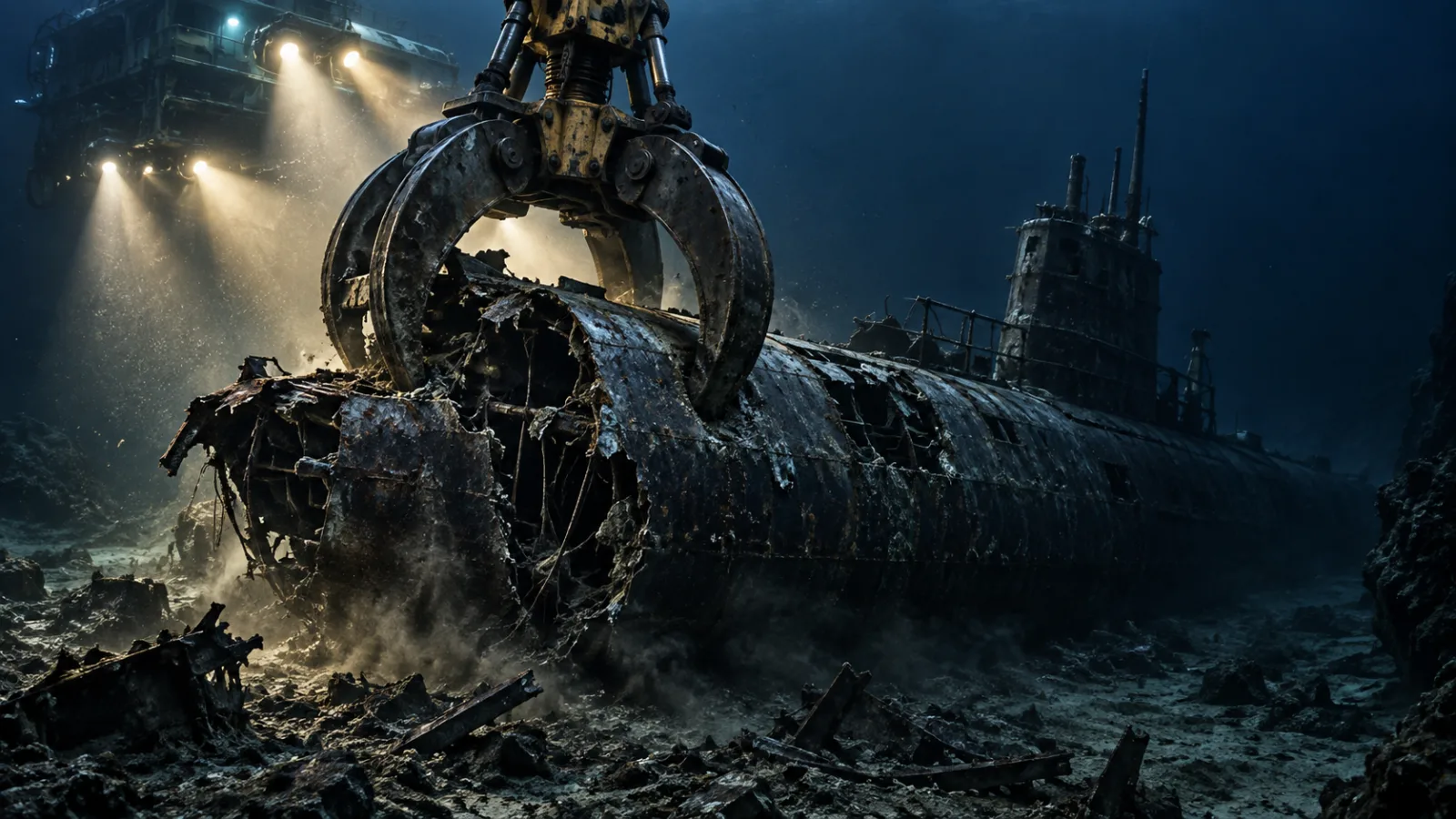
According to declassified CIA summaries released decades later, the claw did reach the submarine and did grip a significant portion of the hull. Then, during the lift, as the wreck was drawn up through three miles of open ocean, part of the submarine broke apart. A section of the hull separated and fell back to the seafloor. The rest continued upward, into the ship's recovery bay.
What the CIA Actually Recovered
This is where the documented record becomes deliberately thin, and where the mission's central mystery lives.
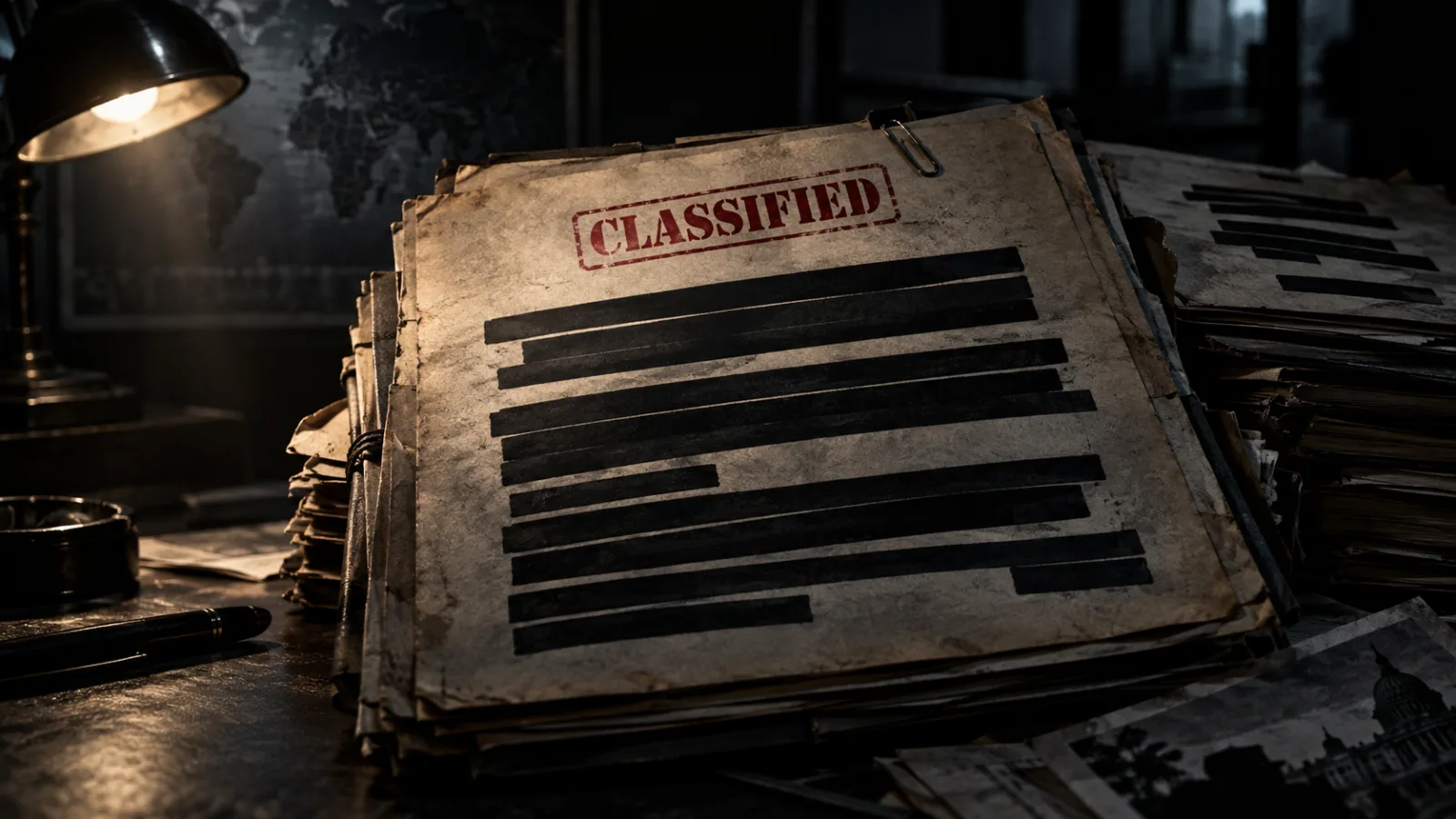
The CIA has confirmed, through a partially declassified 1985 internal history released in heavily redacted form, that a portion of the submarine was recovered. Official statements and later reporting indicate that the section brought aboard included at least some torpedoes and reportedly the remains of Soviet sailors. Those remains were later given a formal burial at sea, conducted with military honors and, according to CIA accounts, filmed for the record. In 1992, the United States quietly gave a videotape of that ceremony to Russian President Boris Yeltsin, a gesture widely interpreted as an implicit acknowledgment of what had happened.
But what else came up in that hull section has never been fully confirmed publicly. The open questions include:
- Did any part of the nuclear missiles survive intact enough to be examined?
- Were codebooks or cryptographic equipment recovered?
- Was any usable intelligence about Soviet missile guidance or warhead design obtained?
The CIA's later assessments, referenced in partial declassifications, have suggested that the intelligence value of what was recovered was limited, since the missile section and much of the forward part of the vessel were reportedly among the pieces lost when the hull broke apart. But limited is not nothing, and the agency has never released a full, detailed accounting of what was examined, what was learned, and what remains classified.
The Leak and the Birth of the Glomar Response
The cover very nearly held permanently. It began to unravel not because of Soviet intelligence, but because of a break-in. In June 1974, burglars broke into the offices of the Summa Corporation, Howard Hughes's company, and stole documents that referenced the Glomar Explorer's true purpose. Some of those documents circulated, and journalists began investigating.
Reporter Jack Anderson broke elements of the story in early 1975, and the Los Angeles Times and other outlets followed. The CIA asked news organizations to hold back full details for national security reasons, and several did for a time. But the essential truth became public: Project Azorian had been a submarine recovery operation disguised as a mining venture.
The episode is also the origin of a phrase still used in American law: the Glomar response. When the Los Angeles Times filed a Freedom of Information Act request for CIA records related to the Glomar Explorer, the agency refused to confirm or deny that any such records existed. That non-answer became a legally recognized standard, still cited by federal agencies responding to sensitive information requests half a century later.
What We Know and What We Don't
Here is what the record supports:
- K-129 sank in 1968 and was located by the Navy shortly afterward.
- The CIA, not the Navy, built an entire recovery program around it, using Howard Hughes and a fabricated mining narrative as cover.
- The Glomar Explorer and its claw were real, and a partial recovery occurred in 1974.
- The hull broke apart during the lift, and some portion, apparently including torpedoes and the remains of Soviet crew members, was brought aboard. Footage of the burial was later given to Russia.
And here is what the government has never said:
- The full technical and intelligence content of what was examined aboard the ship.
- How much of the missile and code equipment made it into the recovered section versus what fell back into the deep.
- The complete contents of the CIA's internal assessment of the mission's success, since large portions of related documents remain classified even in released form.
- Whether a second recovery attempt, sometimes referred to in later reporting as Project Matador and aimed at retrieving the rest of the wreck, ever moved beyond planning, or was quietly abandoned once the story went public.
Somewhere at the bottom of the Pacific, more than three miles down, a piece of a Soviet submarine still rests where it fell in 1974, broken away from the claw that almost carried it into the light. The CIA got close enough to touch history. What it actually held onto, even for a moment, before deciding what the world would never be told, is still locked in a file almost nobody outside a small circle has ever read.