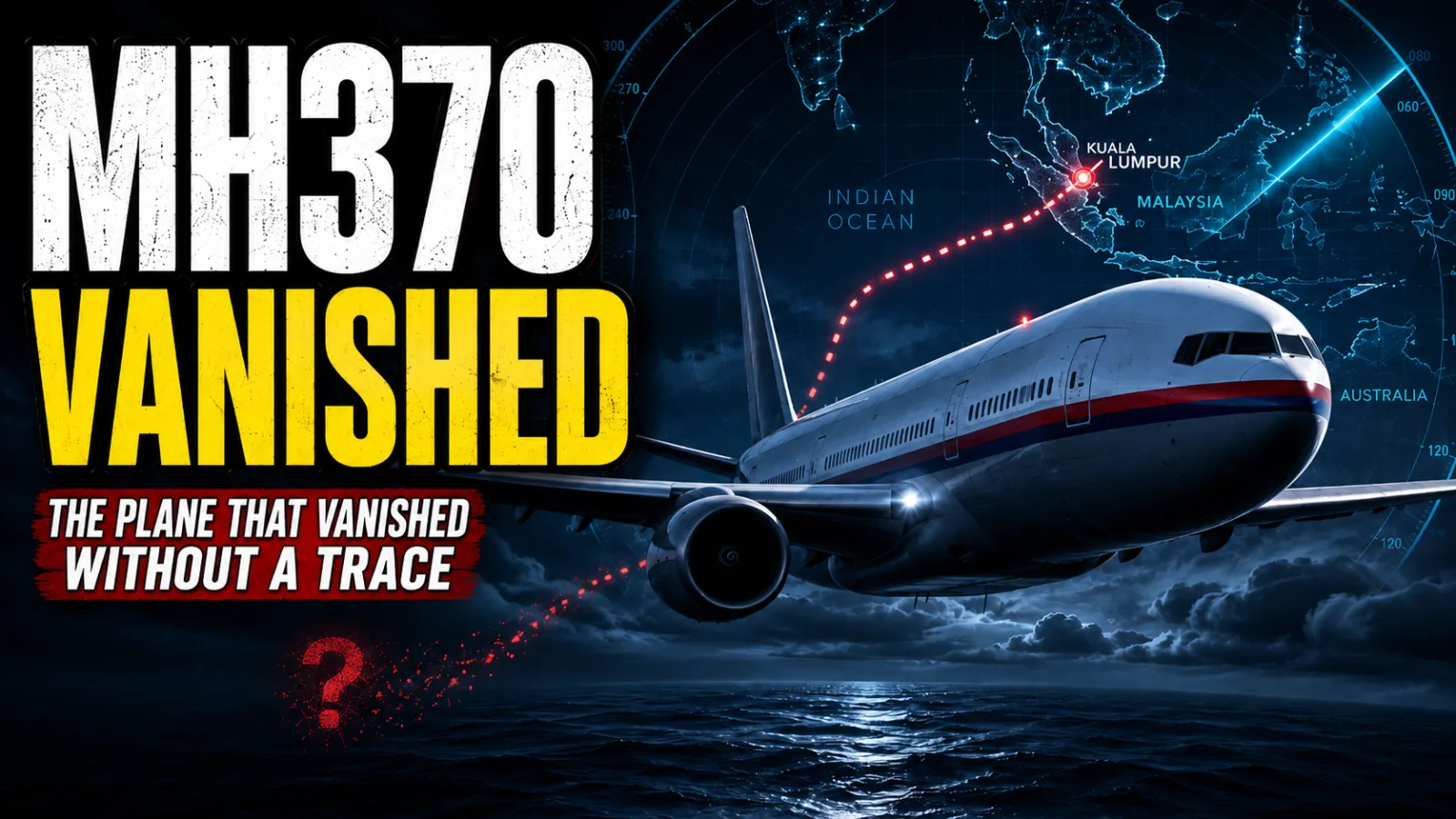
At forty-one minutes past midnight, a Boeing 777 climbed into the dark sky above the South China Sea, carrying 239 people toward Beijing. Thirty-eight minutes later, it vanished from civilian radar. No distress call, no mayday, no wreckage field—just silence spreading outward across an ocean the size of a continent.
For nearly a decade and a half, that silence has never fully been broken. Malaysia Airlines Flight 370 remains the only major commercial jet in modern aviation history to disappear so completely that investigators are still not certain, to this day, exactly where it lies or precisely why it went there.
A Routine Red-Eye Departs Kuala Lumpur
It was March 8, 2014. Flight 370 pushed back from Kuala Lumpur International Airport just before midnight, bound for Beijing. Two hundred and twenty-seven passengers and twelve crew were aboard, a mix of Chinese and Malaysian travelers along with citizens from a dozen other nations. The captain, Zaharie Ahmad Shah, was a veteran with over 18,000 flying hours. The first officer, Fariq Abdul Hamid, was younger and still completing his training on the aircraft type.
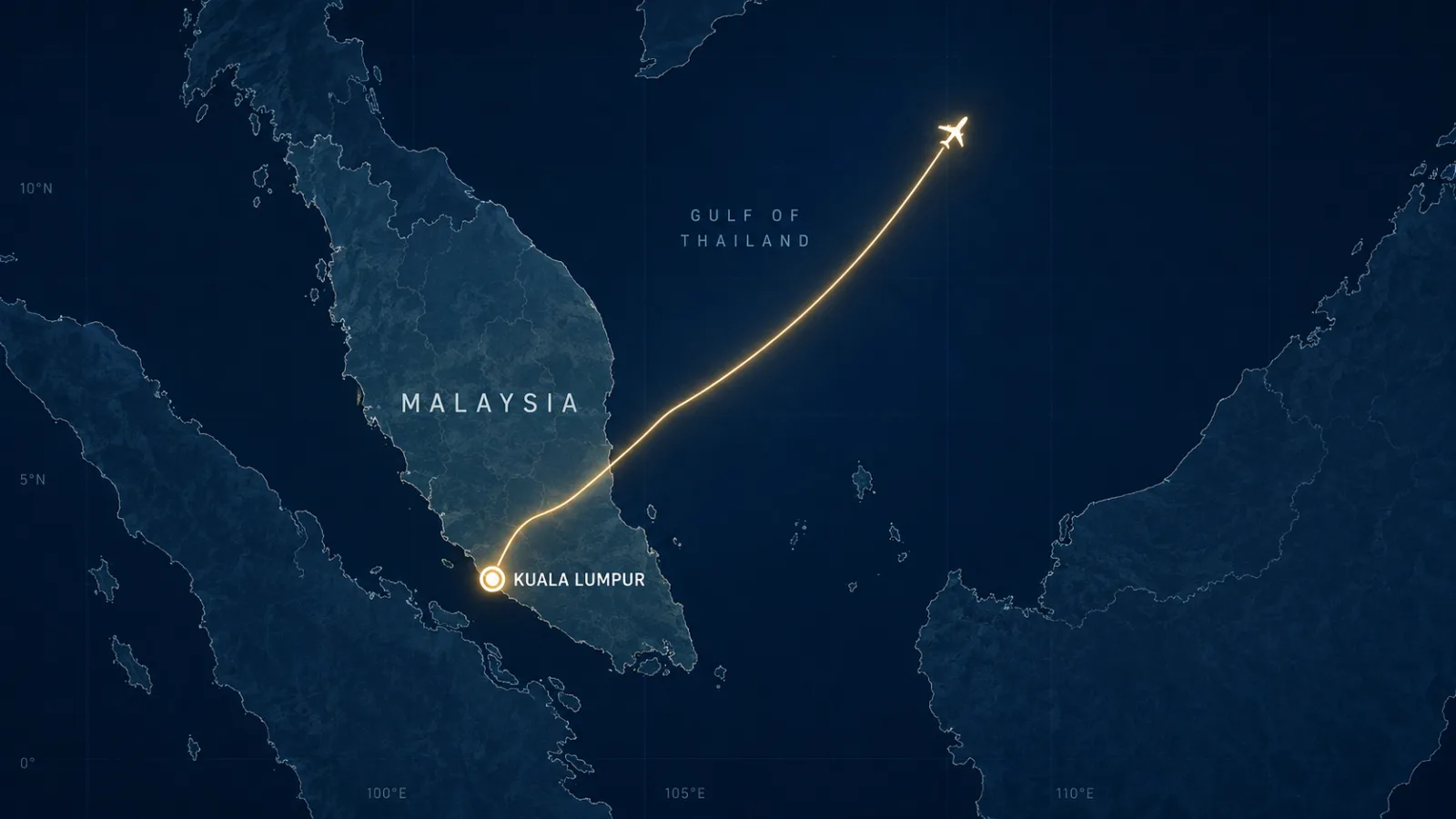
The flight proceeded normally, climbing to cruising altitude and following its filed route northeast across the Gulf of Thailand. At 12:59 a.m., First Officer Fariq acknowledged instructions from Kuala Lumpur air traffic control. At 1:19 a.m., the final voice transmission came from the cockpit—investigators were never able to confirm with certainty whether it was Captain Zaharie or Fariq who spoke. The words were simple: "Good night, Malaysian three-seven-zero."
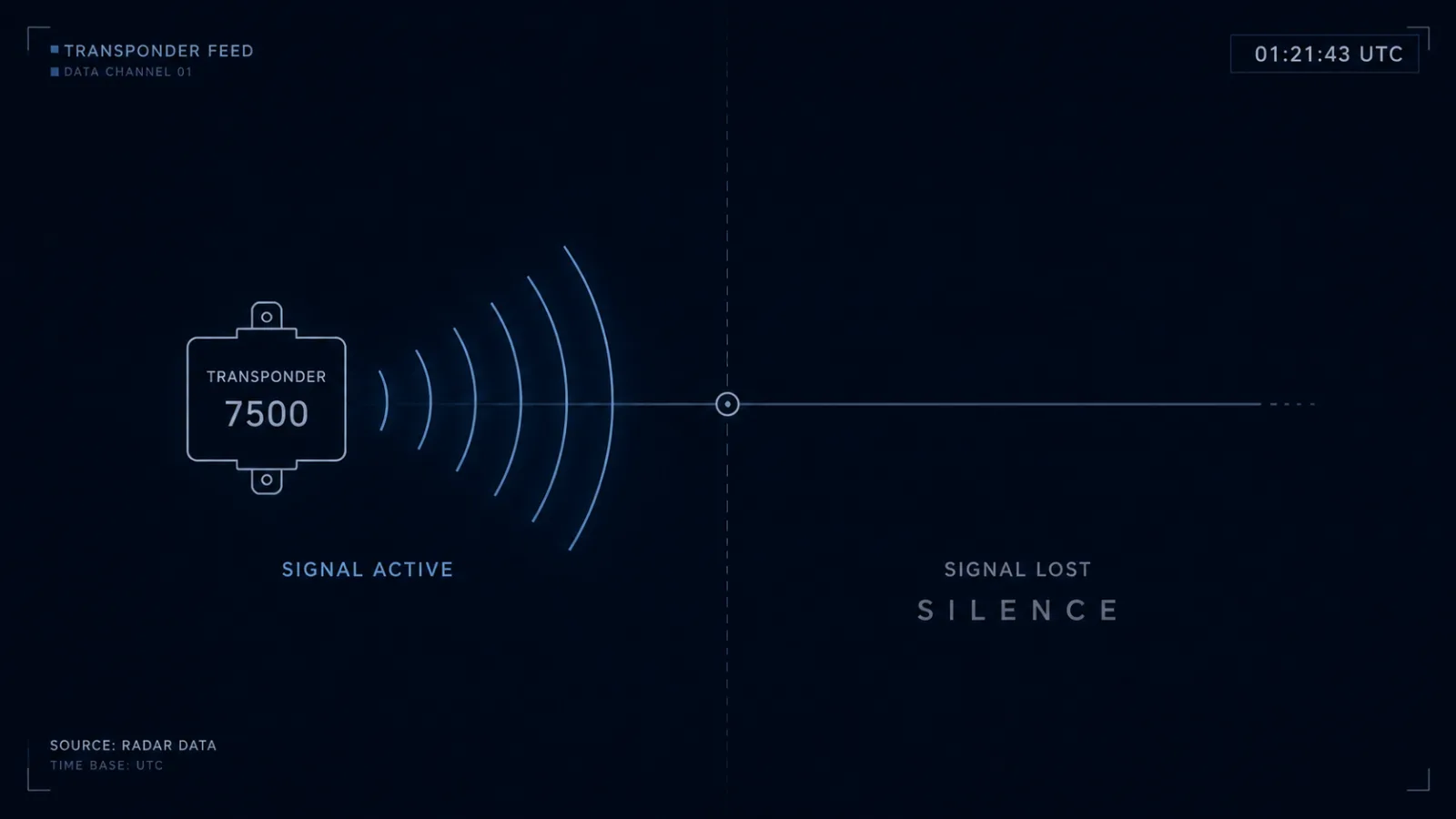
Ninety seconds later, the plane's transponder—the device that broadcasts identity and altitude to air traffic control—stopped transmitting. At that exact moment, the aircraft was crossing from Malaysian into Vietnamese airspace, a handoff point between two control zones. In that gap, Flight 370 disappeared from secondary radar entirely.
The Radar Reversal
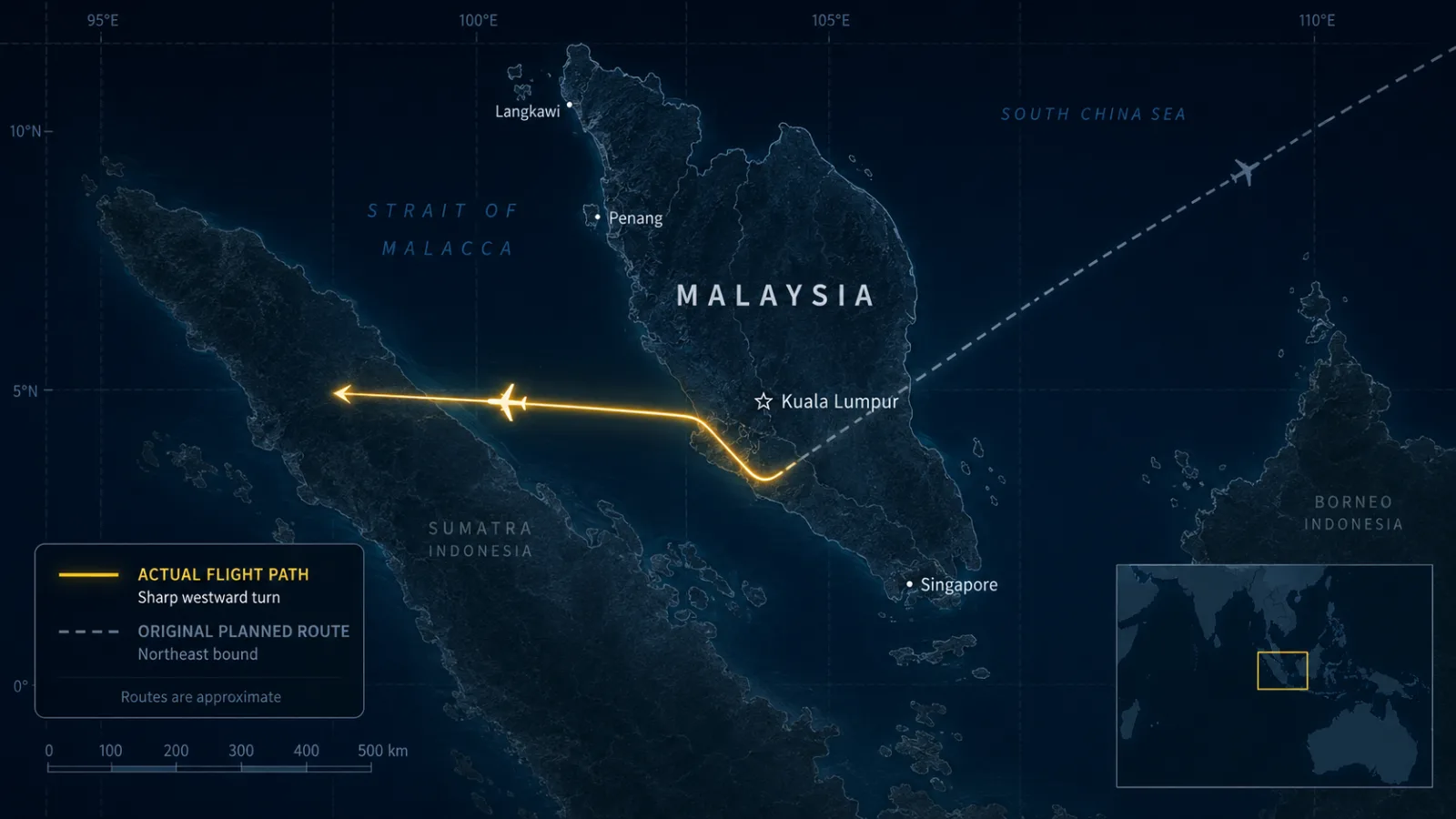
But the plane did not disappear from the sky. Malaysian military radar, reviewed only after the search began, showed something startling: an aircraft believed to be MH370 had turned sharply westward, crossing back over the Malay Peninsula, then curving northwest up the Strait of Malacca. This was the opposite direction of the flight plan to Beijing.
The aircraft continued to be tracked by military radar until around 2:15 a.m., when it faded from view near the edge of radar coverage, roughly 200 nautical miles northwest of Penang, heading out over the Andaman Sea. For hours, nobody outside a small circle of military radar operators knew this had happened. Malaysia Airlines did not report the plane missing until it failed to arrive in Beijing at its scheduled time of 6:30 a.m.—by then the aircraft had already been unaccounted for more than five hours.
An International Search Begins
The search that followed became one of the largest and most expensive in aviation history. Ships and aircraft from more than two dozen nations combed the South China Sea, then the Strait of Malacca, then the Andaman Sea, based on the military radar track. Weeks passed. Nothing was found.
Then came a different kind of evidence entirely: not radar, not eyewitnesses, but mathematics.
Satellite Pings and the Math Behind the Search
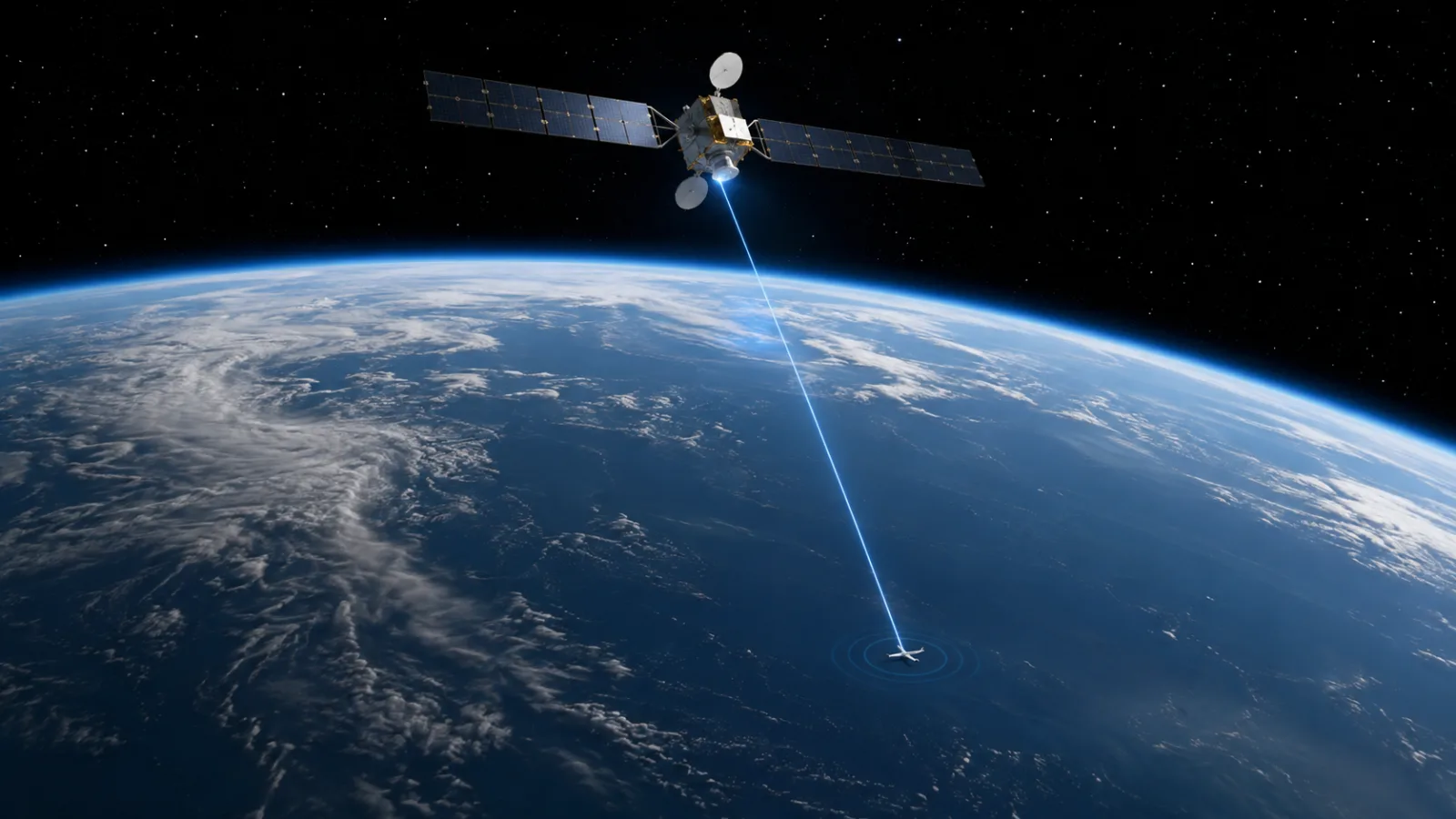
Although the transponder was off, the aircraft continued to exchange automatic hourly signals with a satellite operated by Inmarsat. These were simple handshake pings—the electronic equivalent of a phone quietly checking in with a cell tower. But embedded in the timing and frequency of those pings was information: the Burst Timing Offset and Burst Frequency Offset, values that could estimate the aircraft's distance from the satellite and, through a method resembling the Doppler effect, its likely direction of travel.
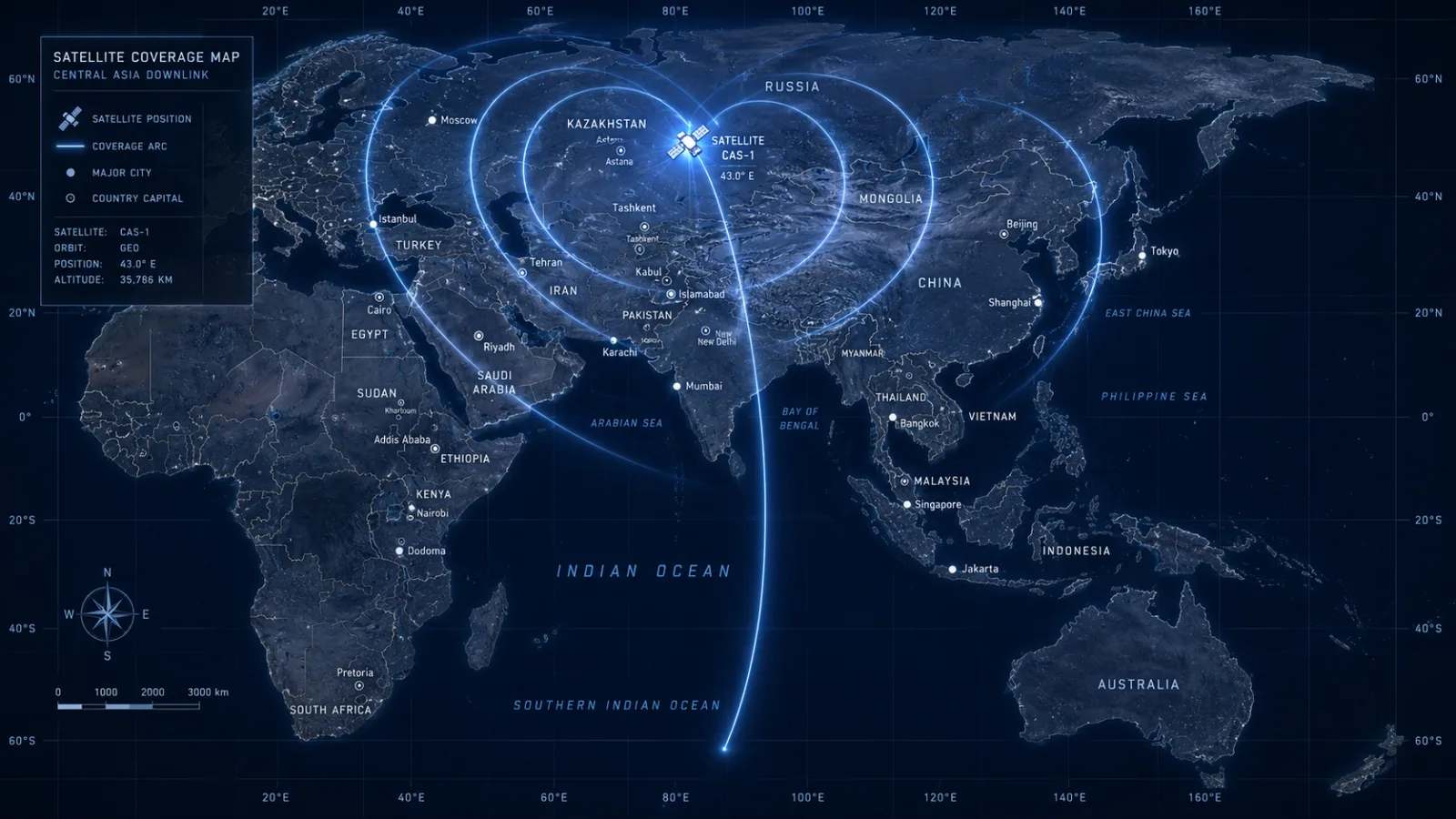
Using this data, British satellite engineers reconstructed a series of arcs representing possible aircraft positions at each hourly ping. The final ping, received at 8:19 a.m., nearly seven hours after takeoff, placed the aircraft along a long arc stretching from Central Asia down through the remote southern Indian Ocean.
Given the plane's fuel load, likely speed, and the fact that no nation along the northern arc reported any unidentified aircraft entering its airspace, investigators concluded the southern route was overwhelmingly more probable. Flight 370, they determined, had flown on for hours after losing contact—alone, far off any established route, into one of the most desolate stretches of ocean on Earth, thousands of kilometers off the coast of Western Australia.
Searching the Southern Indian Ocean
The search shifted to an area so remote that the nearest scrap of usable land sits over a thousand kilometers away. Australian, Chinese, and Malaysian vessels scoured the ocean floor using sonar in some of the most technically demanding underwater search operations ever conducted, across seabed terrain of volcanic ridges and deep trenches. The underwater search, covering an area larger than 120,000 square kilometers, concluded in January 2017 having found no wreckage.
Debris Washes Ashore
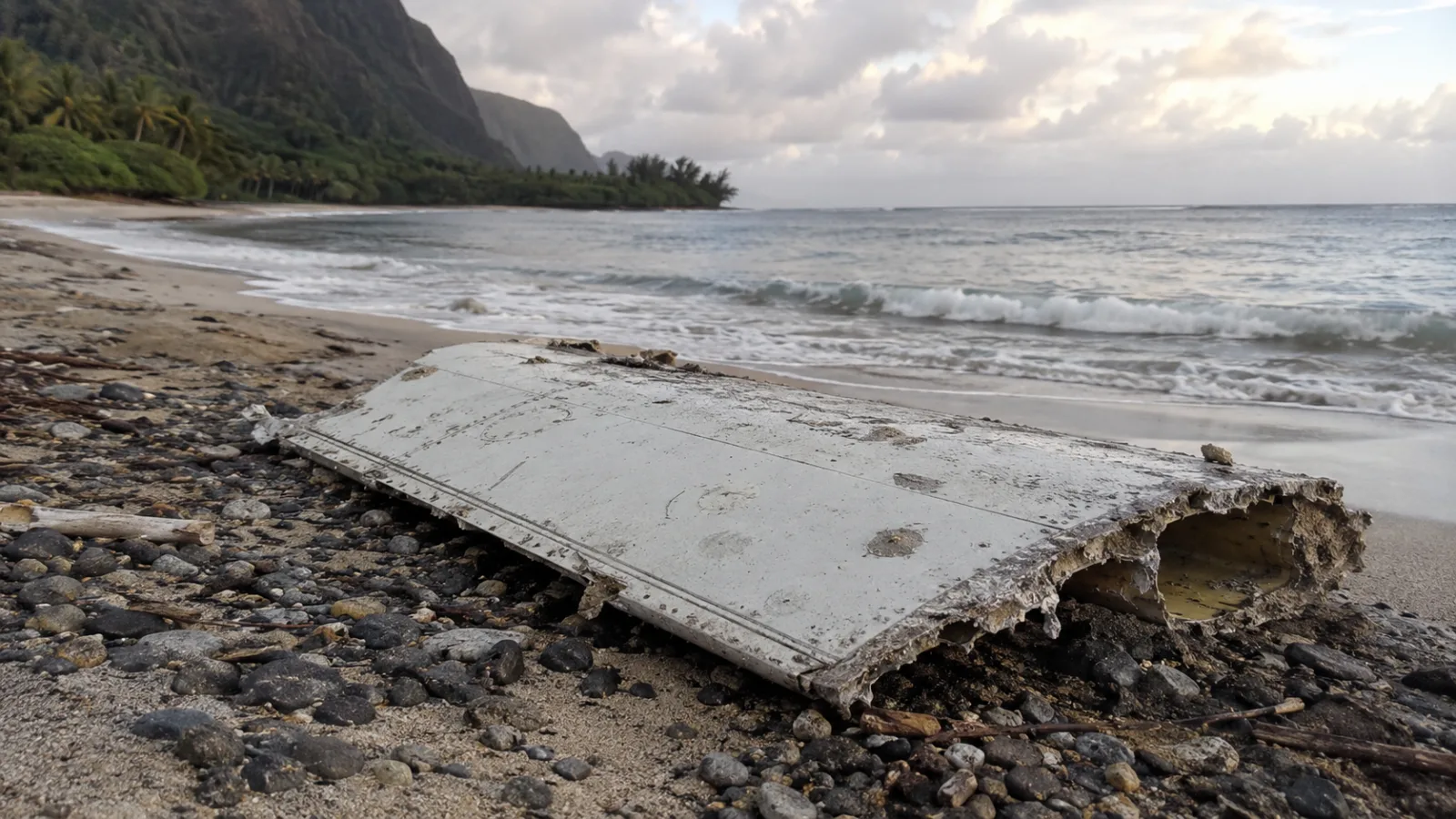
And yet the ocean itself began to answer, piece by piece. In July 2015, a chunk of aircraft debris washed ashore on Réunion Island, off the coast of Madagascar. It was identified as a flaperon, a wing control surface, and confirmed by investigators to be from MH370. Over the following two years, more than twenty other pieces of debris were recovered from beaches across the western Indian Ocean—in Mozambique, South Africa, Mauritius, and Tanzania. Several were positively or very likely linked to the missing aircraft.
Oceanographers ran drift modeling, simulating how debris would travel across years of current and wind patterns from the presumed crash zone. The pattern of where and when debris washed ashore was broadly consistent with a crash somewhere along the southern arc. It confirmed the plane had gone down in the Indian Ocean, but it offered no precise coordinates. The debris told searchers the plane was real, was destroyed, and was out there somewhere—it could not tell them exactly where.
In January 2018, the private American exploration firm Ocean Infinity resumed the search under a "no find, no fee" arrangement with the Malaysian government, scanning an additional area with advanced autonomous underwater vehicles. That search also ended without locating the main wreckage. To this day, the fuselage of MH370, along with the flight data recorder and cockpit voice recorder that might explain what happened aboard it, has never been found.
What Happened in the Cockpit?
So what happened between "good night" and the transponder going dark? There is no single accepted answer. The official investigation, led by Malaysia with international assistance, formally concluded it could not determine a definitive cause. Its final report, released in 2018, stated plainly that the team was unable to identify the reason for the disappearance.
Deliberate Cockpit Action
One leading theory centers on deliberate action by someone aboard. Investigators noted that the sequence of events—the sharp turn, the transponder switching off, and altitude changes recorded on radar—could be consistent with manual, intentional control rather than mechanical failure. A flight simulator recovered from Captain Zaharie's home contained data that included various flight paths, though Malaysian authorities stated this was not unusual for a flight enthusiast and found no direct evidence linking it to the disappearance. No motive, no suicide note, no financial distress, and no clear psychological red flags were ever conclusively established for either pilot. Family members of both men have publicly rejected the theory that either was responsible.
Catastrophic Mechanical Failure
A second theory considers a catastrophic in-flight event—fire, decompression, or mechanical failure—that might have incapacitated the crew, leaving the aircraft to fly on autopilot until it ran out of fuel and crashed. This would explain the hours of undirected flight, but struggles to account for the earlier sharp turn and transponder shutdown, actions that typically require deliberate input.
Hijacking
A third, less mainstream theory involves hijacking, whether by someone aboard or through remote interference. No credible evidence—including passenger manifests, security screenings, or communications—has substantiated this possibility, and most independent investigators consider it unlikely.
Each theory explains part of the puzzle. None of them, based on publicly available evidence, explains all of it cleanly.
A Mystery That Remains Unsolved
This was not some vintage propeller plane over the empty stretches of the 1930s. This was a modern airliner, satellite-linked, radar-tracked, flying in an age when it feels as though almost nothing goes truly unrecorded. And still, it slipped into the dark, and mathematics had to reconstruct, after the fact, a path that human eyes never witnessed.
The debris told us the ocean took it. The satellite data told us roughly where. But the fuselage, resting somewhere on the seafloor of the southern Indian Ocean, has kept its secrets. The recorders that could settle the question, the ones every aircraft carries specifically so that mysteries like this don't happen, remain unheard.
For the 239 families who said good night to someone boarding that flight and never learned exactly what happened, the not knowing is its own kind of grief, one that has now stretched across more than a decade.
Search efforts continue to be discussed and periodically proposed, and ocean technology continues to advance. It remains possible that someday a search vessel's sonar will finally catch the unmistakable shape of a 777 resting on the ocean floor, and some of these questions will finally be answered.
Until then, Flight 370 remains exactly what it became in the early hours of March 8, 2014: a modern airliner that flew into the dark, and never fully came back into the light.