
In the autumn of 1900, a group of Greek sponge divers took shelter from a storm near a small island called Antikythera, tucked in the sea between Crete and the Greek mainland. When the weather cleared, their captain decided to dive the nearby reef, hoping to find sponges in unspoiled waters. What he found instead was a shipwreck, scattered across the seafloor at a depth of around forty-five meters. Bronze arms reached up from the sand. Marble faces stared back at him through the dark. He surfaced convinced he had found a graveyard of the dead.
What he had actually found was a graveyard of the ancient world's lost knowledge — and buried within it, a single corroded lump of bronze that would take more than a century to understand. Today, that object is considered by many historians to be the most sophisticated known device from the ancient world. The question that still divides researchers is simple to ask and brutally hard to answer: how did anyone in the ancient Mediterranean build something like this, and why did that knowledge seem to vanish for the next thousand years?

What Ancient Greek Technology Was Assumed to Be
To understand why this discovery matters, it helps to know what the ancient world was assumed capable of. By the late nineteenth century, historians had a fairly settled picture of ancient Greek technology. They had geometry, philosophy, and engineering on a monumental scale — the Parthenon, aqueducts, siege engines. But precision mechanics, the kind involving interlocking gears calibrated to model the heavens, was considered a much later invention. Clockwork, in the way we think of it, belonged to medieval Europe, over a thousand years later. Nothing in the archaeological record suggested the Greeks had gearing technology anywhere close to that level.
The Shipwreck and Its Treasures
The wreck gave context for what was about to upend that assumption. The ship was Roman-era, believed to have sunk sometime between roughly 70 and 60 B.C.E., likely while transporting looted or traded Greek treasures toward Rome. Divers recovered bronze and marble statues, glassware, jewelry, and coins, some of which helped researchers estimate the date of the wreck. It was, by any measure, one of the richest ancient shipwrecks ever found. The statues alone would have justified the expedition.
But it was a smaller, far less glamorous find that would eventually eclipse everything else.
A Corroded Lump Nobody Noticed
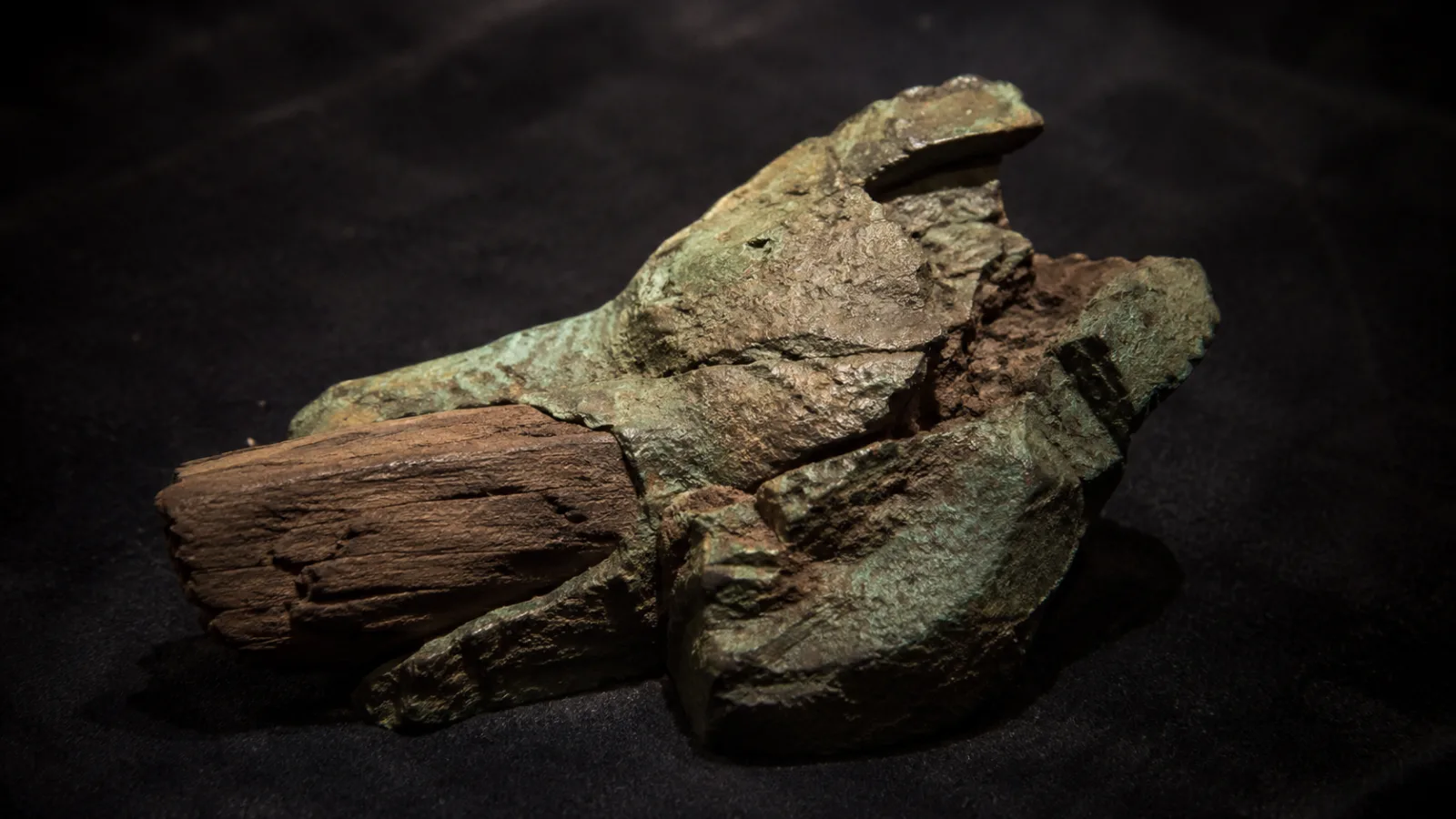
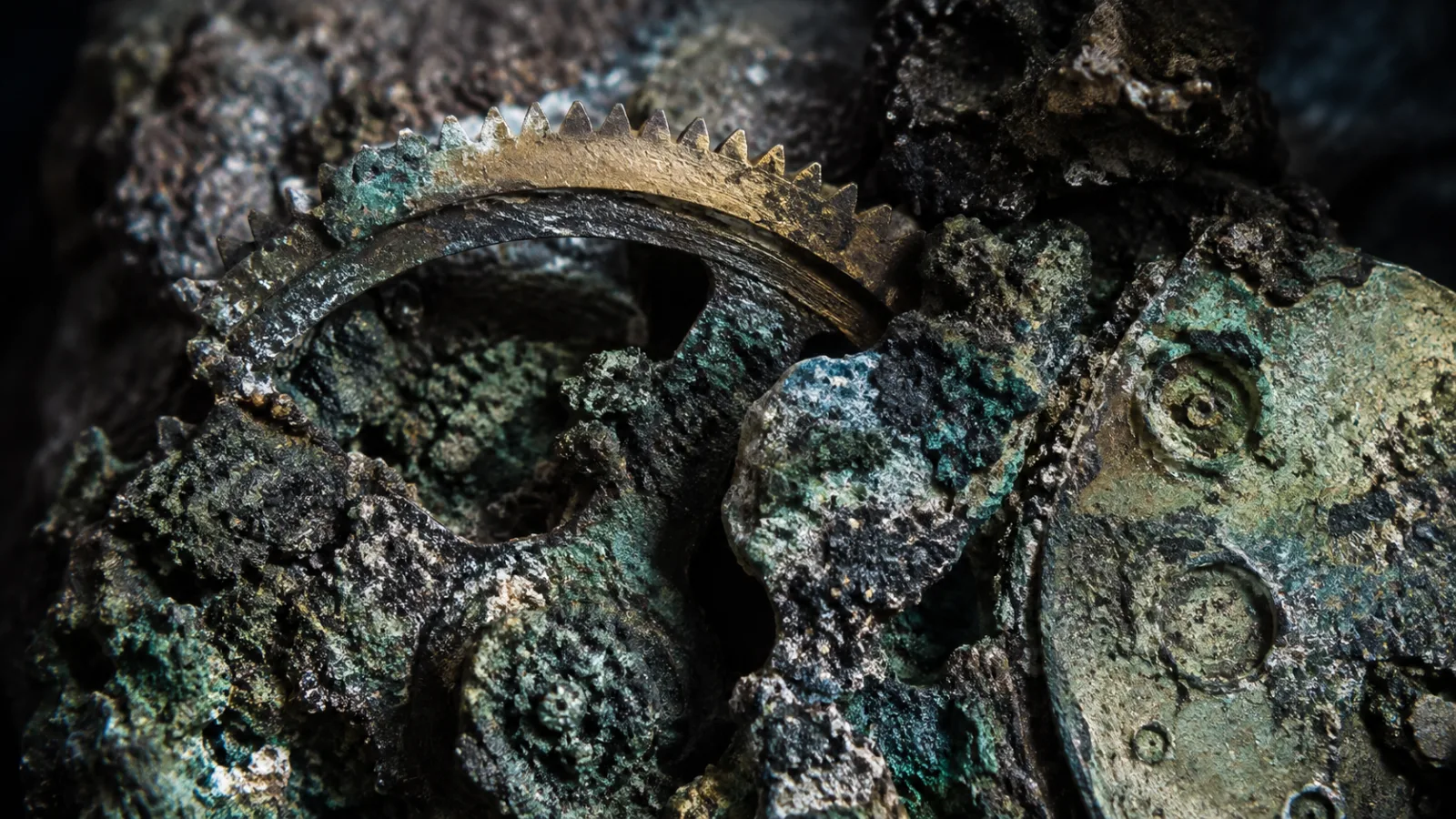
Among the crates of retrieved material sat a shapeless, corroded chunk of bronze and wood, roughly the size of a large book, cracked into pieces. For a while, it drew little attention — it looked like scrap. It wasn't until months later, when the piece dried out and split further, that someone noticed something embedded inside it: a gear wheel, then another, and another. Dozens of them, impossibly fine, with triangular teeth cut with a precision that seemed to belong to a different century entirely.
This was the Antikythera mechanism.
Early Investigations and a Long Silence
Early investigators were baffled. Archaeologist Valerios Stais first identified the gear in 1902 and even suggested it might be some kind of astronomical instrument, but the technology to confirm that theory didn't yet exist. For decades, the mechanism sat only partly understood, its corroded fragments too fragile and too dense to read clearly. Researchers could see gears, faint Greek inscriptions, and traces of dials, but the internal structure remained locked inside the bronze, hidden by two thousand years of marine corrosion.
The Imaging Breakthroughs
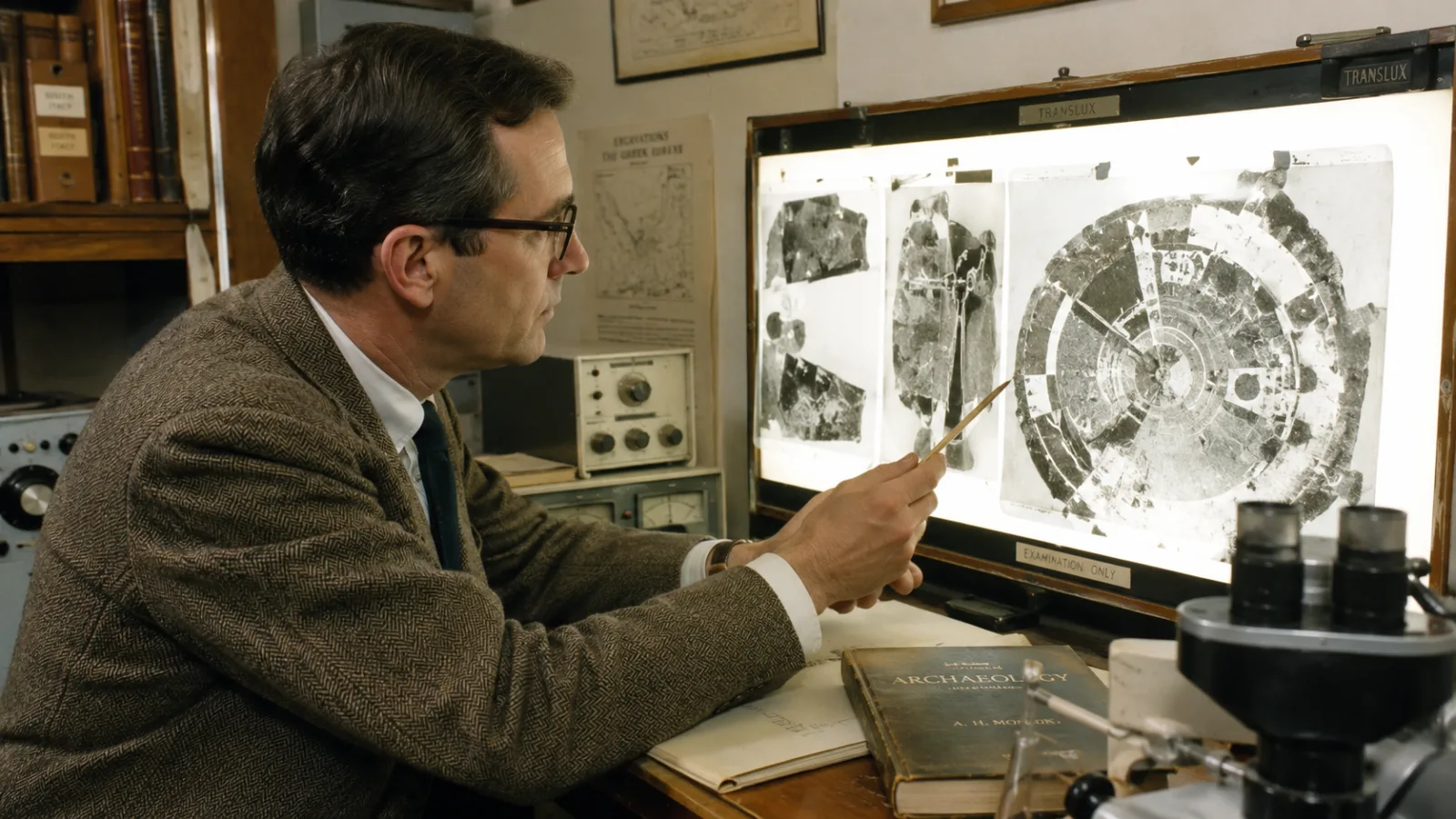
The breakthrough came slowly, in stages, across the twentieth century. In the 1950s and 60s, British science historian Derek de Solla Price began an intensive study of the fragments, eventually using early X-ray and gamma-ray imaging to peer inside the corroded blocks without destroying them. What he found reshaped the conversation: the mechanism contained a differential gear train, an advanced mechanical concept arranged in a way that suggested it modeled astronomical cycles.
Decades later, in the 2000s, a research collaboration known as the Antikythera Mechanism Research Project used high-resolution X-ray computed tomography alongside sophisticated surface imaging to look deeper into the fragments than ever before. What emerged was staggering. The device contained at least thirty bronze gears — some researchers believe the original held more — all housed within a wooden and bronze case roughly the size of a shoebox. The gears varied in size, some with teeth barely a few millimeters apart, cut with a consistency that implied not just skill but a design system worked out mathematically before a single tooth was cut.
The inscriptions covering the mechanism's surface, gradually deciphered through imaging that could read text obscured by corrosion, turned out to describe astronomical and calendrical functions, something like an instruction manual.
An Analog Computer for the Sky
When researchers reconstructed how the gears interacted, the purpose of the device became clear: the Antikythera mechanism was an analog computer for the sky.
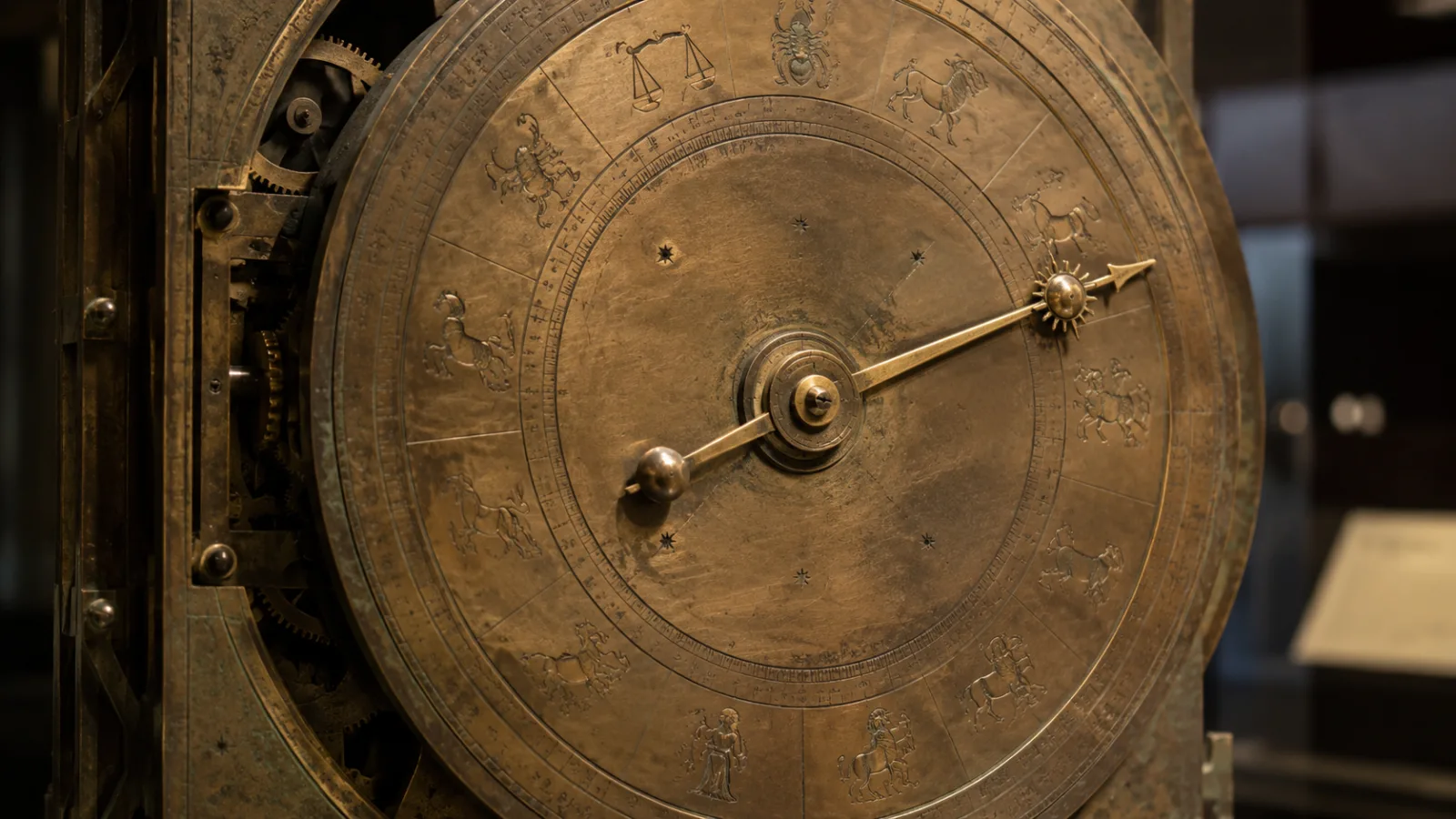
Turn a hand crank, and a chain of gears would rotate. Pointers on the front face tracked the position of the sun and the moon against the backdrop of the Greek zodiac. A separate lunar mechanism, one of the most sophisticated parts of the device, used a pin-and-slot gear arrangement to reproduce the moon's variable speed across the sky, accounting for the fact that the moon doesn't move at a constant pace, a subtlety rooted in real astronomical observation. The device could track a nineteen-year lunar-solar calendar cycle known to Babylonian and Greek astronomers. On the back, dials displayed a four-year cycle corresponding to the timing of Panhellenic games, including the Olympics. Another dial modeled eclipse prediction, based on a cycle of roughly 223 lunar months known as the Saros cycle.ÂÂÂÂÂÂÂÂÂÂÂÂÂÂÂÂÂÂÂÂÂÂÂÂ
In other words, this bronze box, small enough to hold in two hands, could predict solar and lunar eclipses, track the phases of the moon, follow the position of celestial bodies, and mark the calendar for religious festivals and athletic games — all through a manually operated system of interlocking gears.
The Thousand-Year Gap
Nothing else like it survives from the ancient world. Nothing close to it appears again in the historical record for over a thousand years, until complex geared astronomical clocks began appearing in medieval Europe and the Islamic world. That gap is the heart of the mystery.
Ancient writers do give us some context. The Roman philosopher Cicero, writing in the first century B.C.E., described a bronze device built by the Greek scientist Archimedes that modeled the movements of the sun, moon, and planets. Cicero also mentioned a similar instrument attributed to the astronomer Posidonius. These accounts confirm that the ancient world knew of devices like this, that they weren't unimaginable even to Roman writers. But no other physical example has ever been found. The Antikythera mechanism stands almost entirely alone, a single surviving witness to a tradition that otherwise left no trace.

Who Built It?
Who built it remains unknown. The ship is believed to have sailed from the eastern Mediterranean, possibly from the island of Rhodes, home to a renowned school of astronomy and mechanical engineering in antiquity. Some researchers have connected the device to the tradition of Hipparchus, the astronomer whose lunar theory closely matches the mechanism's irregular lunar model. But there is no signature, no maker's name, no definitive attribution. We know a civilization capable of this existed. We don't know who, specifically, sat down and built this exact object, or how many others like it were ever made.
Why Does It Appear Only Once?
That raises a larger, more unsettling question. If the ancient Greeks had the mathematical and mechanical sophistication to build something like this, why does it appear only once in the archaeological record? Was this a rare, expensive masterpiece — a one-of-a-kind commission for a wealthy patron? Or was this kind of technology more widespread than assumed, with other examples lost to time, melted down for their bronze, or still resting undiscovered on the floor of the Mediterranean?
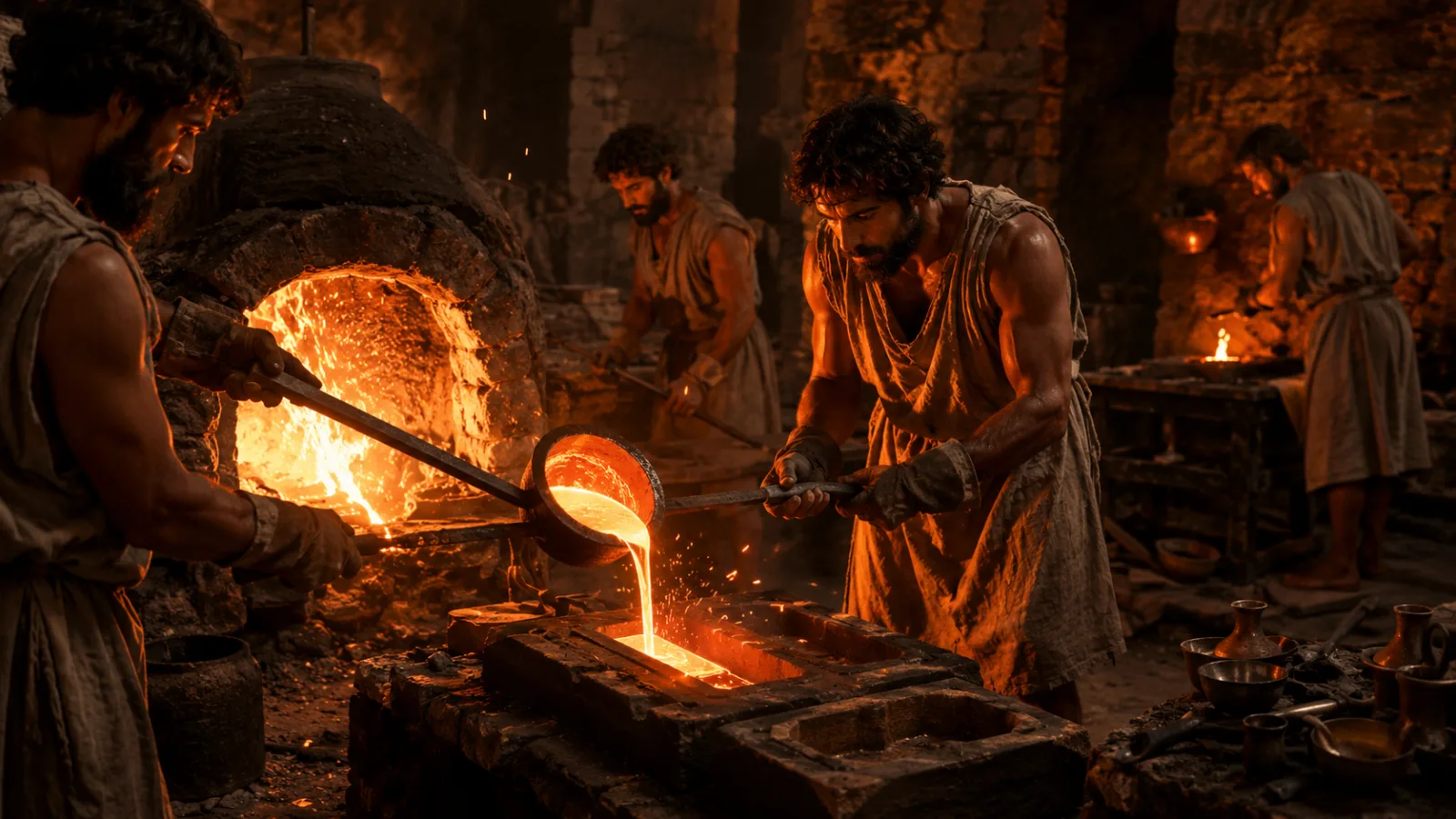
Most historians favor a fairly grounded explanation: that this represents the surviving peak of a genuine tradition of Greek mechanical astronomy, a tradition referenced by ancient writers but almost entirely erased by the simple realities of history. Bronze was valuable and routinely melted down and reused. Wars, fires, and the slow decay of empires destroyed workshops, libraries, and instruments. It doesn't require ancient aliens or forgotten super-civilizations to explain the Antikythera mechanism — it requires only the fact that history is fragile, and that most of what people once built simply didn't survive to be found.
What Remains Unknown
That grounded explanation doesn't erase the wonder of it, or fully close the case. We still don't know exactly who commissioned it, or why it was aboard that particular ship. We don't know how many hands were required to build it, or how long such craftsmanship took to master. We don't know whether it was a working scientific tool, a teaching device, a luxury showpiece for the wealthy, or some combination of all three. And we don't know what else, built with the same knowledge, might still be sitting on the seafloor, or buried in a collection somewhere, unrecognized for what it is.
More than two thousand years after it sank beneath the waves near a small Greek island, the Antikythera mechanism remains a rare, direct piece of physical evidence that the ancient world was more mathematically and mechanically advanced than once assumed — and a quiet reminder of how much of that world's genius simply never made it to us at all.