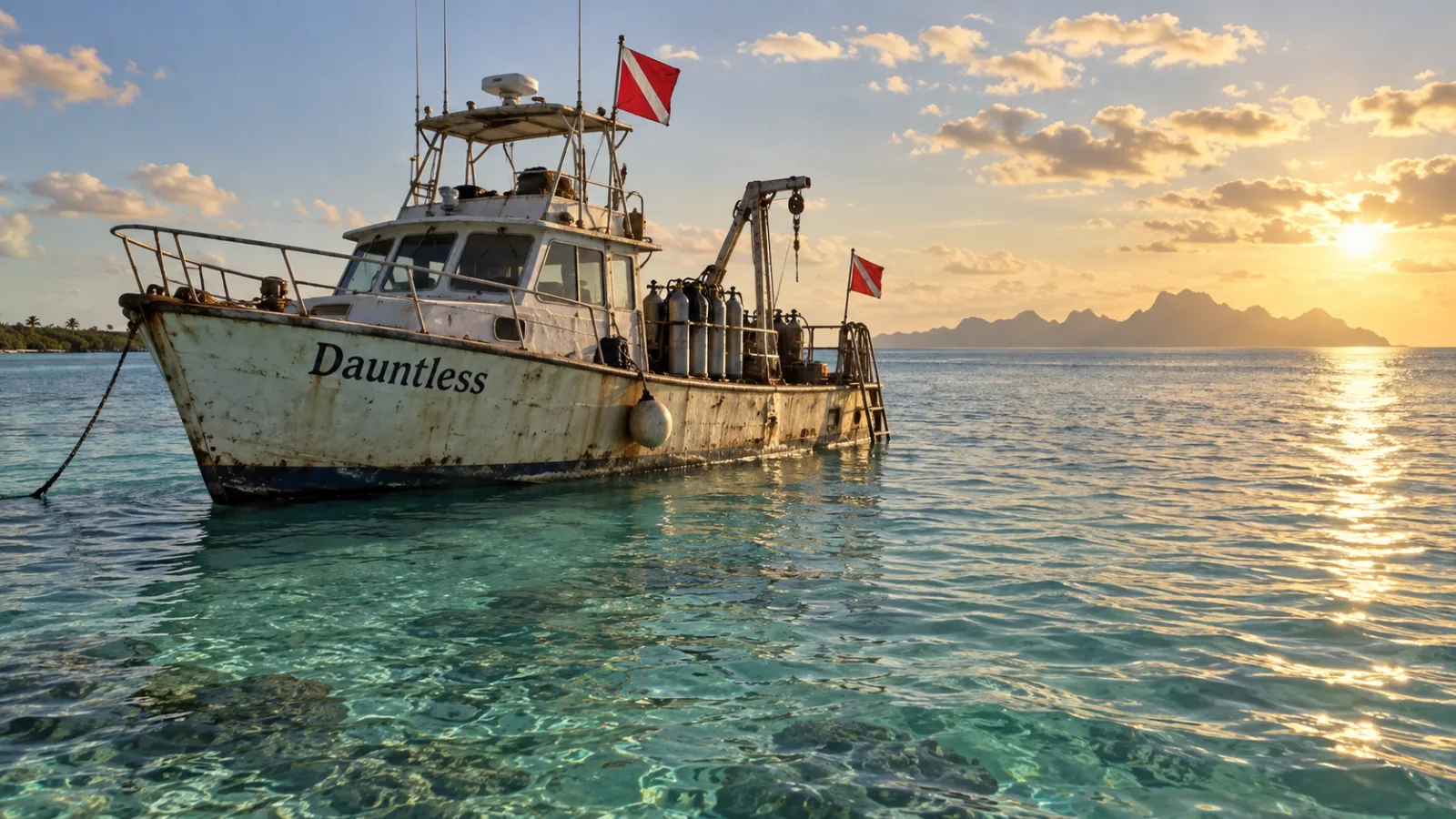
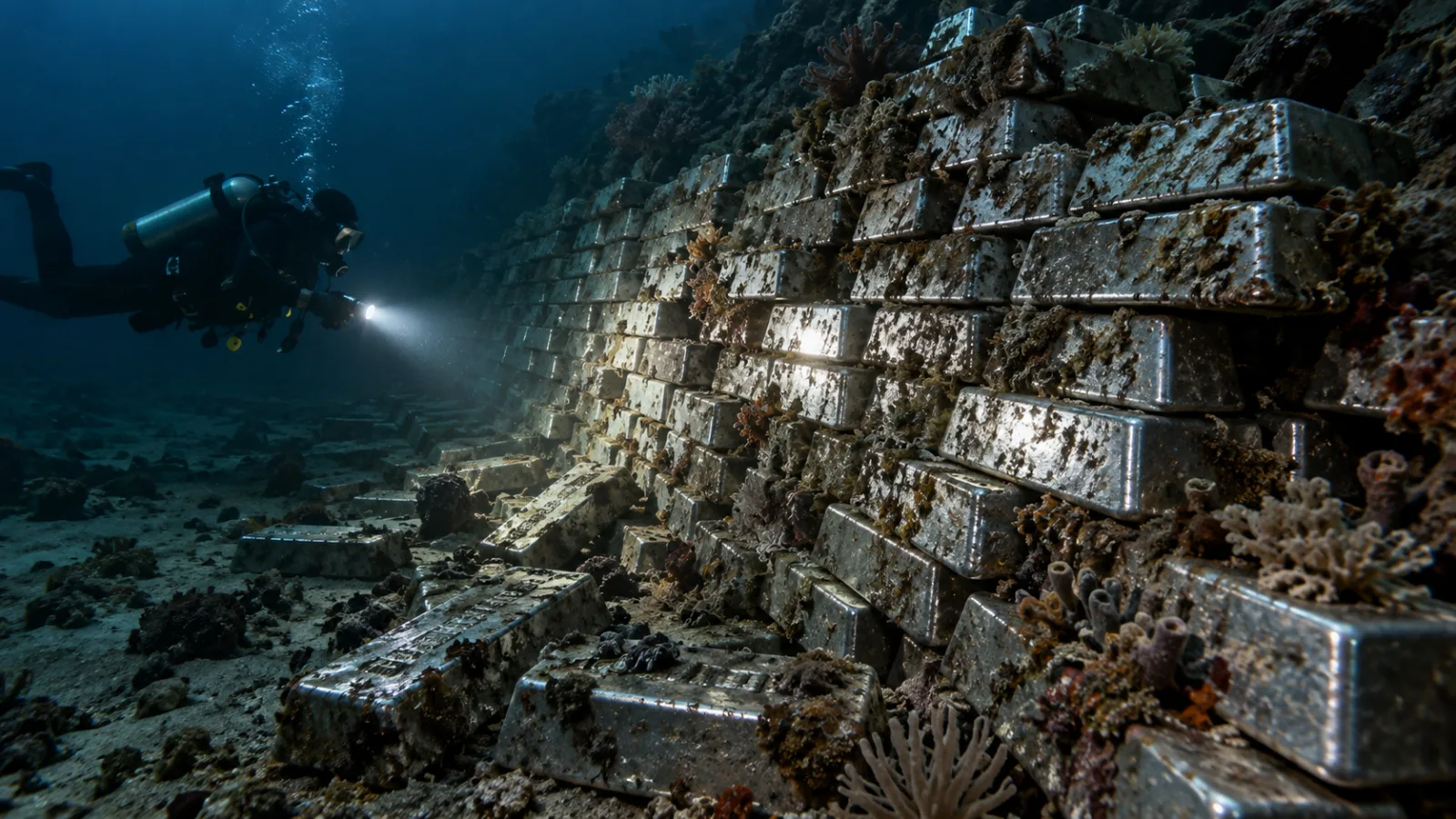
On July 20, 1985, a salvage boat called the Dauntless idled above a stretch of shallow water off the Florida Keys known as the Marquesas. A diver named Greg Wareham dropped beneath the surface, following the same sandy bottom his crew had searched for years. Then, through the murky green light, he saw it. Not a coin. Not a single artifact. A wall: a reef of silver bars, stacked and fused together by three and a half centuries under the sea, stretching into the darkness further than his flashlight could reach.
He surfaced barely able to speak. The words that would become legend soon crackled over the radio to the man who had spent sixteen years, his marriage, his fortune, and nearly his life chasing this moment: put away the charts, you've found the mother lode.
The ship was the Nuestra Señora de Atocha. The question that had haunted treasure hunters, historians, and one particular obsessive American for more than three centuries was simple: where did she go down? The answer was worth an estimated four hundred million dollars. But how she got there, and how long it took the world to find her again, is stranger and more human than any of the gold.
Spain's Treasure Fleet
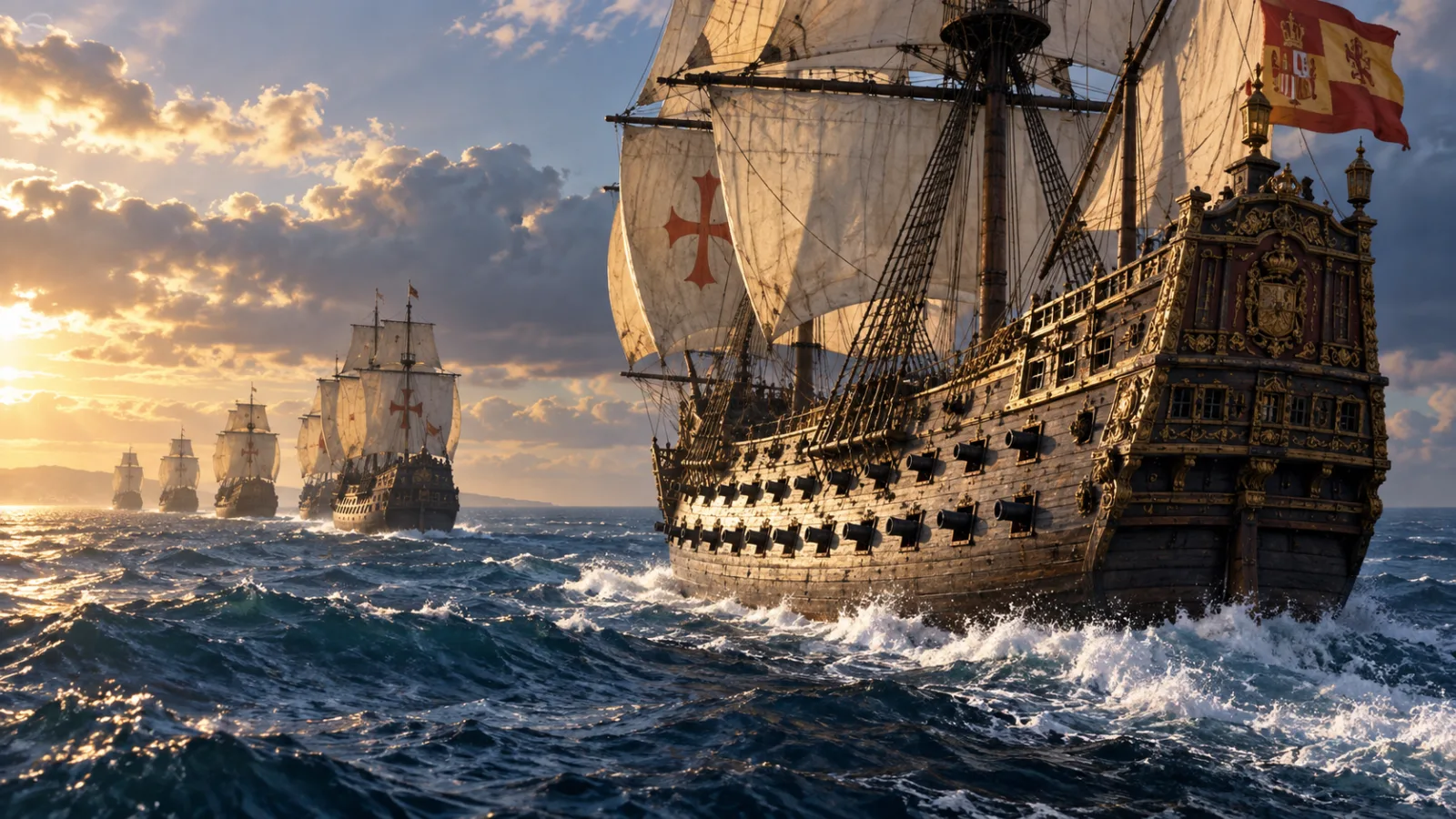
To understand why the Atocha mattered, you have to understand what Spain was doing in the Caribbean in the early 1600s. The Spanish crown had built an empire on extraction. Silver poured out of the mountains of Peru and Mexico, most famously from PotosÃ, high in the Bolivian Andes, one of the richest silver deposits ever found.
Twice a year, this wealth was gathered into convoys of heavily armed galleons and sent across the Atlantic to fund the wars, palaces, and debts of the crown back home.
The Atocha was part of this system. She was a 298-ton galleon, built to serve as the rearguard of the fleet: the armed escort meant to protect the slower, richer ships from pirates and rival powers.
The Cargo and the Hurricane
In September 1622, the Atocha was loaded in Havana with an almost unbelievable cargo:
- Silver bars
- Forty-one kilograms of raw emeralds from the mines of Colombia
- Gold discs
- Tens of thousands of freshly minted silver coins bearing the mark of the Spanish crown
Some of this cargo was declared and recorded meticulously in the manifests kept by Spanish officials. Some of it, historians believe, was smuggled aboard undeclared, hidden to avoid the crown's twenty percent tax, the *quinto real*.
On September 4, 1622, a fleet of twenty-eight ships sailed out of Havana harbor, bound for Spain. They were already late in the season. Hurricane season was a known danger, and captains understood the risk. But treasure waits for no one, and the fleet set out anyway.
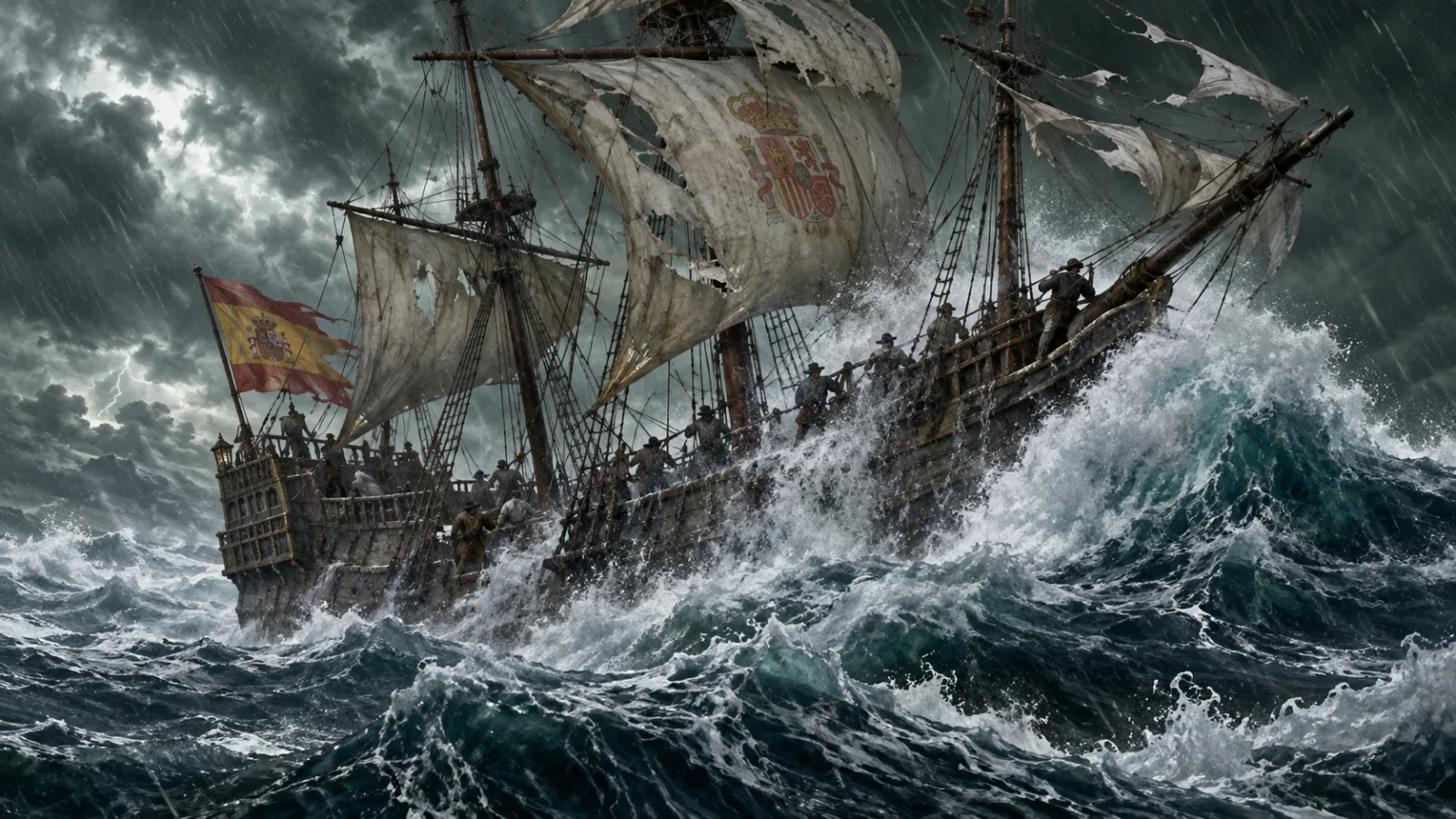
They didn't get far. Barely a day into the voyage, as the ships moved through the Florida Straits, a massive hurricane struck. The Atocha, along with several other ships, was driven onto the shallow reefs near the Marquesas Keys, about thirty-five miles west of Key West. The ship broke apart. Of the mostly civilian crew and passengers aboard, 260 people drowned. Only five survived, clinging to the ship's mizzen mast, which stayed above the surface just long enough to save them.
A Known Wreck Nobody Could Reach
The Spanish knew almost exactly where she had gone down. Survivors reported the location, and salvage ships arrived within weeks. But the wreck lay in about fifty-five feet of water, too deep for the diving technology of the 1620s, whether men holding their breath or using primitive diving bells, to reach the lower decks where most of the treasure was locked away.
Spanish salvors recovered some material from the rigging and upper structure. Then, in October of that same year, a second hurricane hit the site, scattering the wreck further and burying much of it under sand. Spain eventually gave up. The Atocha and her fortune became a known loss in a known stretch of ocean that no one could actually reach.
For three hundred and fifty years, that was where the story stood.

Mel Fisher and the Archival Hunt
Enter Mel Fisher. He was not a historian or an archaeologist by training. He was a diving equipment innovator and treasure hunter from California who had already made a name for himself finding wrecks off the Florida coast, most notably the 1715 fleet. In 1969, he turned his attention to a bigger prize.
Fisher didn't just guess. He and his team, working with a historian named Eugene Lyon, spent years digging through the Spanish colonial archives in Seville, the same meticulous records that had documented the ship's cargo three and a half centuries earlier. Lyon painstakingly translated original survivor testimony and salvage reports, hunting for clues about currents, distances, and landmarks described by men who had watched the Atocha go down.
This is one of the most underappreciated parts of the story. The eventual discovery wasn't luck. It was archival detective work, matching four-hundred-year-old handwriting to modern nautical charts.
Tragedy and Persistence
Knowing the region was one thing. Finding a specific wreck scattered across the seafloor was another, and the search nearly ended the Fisher family before it found the ship.
In 1975, tragedy struck. Fisher's son Dirk, Dirk's wife Angel, and a diver named Rick Gage drowned when their salvage vessel, the Northwind, capsized during a search operation. It was a devastating blow that would have ended most searches on the spot. Mel Fisher kept going, for ten more years.
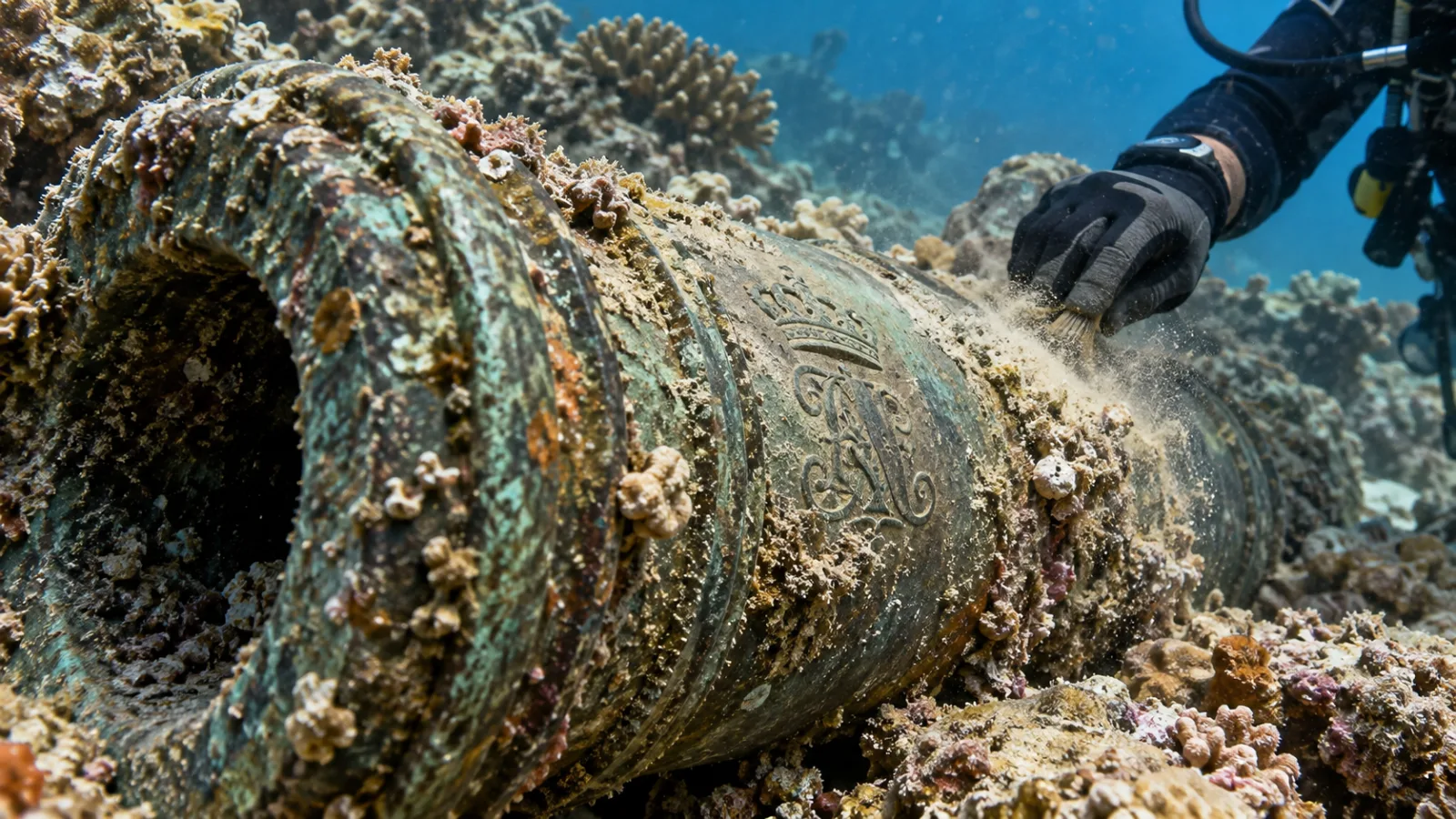
Along the way, the team recovered scattered pieces, enough to keep hope and funding alive: anchors, ballast stones, individual silver coins called reales (sometimes called pieces of eight), and cannons bearing markings that confirmed they had found genuine period wreckage. But the main cargo remained elusive, buried somewhere in the sand, scattered by that second hurricane and further disturbed by centuries of shifting currents.
The Trail of Clues
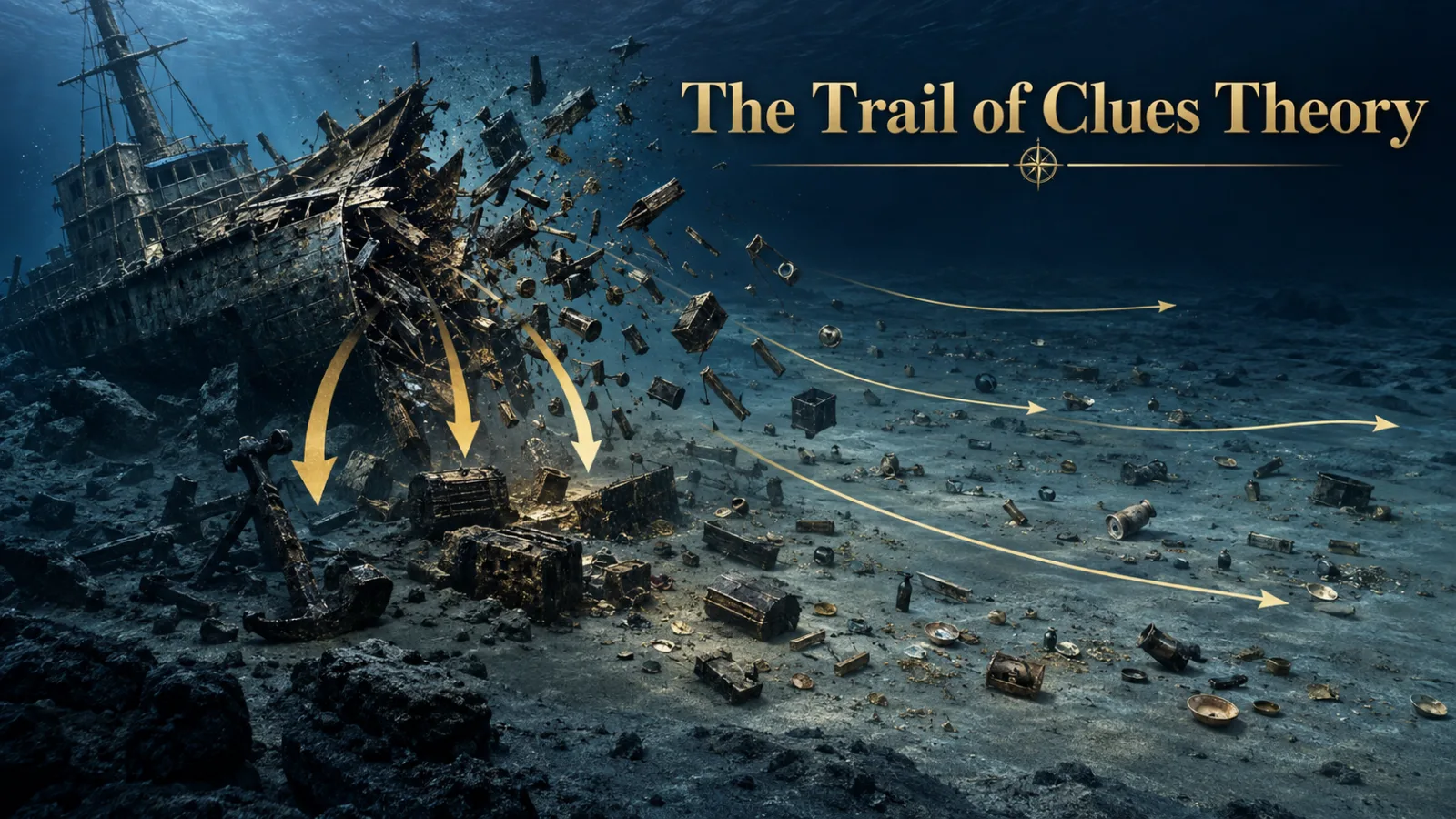
The breakthrough came from what the team called the trail of clues. The Atocha hadn't sunk in one piece and stayed put. As the hull broke apart in the hurricane and later storms, heavier material like anchors and ballast stayed close to the initial wreck site, while lighter debris was carried further by current.
By mapping where individual artifacts were found relative to each other, and cross-referencing that against how a wrecked wooden ship disperses over time, the team could work backward toward where the heaviest, richest concentration of cargo had likely settled.
On July 20, 1985, that theory paid off. The wall of silver bars Greg Wareham found that day turned out to be the ship's primary treasure cache, largely undisturbed since the seventeenth century.
The recovered haul included:
- Around forty tons of silver and gold
- Thousands of silver coins
- Gold bars and chains
- Roughly three thousand emeralds, some of exceptional size and clarity
It was, and remains, one of the largest shipwreck treasure recoveries in history.

Who Owns a Shipwreck?
Here the story becomes something more than an adventure tale. It becomes a legal case. As soon as the treasure surfaced, so did the state of Florida, which claimed a share under a theory that historic shipwrecks in state waters belonged, at least partially, to the public.
Fisher's company fought back, arguing the wreck was in federal waters, beyond state jurisdiction, and that the admiralty law of salvage entitled the finder to the recovered goods. The case, Treasure Salvors versus the Unidentified Wrecked and Abandoned Sailing Vessel, worked its way through the American court system for years. In 1982, the United States Supreme Court ultimately sided with Fisher's company, affirming his rights to the wreck. It remains a landmark case in maritime salvage law, cited in disputes over historic shipwrecks to this day.
Treasure Hunters and Archaeologists
Not everyone views the story the same way, and the evidence leaves room for genuine disagreement. Marine archaeologists have long raised concerns about commercial treasure salvage. Operations focused on recovering valuable artifacts for sale, they argue, can damage or destroy the contextual information that slower, methodical excavation would preserve. Every object's position on the seafloor tells a story about how the ship broke apart and how the disaster unfolded. Commercial salvage, critics say, often prioritizes speed and profit over careful documentation.
Fisher's defenders point out that his operation worked with historians like Eugene Lyon throughout, that the archival research underpinning the search was genuinely rigorous, and that without the profit motive driving a private search, the wreck might never have been found at all.
Both things can be true. The Atocha search combined real scholarship with real commercial hunger, and the balance between those forces still shapes debates about who should have the right to search for, and profit from, wrecks that sit between shared history and finders' law.
What Remains Unknown
There is also the unresolved matter of what's still down there. Fisher's team, and the company that carries on his work, have recovered an enormous amount of material from the Atocha site. But historians who have studied the original manifests believe the ship's declared cargo, let alone whatever undeclared silver and gold was smuggled aboard to dodge the crown's tax, may not be fully accounted for.
The Santa Margarita, a sister ship that sank in the same storm and was located separately, also yielded treasure. But combined recoveries still leave gaps between what the paperwork says should exist and what has actually been pulled from the sand.
Mel Fisher died in 1998, having spent nearly thirty years of his life chasing one ship. His company continues survey and recovery work in the Marquesas today, and new finds (individual coins, fragments, the occasional emerald) still surface with some regularity, a reminder that the site has never been declared fully exhausted.
Which leaves one question hanging over the whole affair, unresolved after four hundred years. Somewhere in that stretch of sand off the Marquesas Keys, mixed in with what the archives say should be there, may sit undeclared riches that no Spanish clerk ever wrote down: smuggled aboard in defiance of the crown, never logged, never taxed, never fully counted. If the official manifest was already incomplete the day the Atocha sank, no one alive today can say exactly how much wealth is still waiting in the dark, or whether the true total will ever be known.