A Sealed Door in the Valley of the Kings
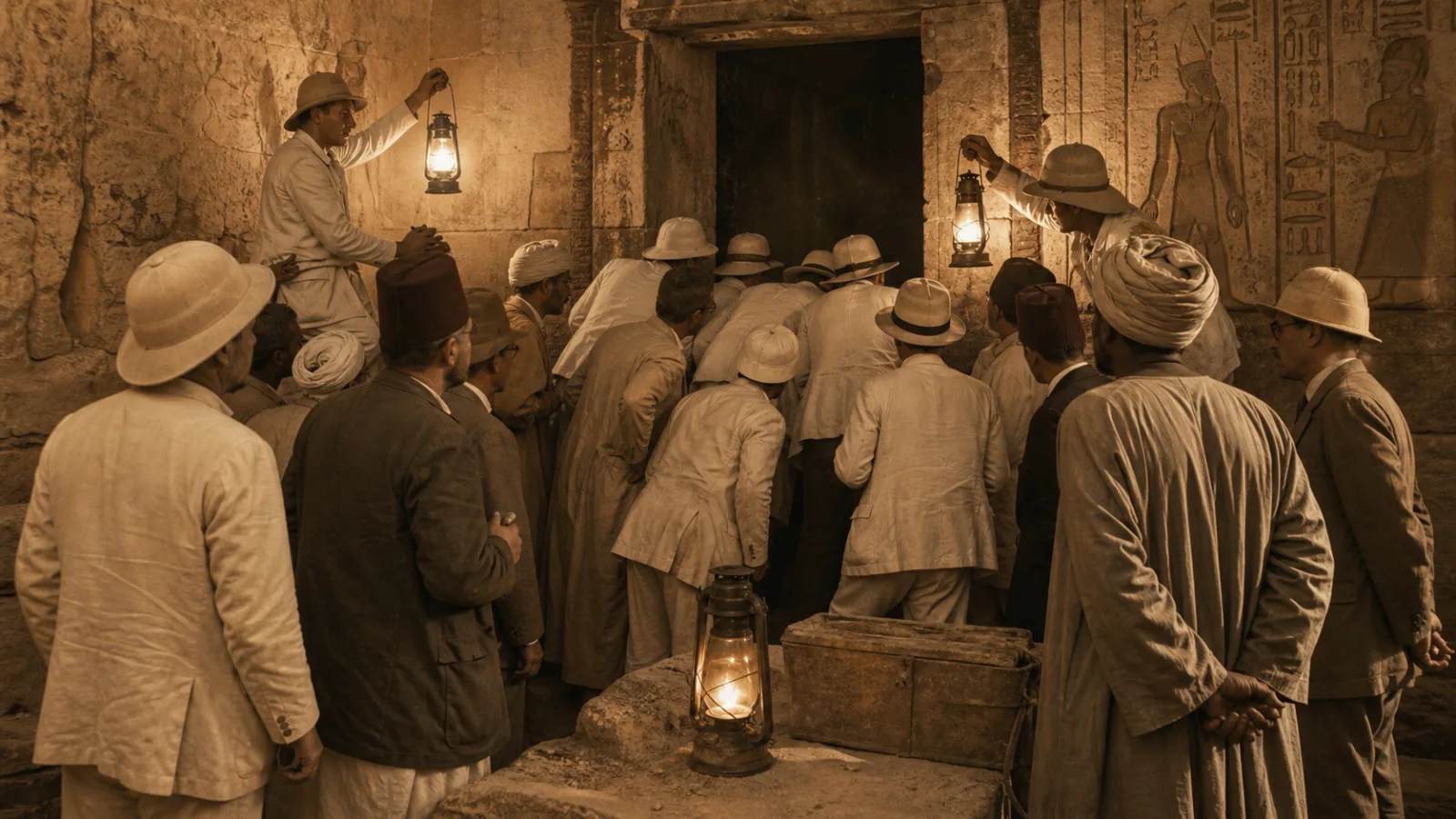
On February 17, 1923, dignitaries crowded into the antechamber of a tomb buried for three thousand years, watching as Howard Carter prepared to break a seal untouched since antiquity. The expedition's financier, Lord Carnarvon, stood nearby in Cairo, unaware that within months he would be dead — and that his death would help spark one of the most enduring legends of the twentieth century.
Within a decade, a string of deaths loosely connected to the tomb had newspapers around the world asking whether Carter's team had disturbed something that should have stayed buried. The real answer lies not in the supernatural, but in a mix of genuine tragedy, medical circumstance, and a press eager for a sensational story.
Who Was Tutankhamun?
Tutankhamun ruled Egypt for roughly ten years, dying around 1323 BCE while still a teenager. He was a minor king by ancient standards, taking the throne after the religious upheaval caused by his father, Akhenaten, who had attempted to reduce Egypt's many gods to one. Tutankhamun's short reign was largely spent reversing that revolution and restoring the old priesthoods and temples.
He died young, was buried quickly, and was effectively erased from history soon after. Later pharaohs sought to scrub his father's legacy from the record, and Tutankhamun's name went with it. His comparatively small tomb, tucked low in the Valley of the Kings, was gradually buried under flood debris and the huts of later workmen, and he became little more than a footnote in Egyptian history.
A Valley Believed Exhausted
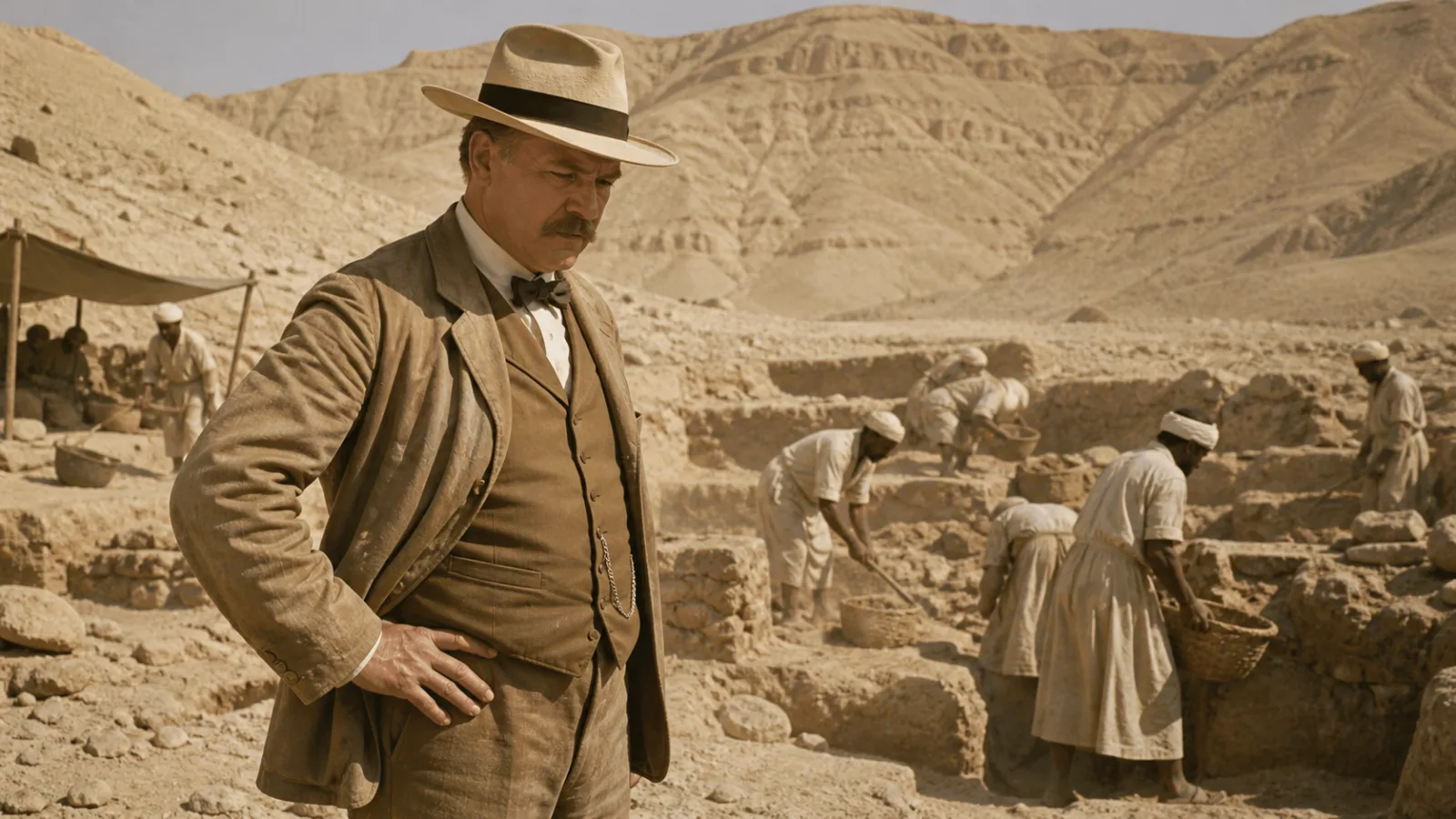
By the early twentieth century, most Egyptologists believed the Valley of the Kings had given up all of its secrets. American financier Theodore Davis, who had excavated there for years, declared the valley exhausted. Howard Carter, a former artist and draftsman who had worked his way up through the Egyptian Antiquities Service, disagreed. He believed Tutankhamun's tomb was still out there, unlooted.
Carter convinced George Herbert, the fifth Earl of Carnarvon, to fund the search. Carnarvon was a wealthy English aristocrat with a passion for antiquities — and fragile health, the lasting result of a serious car accident years earlier that had left his lungs weakened and his body vulnerable to infection. That vulnerability would matter enormously later.
The Breakthrough and "Wonderful Things"
For nearly a decade, Carter dug and found little. By 1922, Carnarvon was ready to end the funding, but Carter asked for one final season. On November 4, a water boy on the site discovered a step cut into the rock. Carter's team cleared a staircase and found a sealed doorway stamped with royal seals.
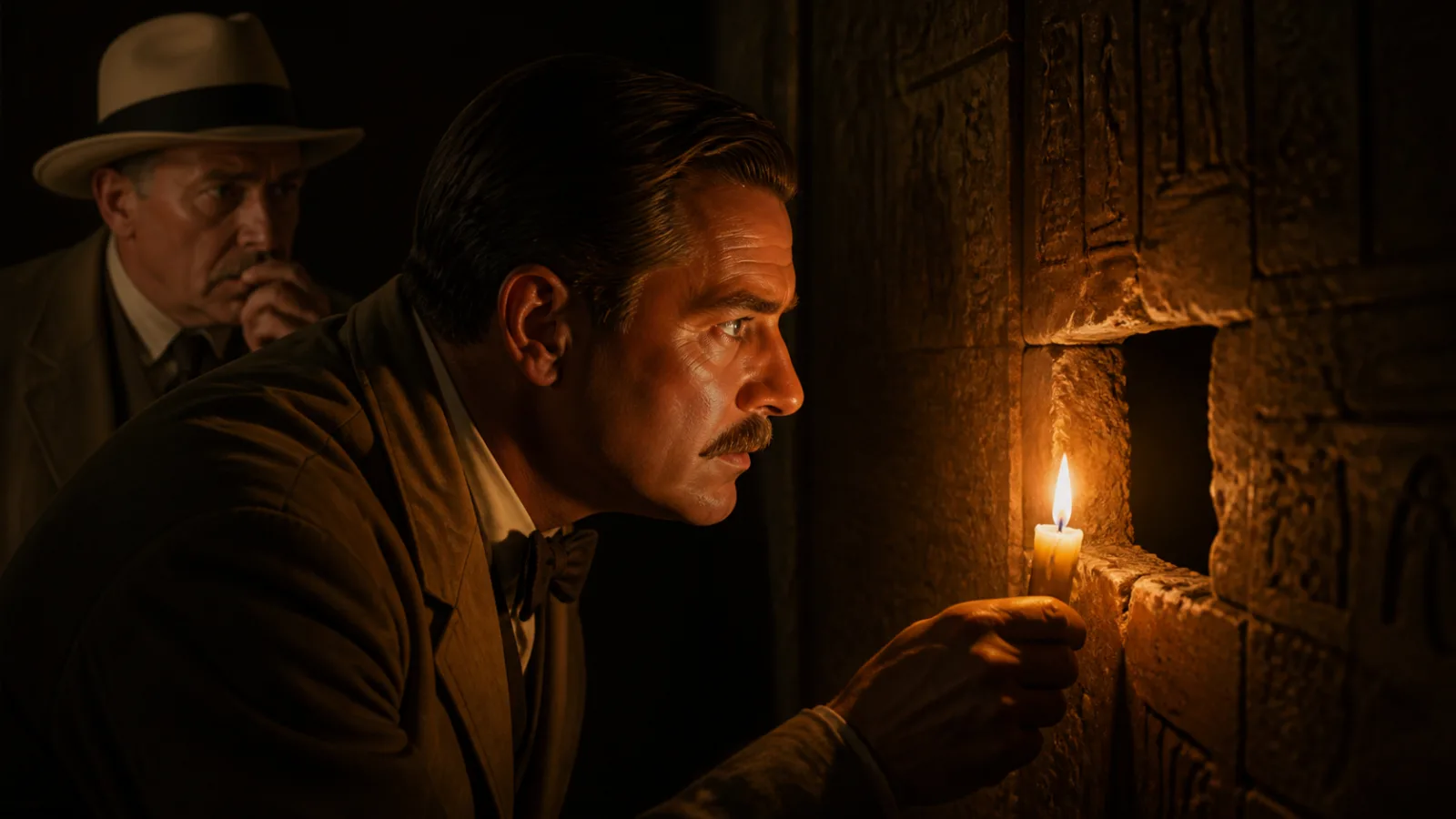
On November 26, Carter and Carnarvon made a small breach in a second sealed door. Carter held a candle to the gap, and when Carnarvon asked if he could see anything, Carter reportedly replied: "Yes, wonderful things."
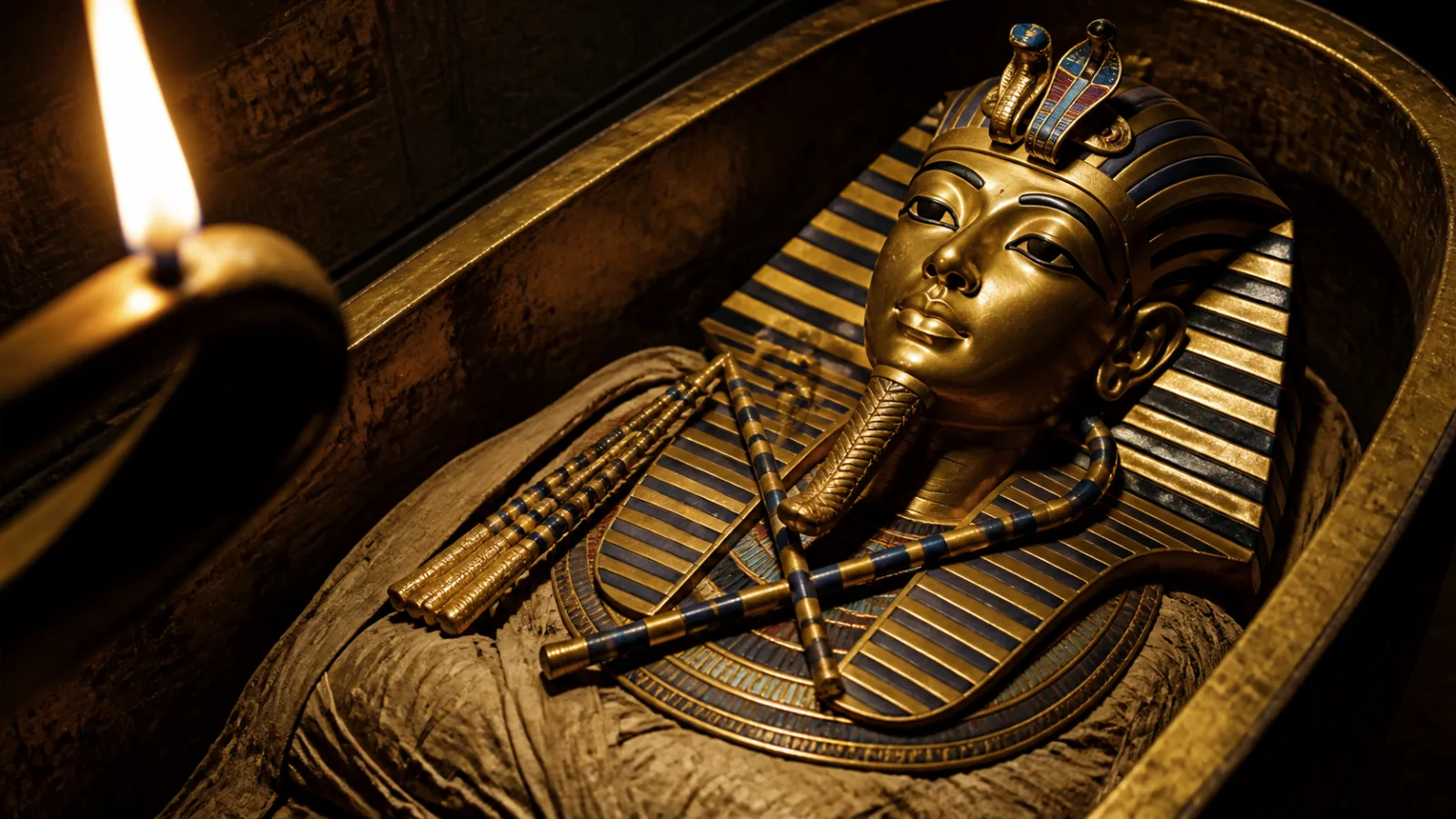
What followed was one of the great discoveries in archaeological history. An antechamber packed with gilded furniture, chariots, statues, and alabaster vases. A burial chamber containing nested shrines and, within them, the sarcophagus of the boy king, his mummy adorned with the now-iconic solid gold funerary mask. Nearly 5,400 individual objects were catalogued, most untouched by ancient looters — the most intact royal tomb ever found in Egypt. It took Carter's team nearly a decade to fully catalogue and remove everything.
Headlines Turn to Tragedy
The discovery made international headlines. Then, on April 5, 1923 — less than four months after the tomb was first breached — Lord Carnarvon died in a Cairo hotel room.
The documented cause was blood poisoning. Carnarvon had nicked a mosquito bite while shaving, the wound became infected, and pneumonia followed, a serious threat given his already weakened lungs. This much is confirmed by the doctors who attended him.
What happened after his death is where documented fact gives way to legend. Newspapers reported that the lights in Cairo flickered and went out citywide at the moment of his death. Some accounts claimed his dog in England howled and died at the same hour. Most famously, a story circulated that a mark was later found on Carnarvon's cheek in the same place as a lesion on Tutankhamun's mummified face. None of these details are independently verifiable in contemporary records. Cairo's power grid was notoriously unreliable at the time, and the dog and lesion stories evolved with each retelling — the hallmarks of legend rather than documented fact.
From Fact to Legend
The press had a phrase ready-made for the moment: a supposed inscription near the tomb's entrance reading, "Death shall come on swift wings to him who disturbs the peace of the king." No such inscription has ever been verified by Egyptologists who examined the tomb. Most researchers believe it was invented, or at least embellished, by newspapers looking for a bigger story than pottery shards and gilded furniture.
Novelist Marie Corelli added fuel to the fire, publishing a widely read letter just weeks before Carnarvon's death warning of dire punishments awaiting anyone who violated an Egyptian tomb. Whether or not she caused the panic, she primed the public to expect one.
Once the idea of a curse took hold, the public began keeping score. Additional deaths — an X-ray specialist who had examined the mummy, a member of Carter's team, a visitor to the tomb — were folded into the growing legend. By the mid-1930s, some tabloid accounts claimed the curse had killed more than twenty people.
The Statistics Tell a Different Story
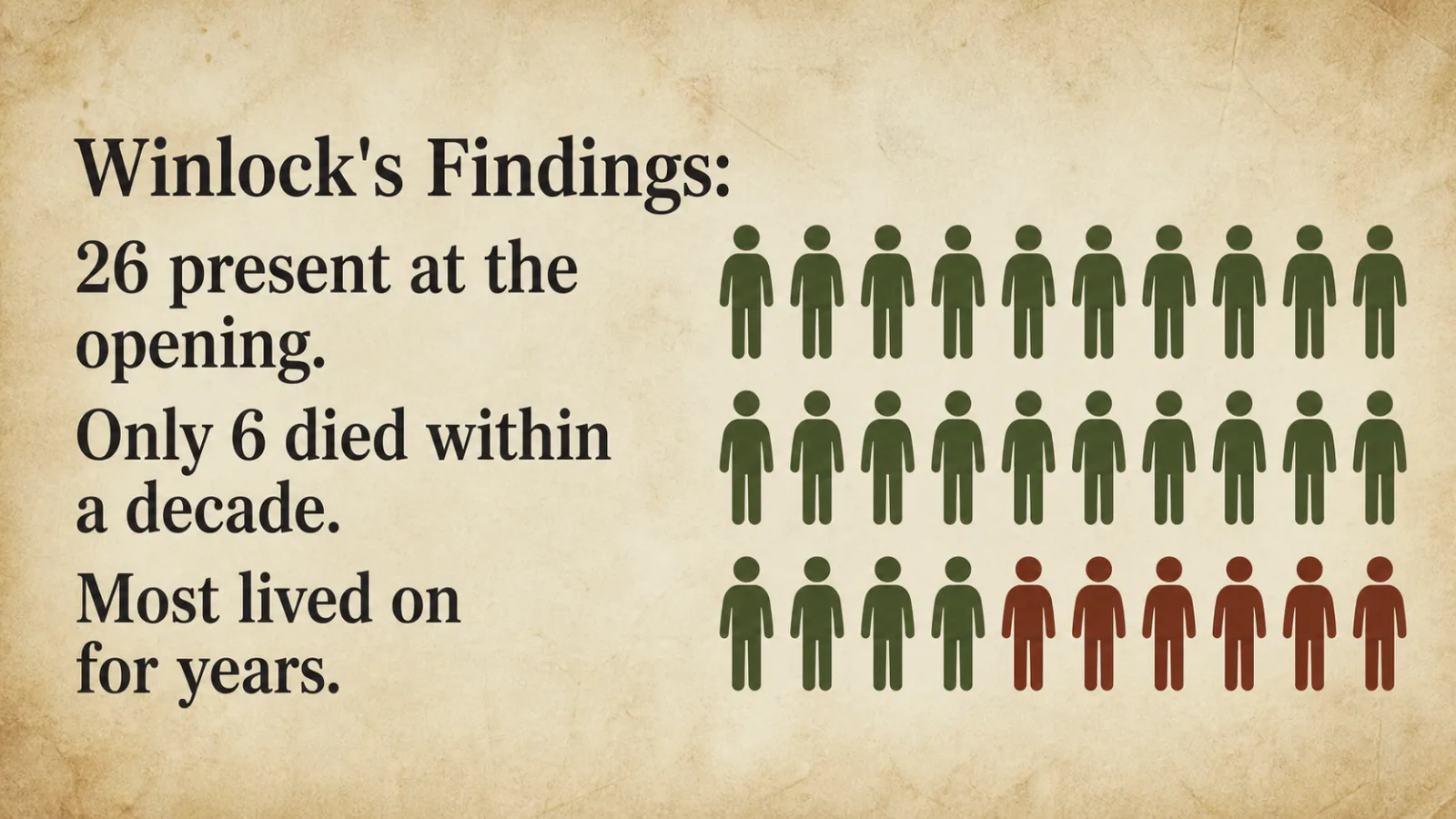
In 1933, Egyptologist Herbert Winlock of the Metropolitan Museum of Art actually did the math. He examined the 26 people present at the official opening of the tomb's burial chamber in 1923. Of those 26, only six died within a decade afterward — the rest lived on for years, some for decades.
Howard Carter himself, the man who broke the seal and arguably disturbed the king's rest more directly than anyone, lived another 17 years, dying in 1939 of lymphoma at age 64. If a curse existed, it apparently spared the person most responsible for the tomb's disturbance.
A more thorough statistical analysis, published in the British Medical Journal in the 1990s, examined lifespans of everyone present at the tomb's opening compared with others exposed to the excavation around the same time. The study found no statistically significant difference in mortality between those connected to the tomb and those who weren't. In plain terms, people linked to Tutankhamun's discovery did not die any sooner, on average, than any comparable group of people living through that era.
Four Real Explanations, No Supernatural Cause
If the numbers don't support a curse, several ordinary explanations account for what did happen.
- Selection bias. Journalists and the public remembered the deaths that fit a dramatic narrative and ignored the much larger number of excavation workers who lived long, unremarkable lives.
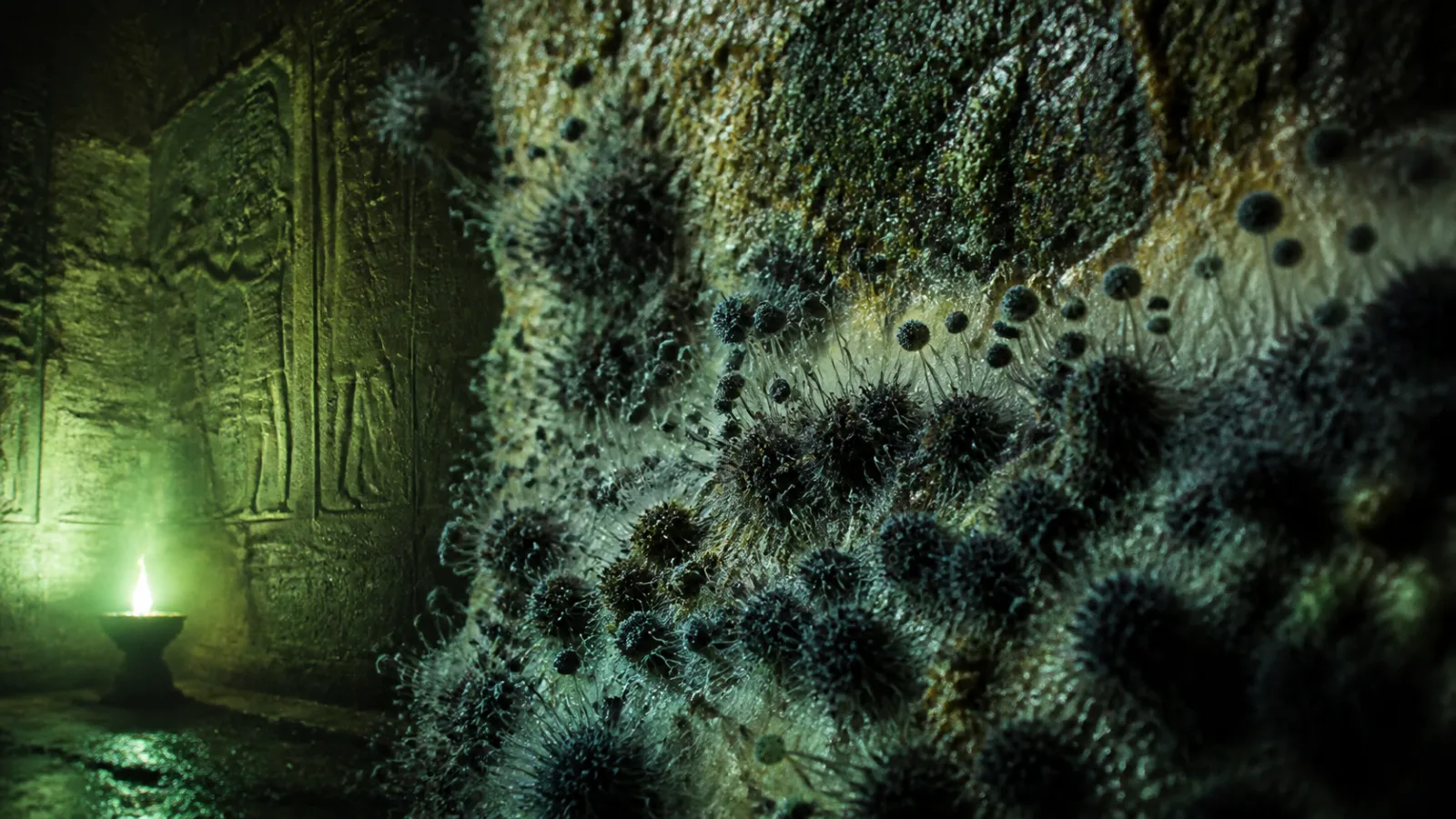
- Tomb pathogens. Sealed ancient chambers can harbor mold spores, bacteria, and fungal growths that thrive in dark, enclosed spaces with organic material. In some documented cases elsewhere in the world, such hazardous molds have caused respiratory illness in people with weakened immune systems. This remains a hypothesis rather than a confirmed cause in Carnarvon's case, since no contemporary account tested the tomb's air or his wound for such organisms — but it offers a plausible, non-supernatural mechanism.
- Carnarvon's pre-existing frailty. His lungs and immune system had been compromised for years following an earlier car accident. A minor infected cut that would have been trivial for a healthier man proved fatal for him.
- Sensational media. The 1920s were an era of mass-circulation newspapers hungry for dramatic copy, and Egyptomania was already sweeping Europe and America. A boy-king's golden tomb, a dead English lord, and an ancient-sounding warning were too good a combination for the press to resist.
Together, these explanations account for the tragedy without requiring anything otherworldly. The curse wasn't excavated from the tomb — it was assembled afterward from fragments of genuine misfortune and manufactured legend, and it kept selling papers for years because it worked.
What Still Remains Unresolved
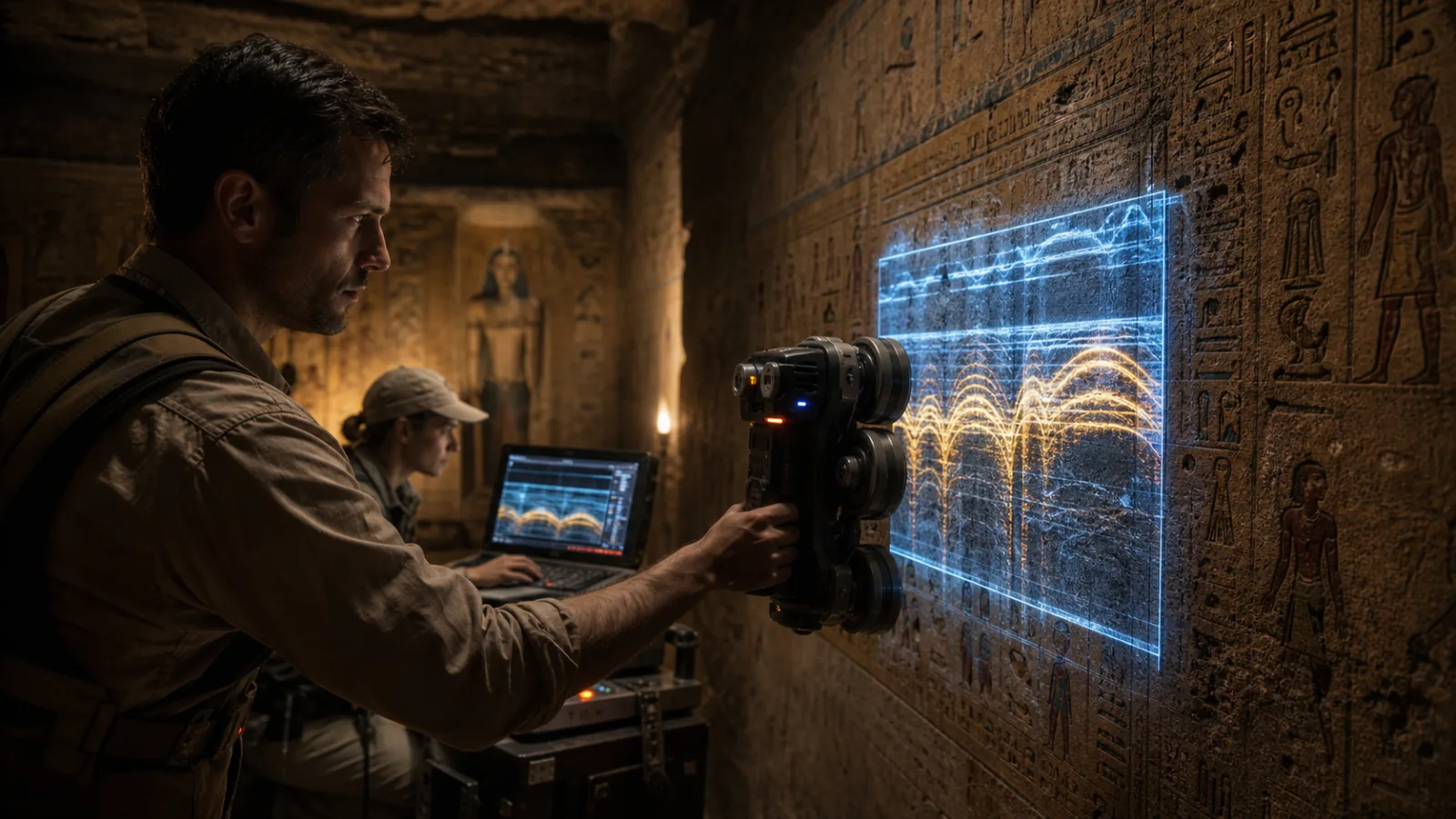
Not everything about the tomb is settled. Some Egyptologists continue to debate whether hidden chambers might exist beyond the walls of Tutankhamun's burial chamber, a question that radar surveys over the past decade have investigated without reaching a full resolution. Whether anything else lies sealed within the rock near the boy king's resting place remains a genuinely open question in Egyptology.
No inscription warning of death has ever been verified at the tomb's entrance. No curse has ever been documented in ancient Egyptian text associated with Tutankhamun. And the mortality data simply doesn't support the legend that made this story famous. Still, three thousand years after his death, the boy king's tomb has been catalogued down to the last gilded chariot wheel — yet the ground around him has not been fully mapped, and may not yet be fully known.